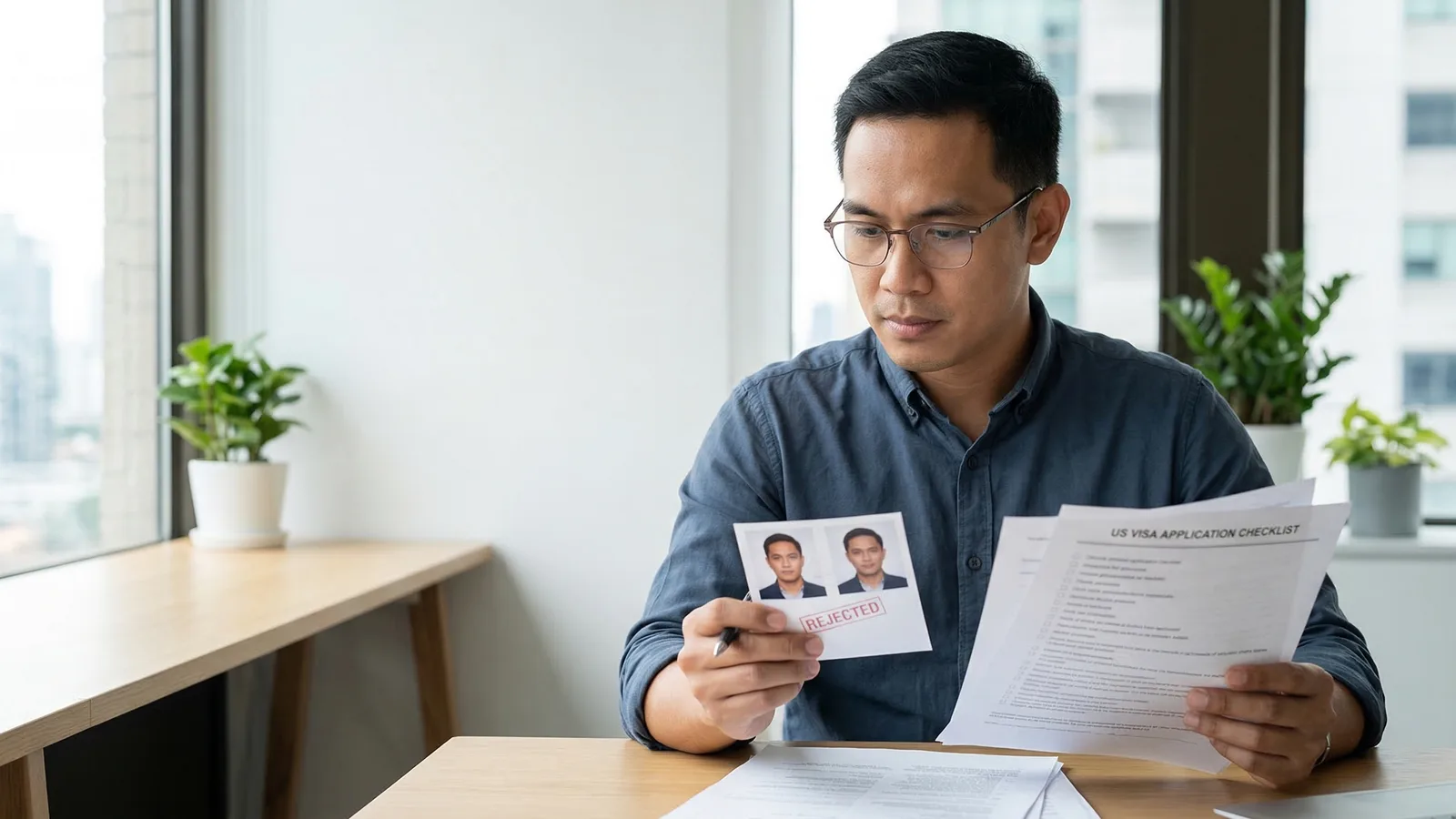
The Philippines enjoys a special relationship with the United States, but that doesn't guarantee visa approval. The B1/B2 visa refusal rate for Filipino applicants sits around 20-30% — lower than India and Nigeria, but still significant. One in four applicants walks away with a rejection.
The US-Philippines alliance means faster processing and slightly more favorable consideration in some cases. But it's not a free pass. You still need to demonstrate strong ties to the Philippines, clear travel purpose, and sufficient financial resources.
Why Filipino US Visa Applications Face Extra Scrutiny
The Philippines presents a unique situation. Many Filipinos have family members in the US through decades of migration. This creates both advantages and challenges for visa applicants. The officer isn't just evaluating you — they're evaluating a family history that may include legal and illegal immigration patterns.
The OFW factor. The Philippines relies heavily on overseas Filipino workers (OFWs). If you're an OFW or being sponsored by one, expect additional scrutiny. Officers want to ensure you're not trying to join them illegally. Documentation of the sponsor's relationship, employment, and legal status becomes critical. Be prepared to explain exactly how you know the sponsor and why they're supporting your trip.
The balikbayan exception. Many Filipino applicants visit the US for tourism under the balikbayan program or to visit family. This is legitimate, but officers see many such applications. Your challenge is to show you're different from applicants who overstay their visa. Clear itinerary, evidence of employment in the Philippines, and property documents help distinguish genuine visitors.
Travel history helps. Filipino applicants who have traveled to other countries — Japan, Australia, Singapore, Europe — have an advantage. Previous international travel demonstrates a pattern of returning home. If this is your first international trip, your documentation needs to be stronger to compensate for the lack of travel history.
Processing in Manila. The US Embassy in Manila handles the majority of Filipino applications. Processing times are generally reasonable compared to some other countries, but interview availability can vary seasonally. Plan ahead and apply early.
Get a compliant passport photo online
Most Common US Visa Rejection Reasons for Filipino Applicants
Insufficient ties to the Philippines. This is the universal rejection reason and the most common for Filipino applicants too. Officers want to see why you'll return after your visit. Strong ties include employment, property, family, and business interests. The definition of ties is broader than most people think — it's not just property and jobs.
Property ownership carries particular weight. A house, condo, or land in the Philippines shows roots that would be costly to abandon. Bring original documents and copies. Tax declarations for properties add credibility. Employment with a recognized company helps. If you're self-employed, bring business registration documents and tax returns. Students should bring enrollment certificates showing they're actively pursuing education in the Philippines.
Financial documentation issues. Bank statements must show consistent patterns over three to six months. Officers can spot suspicious deposits — sudden large amounts followed by minimal activity look like window dressing. Regular income, whether from employment, business, or remittances from abroad, demonstrates financial stability. Show the pattern, not just the balance.
If you're sponsored by a family member in the US, include their financial documents, employment verification, and a detailed sponsorship letter explaining the relationship and the purpose of your trip. The sponsorship letter should include the sponsor's immigration status, how long they've been in the US, and their reasons for supporting your visit.
Unclear travel purpose. Tourism applicants need a clear itinerary. Which cities will you visit? Why those cities? Where will you stay? Specific answers matter. Vague responses like "I want to see America" raise concerns.
Business travelers need documentation from both your Filipino employer and the US company you're visiting. Conference attendees should provide registration confirmation. Training participants need letters explaining the program.
The interview matters. Your interview performance influences the outcome. Officers make quick judgments based on your answers, confidence level, and consistency. Be prepared to answer questions about your trip purpose, duration, accommodations, finances, and plans after returning.
Common interview questions include: Why are you visiting the US? Who will you stay with? How long will you be gone? What do you do for work? How will you fund this trip? What will you do when you return? What is your current employment? Do you own property in the Philippines? Answer each question directly and honestly.
What Does 214(b) Mean for Filipino Visa Applicants?
Section 214(b) creates a presumption that you intend to immigrate to the US. This presumption applies to all non-immigrant visa applicants, but Filipino applicants face it because of the large Filipino community in America and concerns about overstaying.
This presumption is not an accusation. It's a legal framework that places the burden of proof on you. You need to demonstrate strong ties to the Philippines and clear non-immigrant intent.
A 214(b) rejection isn't permanent. Many Filipino applicants succeed on their second or third attempt. The key is understanding what weakened your application and strengthening those areas before reapplying.
How Your Photo Affects Your US Visa Application from the Philippines
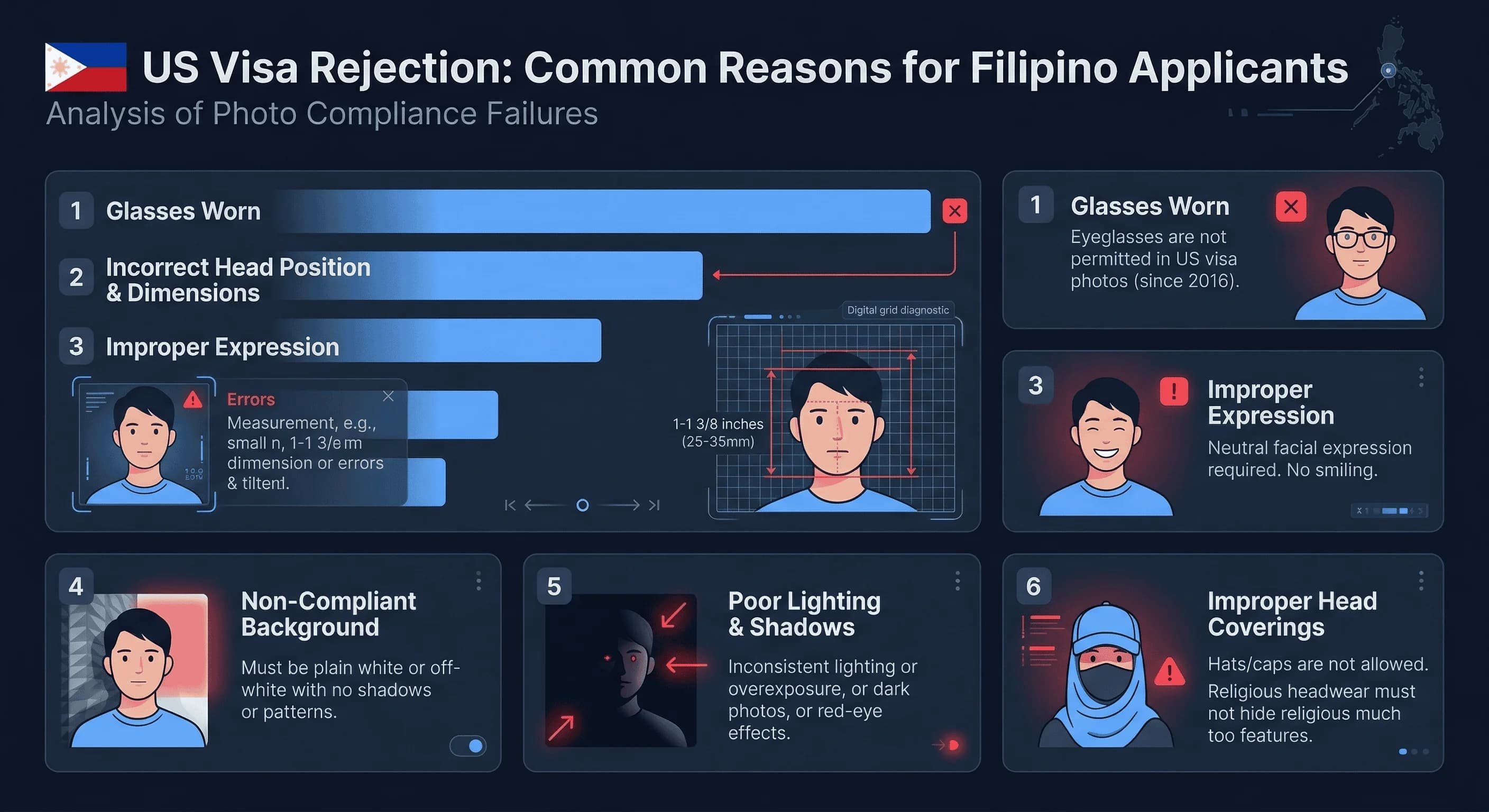
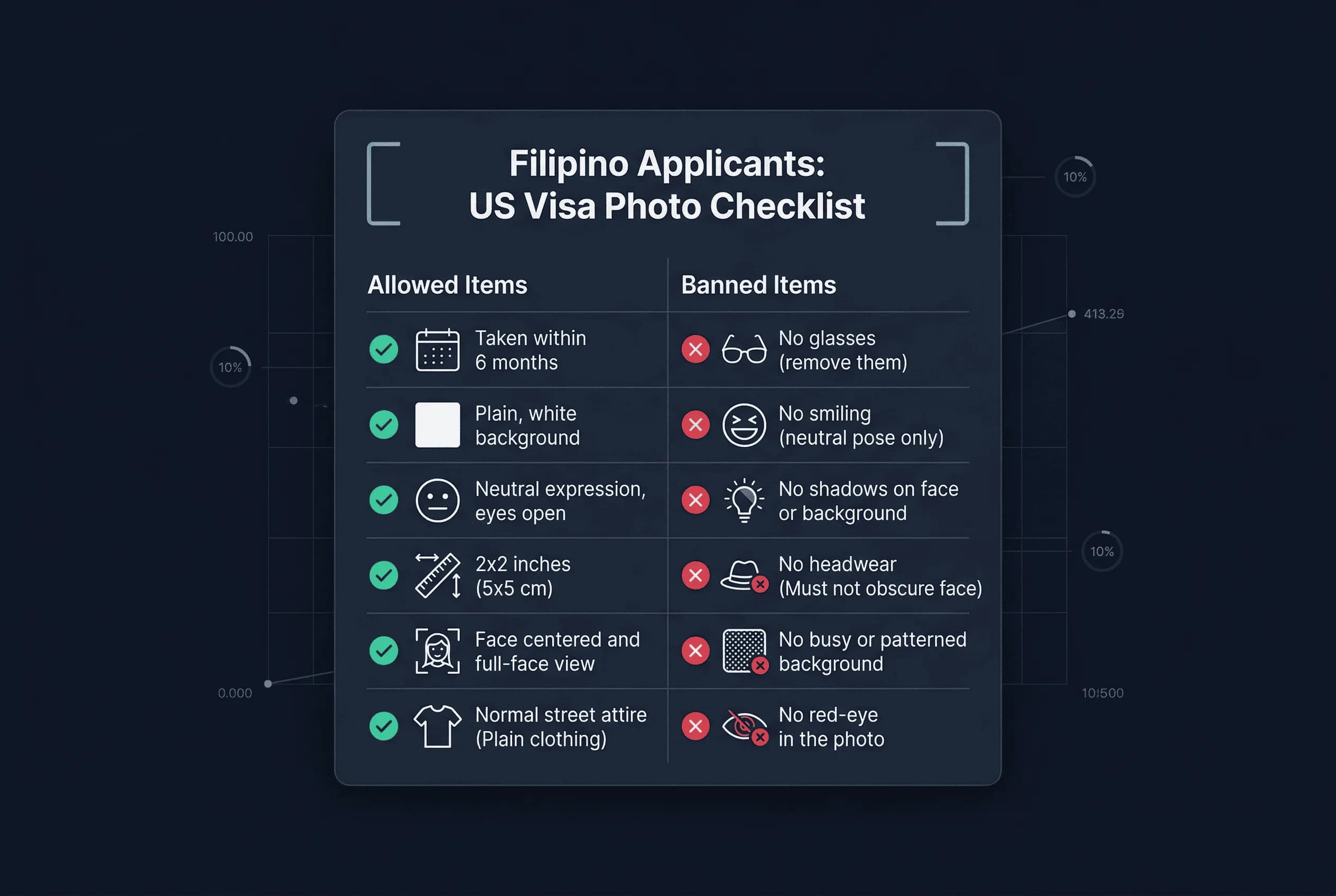
Your visa photo is the first impression you make. US visa photos must be exactly 2×2 inches (600×600 pixels) with a plain white background, following the US passport photo requirements. The DS-160 upload system strictly enforces these specifications.
Many applications face delays because of photo issues. The system rejects photos that don't meet exact requirements. This creates unnecessary delays in an already lengthy process.
The digital photo you upload is separate from the physical photo you bring to the interview. Both must comply with specifications, but they serve different purposes. Get both right.
How to Strengthen Your US Visa Application from the Philippines
Document everything thoroughly. Bring evidence of your ties to the Philippines. Property documents, employment letters, business registration, school enrollment — anything that shows your life is anchored there.
Prepare a clear itinerary. Know your travel plans in detail. Where will you stay? Which cities will you visit? Why those cities? What will you do there? Specific answers demonstrate genuine tourism or business purpose. You don't need every hotel booked, but you need a coherent story about your trip. Officers hear vague itineraries all day — make yours specific and memorable.
Practice your interview answers. Stand in front of a mirror. Record yourself. Time your responses. The interview is brief, so make every answer count. Confidence matters, but so does honesty.
Address the OFW question. If you're being sponsored by an OFW family member, be prepared to explain the relationship clearly. Know their employment status, how long they've been abroad, and why they're sponsoring your trip. Inconsistencies here raise major red flags.
Dress appropriately. Your appearance signals respect for the process. Business-casual is appropriate for most interviews. Neat, pressed clothing shows you take this seriously. Avoid overly casual attire like shorts or t-shirts. Your appearance should match the purpose of your visit.
Be honest about your intentions. If you have family in the US, don't hide it. Officers will find out through background checks. Honesty about your connections demonstrates trustworthiness. Concealment guarantees rejection if discovered and makes any future applications nearly impossible.
What Happens After a US Visa Interview in the Philippines?
If approved, you'll receive information about passport delivery. Processing times vary, but expect at least a few business days. Some applications require administrative processing, which can take weeks longer. If rejected, you'll get a slip explaining the reason. A 214(b) rejection means you need to strengthen your ties or documentation before applying again.
There is no mandatory waiting period to reapply. However, addressing the reasons for rejection before your next attempt improves your chances significantly. Many Filipino applicants succeed on their second or third try.
Get Your US Visa Photo Right for Filipino Applications
Don't let a preventable photo issue delay your application. A non-compliant photo gets rejected by the DS-160 system, forcing you to retake and resubmit.
passportsize-photo.online creates US-compliant visa photos in minutes. Upload any photo, AI corrects it to meet exact State Department specifications, and you download a file ready for your DS-160. Use our passport photo checker to verify compliance before uploading. See our pricing for details. Compare experiences with applicants from US visa rejection for Nigerian applicants to understand different patterns. No pharmacy visits. No guessing. No delays.
Frequently Asked Questions About US Visa Rejection in the Philippines
What is the US visa rejection rate for the Philippines?
The Philippines has a B1/B2 visa refusal rate of approximately 20-30%. This is lower than India and Nigeria but still significant. Your individual outcome depends on your specific circumstances and preparation. The rate fluctuates based on economic conditions and policy changes.
Can I Reapply After a 214(b) Rejection in the Philippines?
Yes. There's no mandatory waiting period. Many Filipino applicants succeed on their second or third attempt. Address the reasons for your rejection before reapplying. Strengthen your documentation and prepare more thoroughly for the interview.
What Documents Should I Bring to a US Visa Interview?
Bring your passport, DS-160 confirmation, interview appointment letter, and photo. Supporting documents include bank statements (3-6 months), employment letter, property documents, tax clearance, previous passports, and any US visa copies. Bring originals and copies.
Does US Family Help or Hurt a Filipino Visa Application?
It depends. Family in the US can demonstrate ties if they're sponsoring you legitimately. However, it can also raise concerns about immigrant intent. Be prepared to explain the relationship clearly and demonstrate strong ties to the Philippines.
How long does the US visa process take in the Philippines?
Processing times vary. Interview availability in Manila can take weeks. After approval, passport delivery takes additional time. Plan for at least 4-6 weeks from application to potential travel date. Some applicants experience longer waits during peak seasons and holiday periods.
Does the US-Philippines Relationship Help Visa Approval?
The US-Philippines alliance means faster processing for some categories and slightly more favorable consideration in ambiguous cases. But it's not a guarantee. You still need to demonstrate strong ties and clear travel purpose.
Should I apply in Manila or another location?
The US Embassy in Manila handles most applications. There's also a consular agency in Cebu, but Manila has more interview availability. Apply where it's most convenient for you, but don't delay just for location preferences.
What Is the US Visa Interview Process in the Philippines?
The process involves security screening, biometrics, and the interview itself. Arrive early. Bring only essential documents. Answer questions honestly and confidently. The interview typically lasts 2-5 minutes.