Nigeria's B1/B2 visa refusal rate sits between 45-55% — more applications are rejected than approved. This is the highest refusal rate among major countries. Understanding why is the first step to becoming one of the applicants who gets approved.
The stakes are high for Nigerian applicants. Processing times are longer. Interview slots are harder to get. When you finally sit across from the consular officer, the scrutiny is intense. But many applicants succeed every year. Their secret isn't luck — it's preparation.
Why Do Nigerian Applicants Face Higher US Visa Rejection Rates?
Nigeria presents unique challenges that other countries don't face. The consular officer isn't judging you personally. They're evaluating patterns they've seen in thousands of applications from your country. This isn't fair, but it's reality.
Economic indicators matter more. Nigeria's economic situation means officers look more carefully at financial documents. They need to see you can afford the trip without hardship. This means demonstrating stable income, not just showing a large bank balance that might be a one-time windfall. The difference between someone who earns $500 monthly and someone who shows $10,000 is significant — but the officer needs evidence of consistent earning, not a single large deposit.
Sponsorship complexity increases scrutiny. Many Nigerian applicants are sponsored by family members in the US or other countries. These applications require additional documentation. The officer needs to verify the sponsor's relationship, their legal status, and their ability to fund the trip. Every link in this chain gets examined carefully. A sponsor in the US needs to provide proof of their immigration status, employment, and financial capacity. Any gap in this documentation raises concerns.
Travel history and documentation gaps. Many Nigerian applicants have limited international travel history. Without a track record of returning home from other countries, officers have less evidence to gauge your intentions. Every document must be stronger to compensate for this. Applicants who have visited other countries and returned home have an advantage — they can point to past behavior as evidence of their intentions.
Interview patterns and detection. Officers are trained to detect inconsistencies. They hear the same stories repeatedly. If your explanation sounds rehearsed in the wrong way or too vague, it raises concerns. The goal isn't to sound perfect — it's to sound genuine and consistent with your documentation.
Get a compliant passport photo online
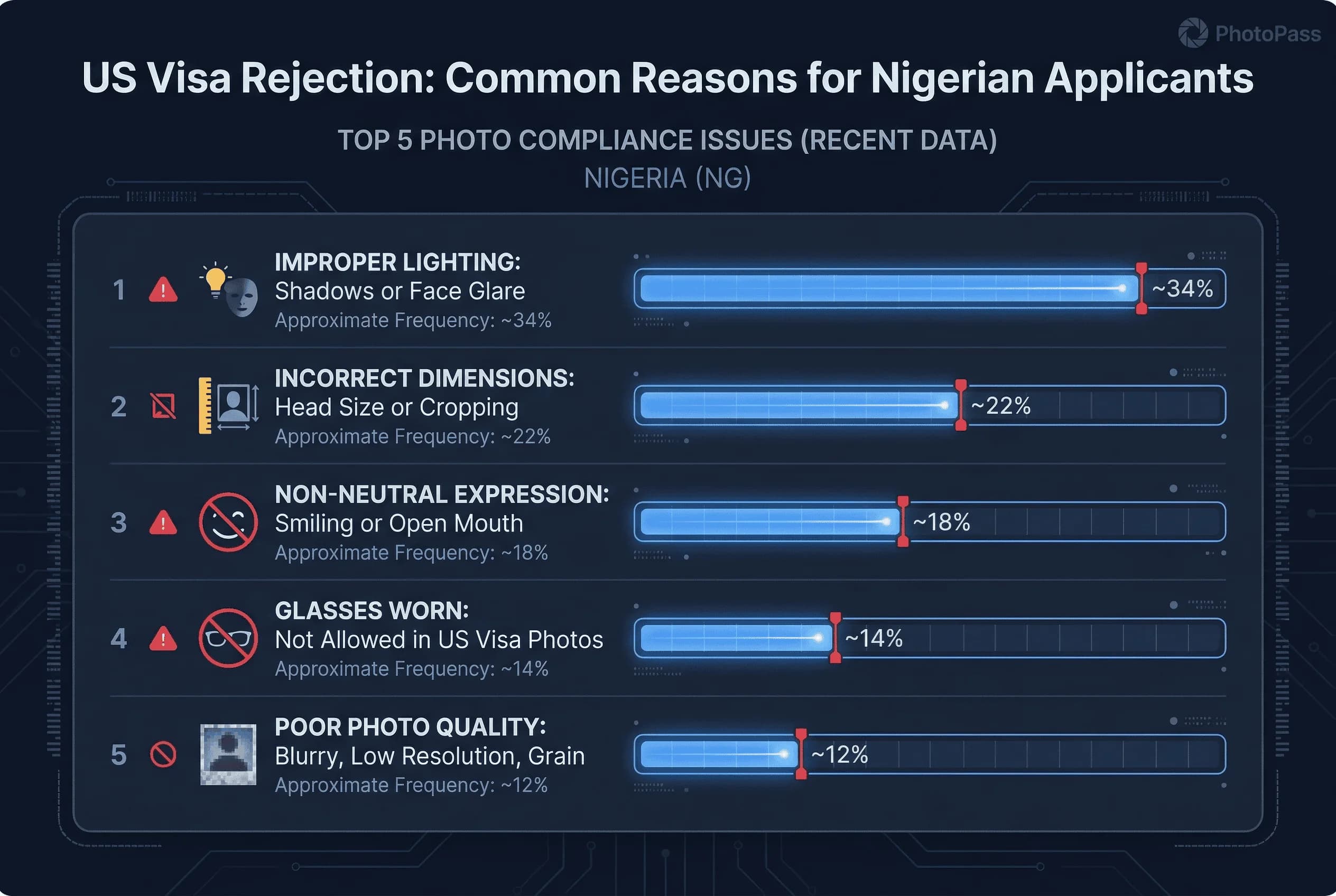
Most Common US Visa Rejection Reasons for Nigerian Applicants
Insufficient ties to Nigeria. This is the number one rejection reason. Officers want to see why you'll return after your US visit. Strong ties include property ownership, stable employment, a business you run, family members who depend on you, or enrollment in educational institutions.
Property ownership carries significant weight in Nigerian applications. A house, land, or other real estate shows roots that would be difficult to abandon. Bring original documents and copies. Tax clearance certificates for properties add credibility. If you don't own property, employment with a recognized company helps. A business owner should bring CAC registration and tax returns. Students should bring enrollment letters from their institutions.
Financial insufficiency and documentation issues. Bank statements must show consistent transaction patterns over three to six months. Officers recognize when someone just deposited money to look better. They want to see regular income deposits, reasonable spending patterns, and funds that have accumulated over time. A sudden large deposit followed by a zero balance raises immediate questions.
If someone is sponsoring you, include their bank statements, employment letter, and a signed sponsorship letter explaining the relationship. The sponsorship letter should include the sponsor's US immigration status if they're in America. All documents should be notarized where possible. The officer will verify these documents, so accuracy is essential.
Unclear travel purpose. Your itinerary must be specific. For tourism, know which cities you'll visit and why. For business, have letters from the US company detailing meetings and purposes. Vague answers like "I want to explore opportunities" raise immediate concerns about immigrant intent. Officers hear these vague answers constantly from people who actually intend to stay.
Business visitors need additional documentation. An invitation letter from the US company should detail the business purpose, expected outcomes, and duration of stay. Your Nigerian employer should provide a letter explaining why this travel is necessary for your job. Without these, officers assume the worst.
Interview performance. The interview is brief but decisive. Officers make quick judgments based on your answers, body language, and consistency. Nervousness is understandable, but it can't override your ability to tell a coherent story about your trip. Confidence matters. So does honesty.
Common questions include: What is the purpose of your visit? Who will you stay with? How long will you be gone? What do you do for work? Can you show me your employment letter? How will you fund this trip? What will you do when you return? Practice answering all of these until they feel natural, not scripted.
What Does the 214(b) Presumption Mean for Nigerian Applicants?
Section 214(b) creates a presumption that you intend to immigrate to the US. This is the legal basis for most rejections. The burden is on you to overcome this presumption through documentation and interview performance.
This doesn't mean you're suspected of anything. Every non-immigrant visa applicant faces this presumption. Nigerian applicants face it more intensely because of the higher volume of applications from people trying to relocate. The officer isn't assuming you're lying — they're waiting for you to prove you're not.
To overcome 214(b), you need to demonstrate strong ties to Nigeria, clear travel purpose, and sufficient financial resources. No single document guarantees approval. The overall picture matters most. Every piece of evidence that supports your case adds to the total.
A 214(b) rejection doesn't mean never. It means not this time. Many Nigerian applicants succeed on their second or third attempt after strengthening their documentation and interview preparation. The key is understanding why you were rejected and addressing those specific concerns in your next application.
Additional Tips for a Successful US Visa Application from Nigeria
Apply early. Processing times in Nigeria are longer than many other countries. Don't wait until you need to travel soon. Apply months ahead to allow for processing delays, potential administrative review, and any issues with your application.
Be consistent across all documents. Your DS-160 form, employment letter, bank statements, and interview answers should all tell the same story. Any inconsistency between these sources raises immediate concerns about accuracy and honesty.
Don't provide unnecessary information. Answer questions directly. If you're not asked about something, don't volunteer information that might raise additional questions. Focus on answering what the officer asks clearly and confidently.
How Your Photo Affects Your US Visa Application from Nigeria
Your visa photo is your first impression before you speak. US visa photos must be exactly 2×2 inches (600×600 pixels) with a plain white background, following the US passport photo requirements. The specifications are strict, and the DS-160 upload system will reject photos that don't meet them exactly.
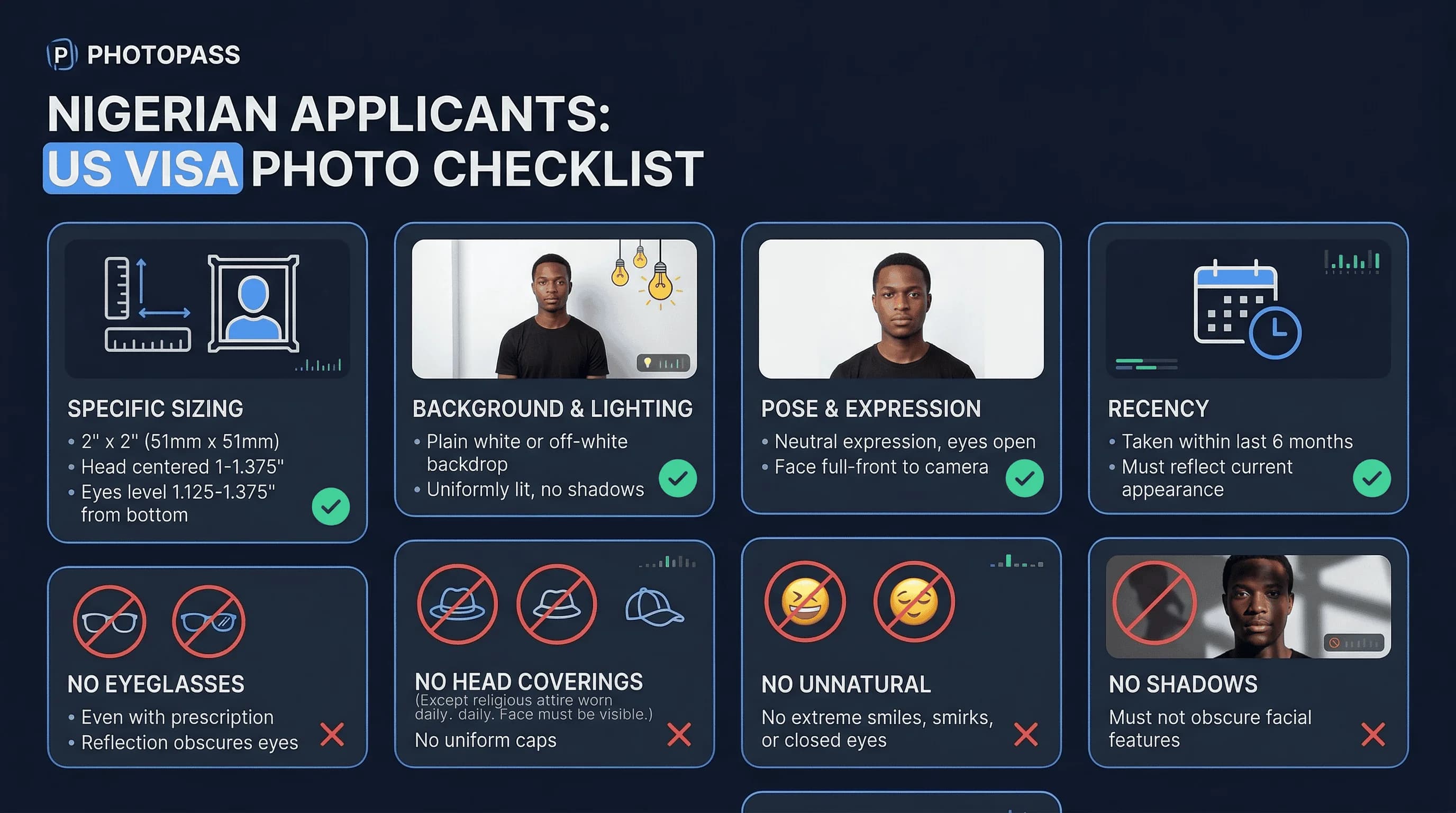
Many Nigerian applicants face delays because their photo doesn't pass the automated upload check. This is avoidable. Get it right the first time by using a tool that understands State Department specifications.
The photo you upload digitally is separate from the physical photo you bring to the interview. Both must comply with specifications, but they serve different purposes in the application process.
How to Strengthen Your US Visa Application from Nigeria
Document everything meticulously. Every claim you make in the interview should be supported by documents. Employment claims need letters. Financial claims need bank statements. Travel claims need itineraries. The more evidence you provide, the less the officer has to guess.
Prepare for the sponsorship question. If someone is sponsoring your trip, be ready to explain the relationship in detail. How do you know them? What's their immigration status? How long have they been in the US? Why are they sponsoring you? Inconsistent answers about sponsorship raise major red flags.
Know Nigeria-specific documentation. Bring your company's CAC registration if you're employed. Bring tax clearance certificates. Bring evidence of any professional licenses or memberships. Nigerian consular officers know the local business environment. Documents that don't add up get noticed.
Practice your interview answers. Stand in front of a mirror. Record yourself. Time your answers. The interview will be brief, but those minutes determine the outcome. Practice until your answers flow naturally.
Dress professionally. Your appearance signals how seriously you take the process. Business-casual is appropriate for most interviews. Neat, pressed clothing shows respect for the officer and the process.
Get Your US Visa Photo Right for Nigerian Applications
A rejected photo means a delayed application. Don't let something fixable stand between you and your interview date.
passportsize-photo.online creates US-compliant visa photos in minutes. Upload any photo, our AI corrects it to meet exact State Department specifications, and you download a file ready for the DS-160 system. Use the passport photo checker to verify compliance before uploading. No guessing. No delays. No pharmacy visits. Compare options with our guide on US visa rejection for Indian applicants to understand patterns across different countries.
Your photo is the first thing the officer sees. Make sure it's right.
Frequently Asked Questions About US Visa Rejection in Nigeria
What is the US visa rejection rate for Nigeria?
Nigeria's B1/B2 visa refusal rate averages 45-55%, making it one of the highest among all countries. This means roughly half of all applicants receive a 214(b) rejection. However, many applicants succeed every year with proper preparation.
Can I Reapply After a 214(b) US Visa Rejection from Nigeria?
Yes. There's no mandatory waiting period after a 214(b) rejection. However, you should address the reasons for rejection before reapplying. Strengthen your ties, gather better documentation, and prepare more thoroughly for the interview.
What documents do Nigerian applicants need?
Standard documents include passport, DS-160 confirmation, interview appointment letter, and photo. Additional documents include bank statements (3-6 months), employment letter, property documents, tax clearance certificates, and any sponsorship documentation. Bring originals and copies.
Does Photo Quality Affect US Visa Approval from Nigeria?
Non-compliant photos get rejected by the DS-160 upload system, causing delays. Some applicants miss their interview dates because they couldn't upload a correct photo in time. A correct photo is essential.
How long does the US visa process take in Nigeria?
Processing times vary significantly. Interview availability in Lagos and Abuja can take weeks or months. After the interview, administrative processing may take additional time. Plan for at least 2-3 months from application to potential travel date.
What Happens During a US Visa Interview in Nigeria?
The officer will ask about your travel purpose, duration, accommodations, financing, and ties to Nigeria. Answer honestly and confidently. Provide documents when asked. The interview typically lasts 2-5 minutes.
Should I apply through Lagos or Abuja?
Both locations process visas. Lagos has more interview availability but longer queues. Abuja may have shorter waits. Choose based on convenience, but don't delay applying just because of location preferences.