India's B1/B2 visa refusal rate hovers around 35-40% — roughly one in three applicants walks out of the embassy with a rejection stamp. That number sounds alarming. But understanding why rejections happen puts you in control.
The most common rejection reason is Section 214(b) of the Immigration and Nationality Act. This isn't a judgment on your character. It's a legal presumption that you intend to immigrate to the United States until you prove otherwise. The burden sits entirely on your shoulders.
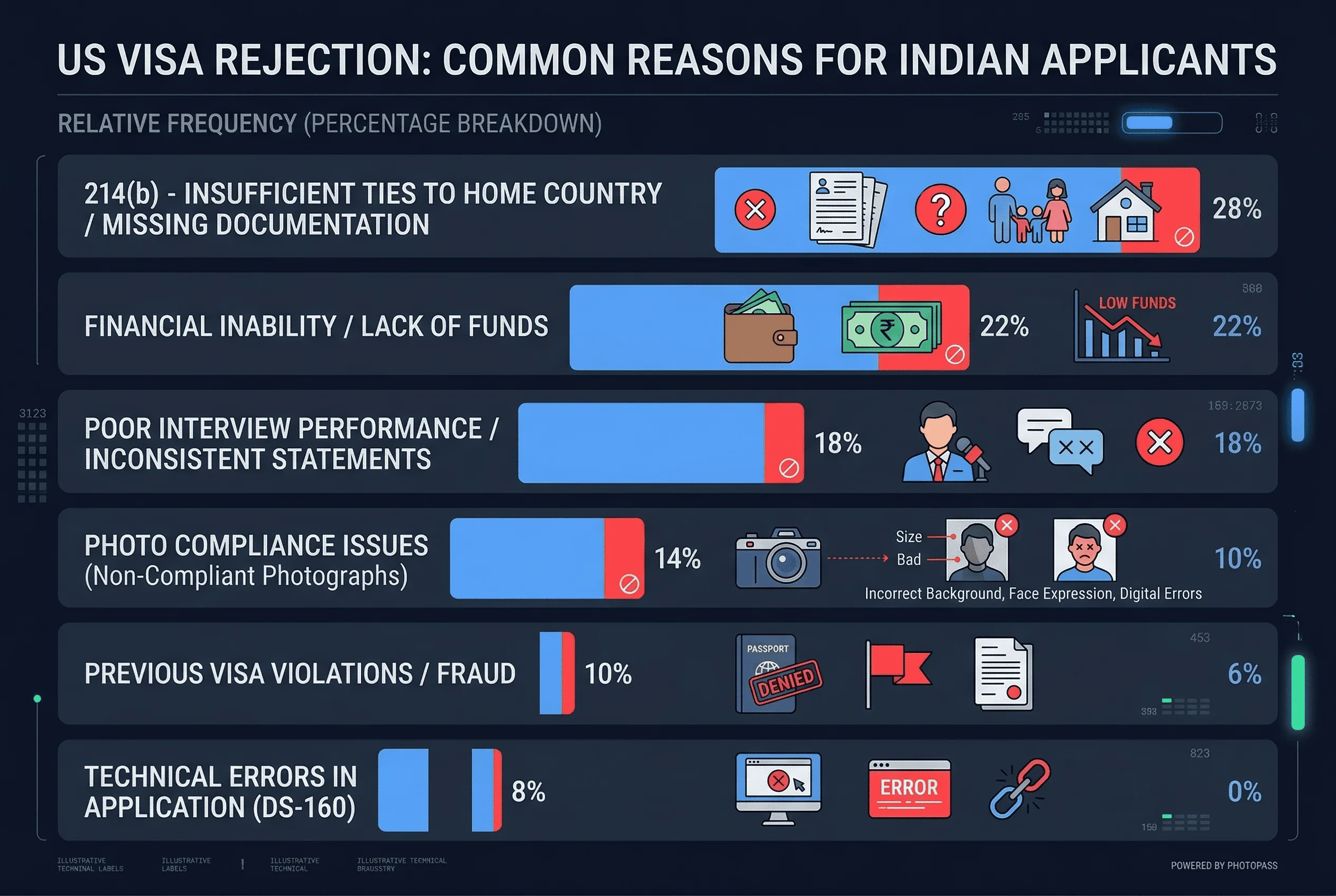
Most Common US Visa Rejection Reasons for Indian Applicants
Insufficient ties to home country. Consular officers look for reasons you'll return after your visit. Property documents prove you have assets in India. Employment letters show you have a career waiting for you. School enrollment records for children demonstrate family obligations. If you're self-employed with no property and no dependents, the officer sees fewer anchors pulling you back.
The definition of "ties" is broader than most people realize. It's not just property and jobs. Professional licenses, business registrations, community organizations, religious institutions — all of these signal roots that would be costly to abandon. A doctor with an active practice has stronger ties than someone working odd jobs with no fixed address.
Financial insufficiency. Bank statements showing low balances, inconsistent income, or unexplained wealth raise red flags. Officers want to see you can afford the trip without becoming a public charge. Three months of transaction history matters more than a one-time large deposit.
Many applicants make the mistake of showing only the final balance. That's not enough. Officers look at the pattern. Regular salary deposits, consistent savings behavior, and steady spending patterns all help your case. If you're showing a large balance that appeared suddenly, expect questions about its source.
Unclear travel purpose. Your itinerary must tell a clear story. A business visitor needs letters from the US company detailing the business purpose, expected meetings, and duration of stay. Tourism requires hotel bookings, a plausible route through the country, and reasons for visiting specific places. Vague answers like "I want to see America" concern officers who hear the same thing hundreds of times daily.
Business travelers face additional scrutiny. You need to demonstrate legitimate business reasons — attending a conference, negotiating with a supplier, training at a US facility. The invitation letter from your US counterpart matters. So does documentation of your company's operations.
Inconsistent documentation. Every document must align with what you say in the interview. If your DS-160 shows a different employer than your invitation letter, that mismatch hurts you. Review everything before you walk in. Check names spell exactly the same way. Verify dates match across all forms.
This extends beyond obvious documents. Your passport should show all previous US visas. Travel history to other countries matters. Family members in the US must be disclosed. Any discrepancy between what you say and what's in your file raises suspicion.
Interview performance. This matters more than people realize. Nervous answers, inconsistent stories, and inability to elaborate on basic details about your trip all work against you. Preparation isn't optional — it's the difference between approval and rejection.
The interview is your chance to tell your story. Officers are trained to spot deception. But they're also looking for genuine travelers with legitimate purposes. Confidence matters. So does honesty. If you don't know something, say so. Don't guess.
Get a compliant passport photo online
What Does a 214(b) Visa Refusal Mean for Indian Applicants?
Section 214(b) creates a presumption of immigrant intent. That's the legal framework behind every interview. The officer assumes you want to stay in the US indefinitely unless you actively overcome that assumption.
This presumption is temporary. A rejection under 214(b) doesn't mean never. It means not this time, with this application, based on what the officer saw that day. Many applicants succeed on their second or third attempt after strengthening their profile.
The key is understanding what the officer looked for. They weren't trying to reject you. They were trying to find a reason to approve you. When they can't find that reason, they issue 214(b).
What breaks this presumption? Strong ties to India. Clear, documented travel purpose. Consistent answers that match your paperwork. Financial stability. None of these guarantee approval, but they dramatically improve your odds.
The 214(b) rejection is the most common because it's the easiest to issue. It requires no additional documentation. It can be applied to any applicant who doesn't clearly demonstrate non-immigrant intent. Understanding this helps you prepare more effectively.
How Your Visa Photo Affects Your US Visa Application from India
Here's the uncomfortable truth: your visa photo won't directly cause rejection. The interview and documentation determine approval. But a non-compliant photo creates a negative first impression before you even speak.
A sloppy photo signals a sloppy application. Officers process thousands of cases. Subtle signals influence their perception. If your photo is slightly off-specification, you immediately look less serious.
US visa photos must be exactly 2×2 inches (600×600 pixels) with a plain white background, as specified in the US passport photo requirements. Your face must be centred, eyes open, with a neutral expression or natural smile. No glasses, no headphones, no shadows. The specifications exist for a reason — they ensure your identity matches across all systems.
Many Indian applicants get rejected for photo issues at the upload stage itself. The DS-160 photo upload tool rejects files that don't meet exact specifications. This delays your application and forces a redo. Getting it right the first time saves time and stress.
The digital photo you upload is different from the physical photo you bring to the interview. Both must comply with the same specifications, but they serve different purposes. The digital version goes into the system. The physical version gets stapled to your application.
Common photo mistakes include shadows on the face or background, red-eye, tilted head, and exaggerated expressions. A neutral expression or natural, relaxed smile are both accepted — but wide grins, squinting, or raised eyebrows will cause rejection. The face must occupy 50–69% of the image vertically. Eyes should be at approximately 56% from the bottom of the image.
How to Strengthen Your US Visa Application from India
Build stronger ties. Property documents prove you have reasons to return. Employment letters showing approved leave dates signal commitment to your job. Family photographs, school records for children — these all help. The officer needs to see your life in India is substantial enough to pull you back. For other travel document needs, check India passport photo requirements.
Consider what ties you have and what documentation supports them. A stable job with a leave letter beats a generic "I work at a company." Property documents should include recent tax payments. Business owners should show company registration and tax returns.
Prepare your finances. Three to six months of bank statements showing regular income helps more than a single large balance. If someone is sponsoring your trip, include their financial documents and a signed sponsorship letter explaining the relationship.
Don't forget that the officer sees many applications. They know common tricks. A sudden large deposit looks suspicious. Consistent patterns look authentic. Show the full picture, not just the highlight reel.
Know your itinerary cold. Where will you stay? What cities will you visit? Why those cities? Can you describe your hotel and approximate dates? Specific answers beat vague ones every time.
For business travelers, this means knowing your meeting locations, the companies you'll visit, and the purpose of each meeting. For tourists, it means having a realistic plan. You don't need hotel bookings for every night, but you need a coherent story about your trip.
Practice for the interview. Stand in front of a mirror. Record yourself answering questions about your trip. Work on eliminating nervous filler words. The more you practice, the more confident you'll sound.
Common interview questions include: Why are you visiting the US? How long will you stay? Who will you stay with? What do you do for work? Can I see your bank statements? What will you do after you return? Prepare answers to all of these.
Dress appropriately. This sounds trivial, but it matters. Business-casual for business visas. Neat casual for tourism. You want to look like someone taking the process seriously.
Appearance signals respect for the process. It also affects how the officer perceives you. This isn't about judged — it's about presenting yourself in the best possible light.
Get Your US Visa Photo Right for Indian Applications
A compliant photo won't guarantee visa approval. But a non-compliant photo guarantees delays. Don't let something this fixable hurt your application.
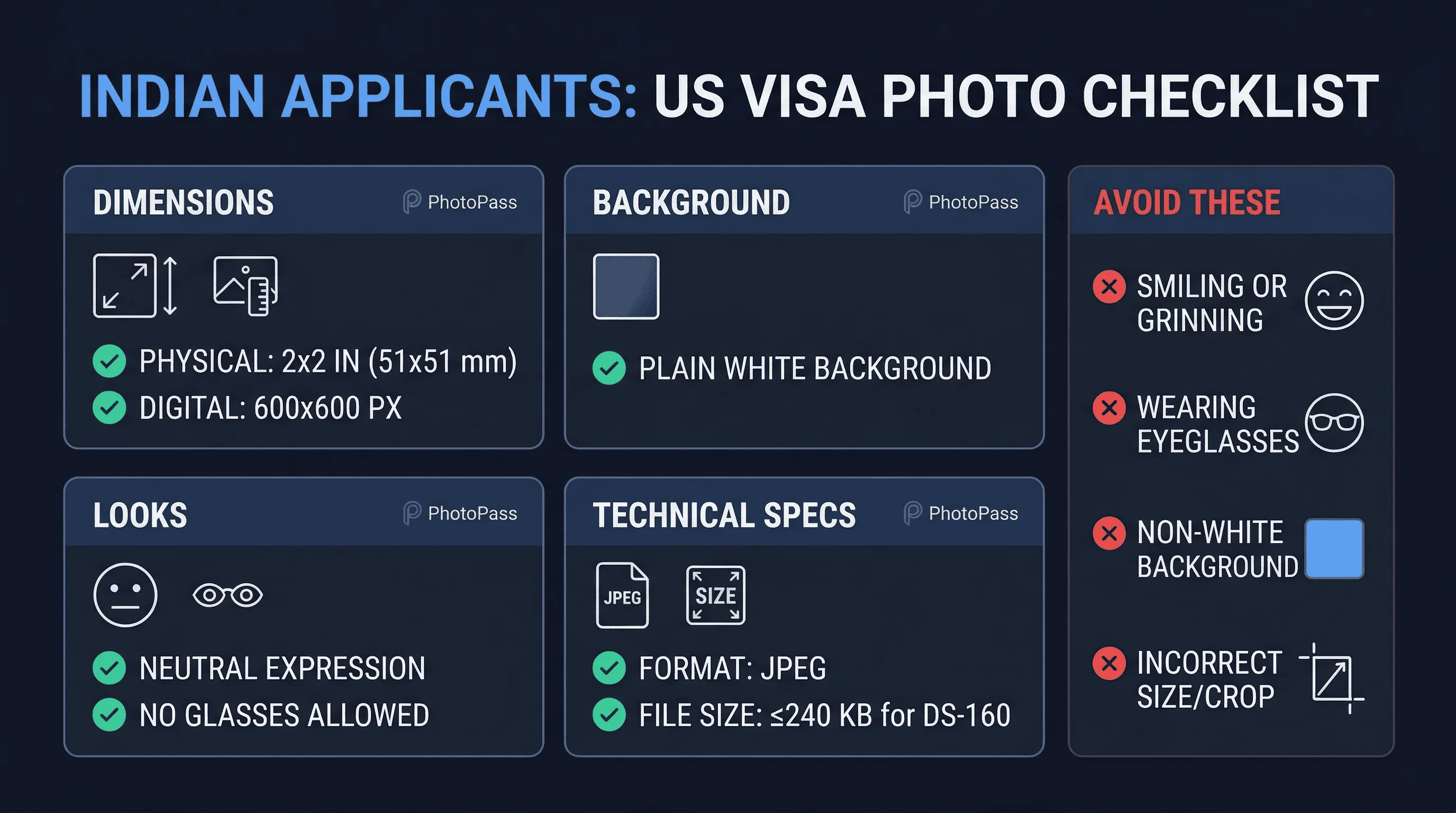
passportsize-photo.online creates US-compliant visa photos in minutes. Upload any photo, AI corrects it to meet exact State Department specifications, and you download a file ready for your DS-160. Use our passport photo checker to verify your photo meets all requirements before uploading.
Your visa photo is the first impression you make. Make it count.
Frequently Asked Questions About US Visa Rejection in India
What is the US visa rejection rate for India?
India's B1/B2 visa refusal rate averages 35-40%. This means approximately one in three applicants receives a 214(b) rejection. The rate varies by visa category, your home city, and the time of year. Mumbai and Delhi tend to have slightly lower rates than smaller consulates.
Can I Reapply After a 214(b) US Visa Rejection from India?
Yes. There's no mandatory waiting period. However, you should address the reasons for rejection before applying again. Strengthen your ties, improve your documentation, and prepare better for the interview. Many applicants who were rejected initially succeed on their second or third attempt.
Does Photo Quality Affect US Visa Approval for Indians?
Photo quality doesn't directly cause rejection at the interview stage, but it creates a first impression. More importantly, non-compliant photos get rejected by the DS-160 upload system, causing delays and forcing you to retake your photo before you can even schedule an interview.
How long does a US visa interview take in India?
The interview itself takes 2-5 minutes. The wait before it can be hours depending on the consulate and time of year. Arrive early at the designated time on your appointment letter. Bring all required documents organized in a clear folder.
What Should I Bring to a US Visa Interview in India?
Required documents include your passport, DS-160 confirmation page, interview appointment letter, and photo. Supporting documents include bank statements, employment letter, property documents, previous passports, and any US visa copies. Bring originals and copies. The officer may or may not ask to see them, but having them ready shows preparation.
Does a Previous US Visa Rejection Affect a New Application?
Previous rejections are noted in your file. They don't automatically disqualify you, but you need to address why your situation has changed. A new application should demonstrate stronger ties and clearer purpose than the previous one.
Can I Apply for Another Visa After B1/B2 Rejection?
You can apply for any visa category, but the 214(b) presumption applies to all non-immigrant visas. The key is demonstrating strong ties to India and clear non-immigrant intent for whatever category you're applying for.
Understanding the US Visa Interview Process in India
The US visa interview process in India involves several steps. After completing your DS-160 form and paying the fee, you schedule an appointment at the nearest US embassy or consulate. Locations include New Delhi, Mumbai, Chennai, Kolkata, and Hyderabad. Each location has its own processing times and interview availability.
On interview day, you'll wait in a queue, submit your biometrics, and then meet with a consular officer. The entire process can take half a day or longer. Arrive early. Bring only essential documents. Leave phones and other electronics at home or in your car.
The officer's decision happens at the window. If approved, you'll receive information about passport delivery. If rejected, you'll get a slip explaining the reason. The 214(b) rejection slip is the most common outcome. It doesn't mean your application is closed forever — it means you need to strengthen your case before trying again.