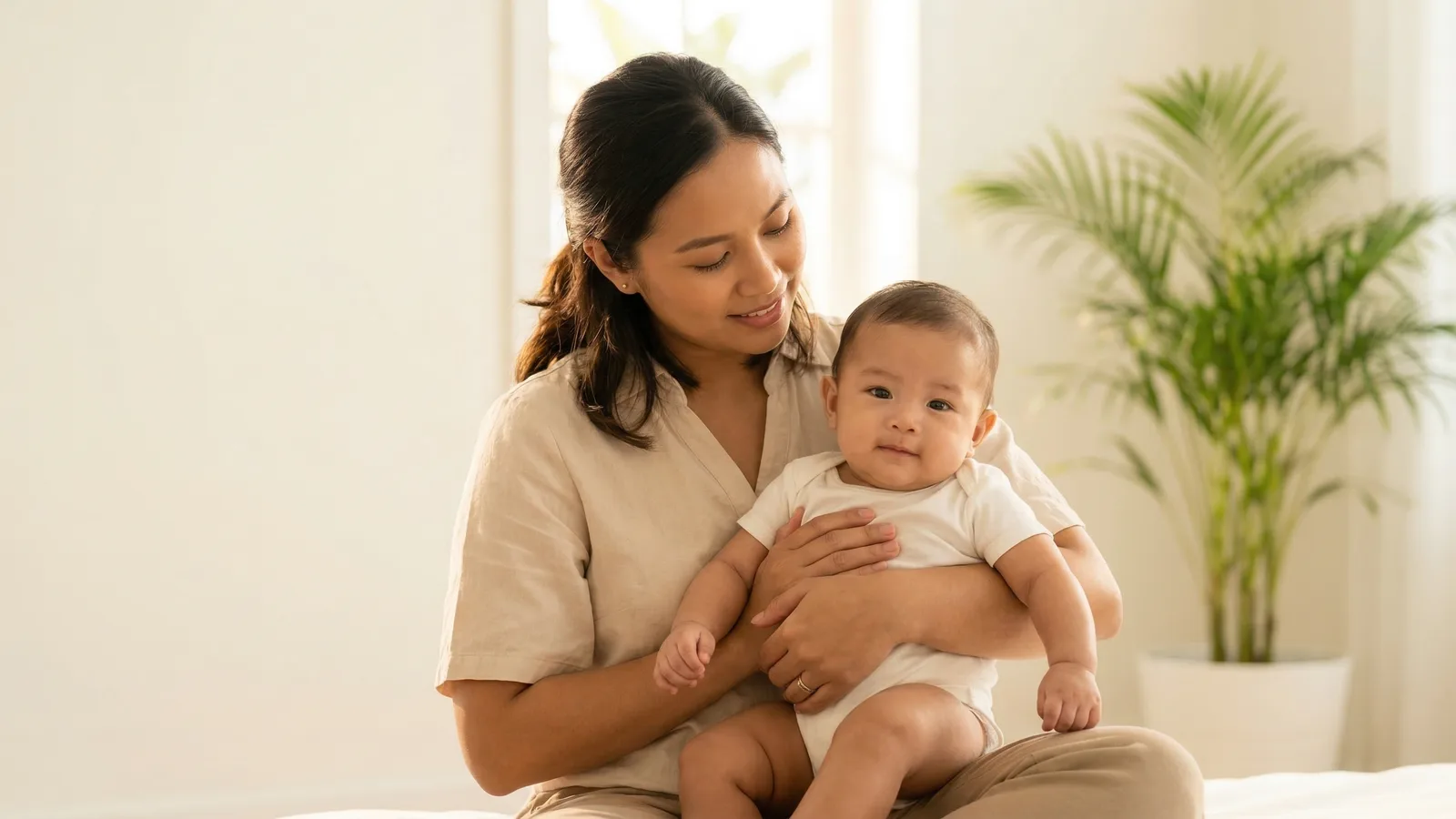
Getting a baby passport photo right in the Philippines involves navigating the same technical requirements as adult photos — 35×45mm with pure white background — while working with a subject who can't follow instructions. The DFA allows natural expressions for infants and young children, which makes the process significantly more manageable.
The Department of Foreign Affairs recognizes that newborns and toddlers cannot maintain the neutral expressions required of adults. This pragmatism acknowledges that a photo showing a baby's genuine expression is more useful than one where a crying infant has been forced into an unnatural "neutral" appearance.
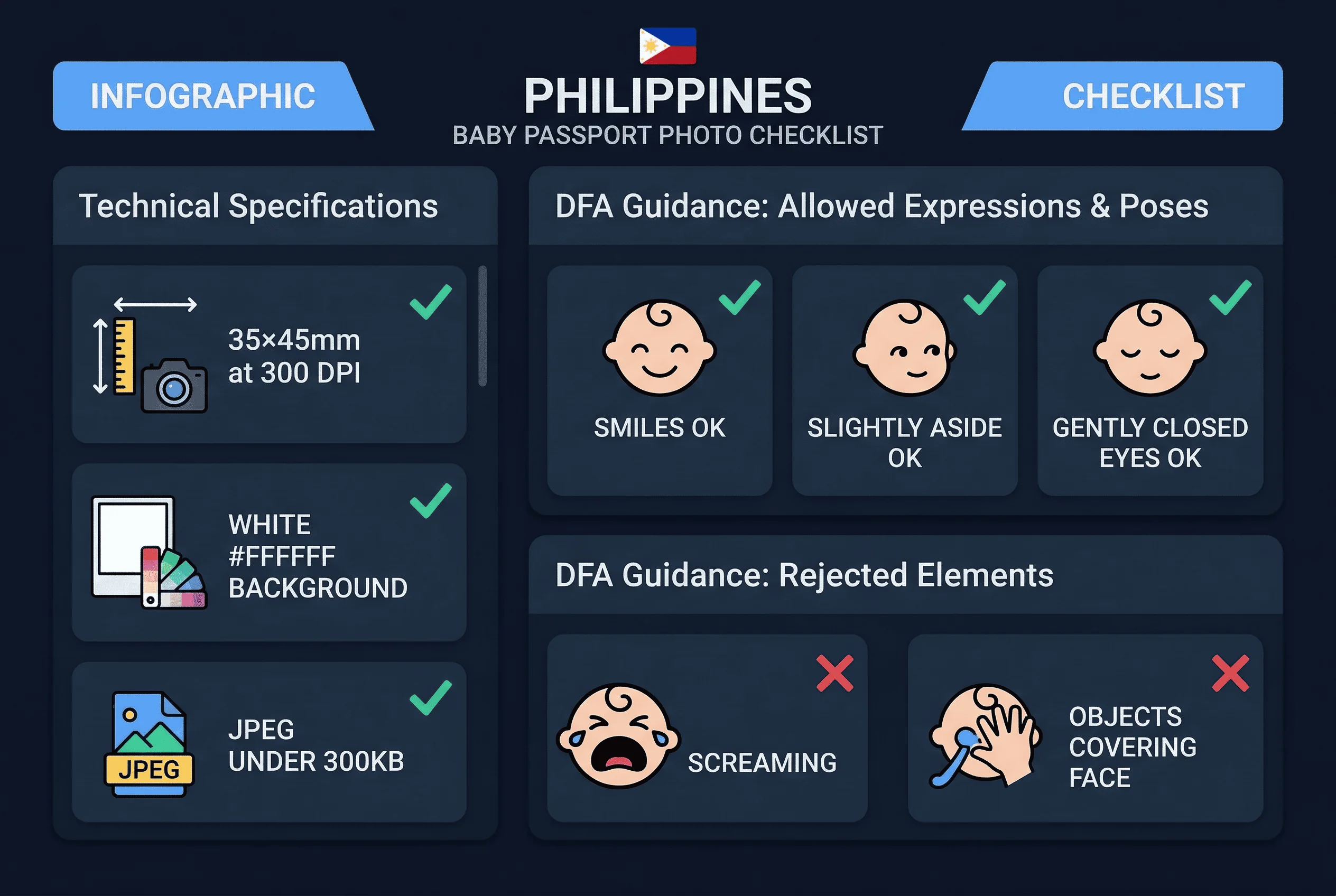
Philippine Baby Passport Photo Technical Specifications
Your baby's photo must meet these exact requirements:
| Specification | Requirement |
|---|---|
| Dimensions | 35×45mm |
| Resolution | 300 DPI minimum |
| Background | Pure white (#FFFFFF) |
| File Size | Under 300KB |
| Format | JPEG |
The challenge lies not in the specifications themselves, but in achieving them with an infant subject.
Get a compliant passport photo online
White Background Tips for Philippine Baby Passport Photos
Creating a compliant white backdrop with a baby requires planning:
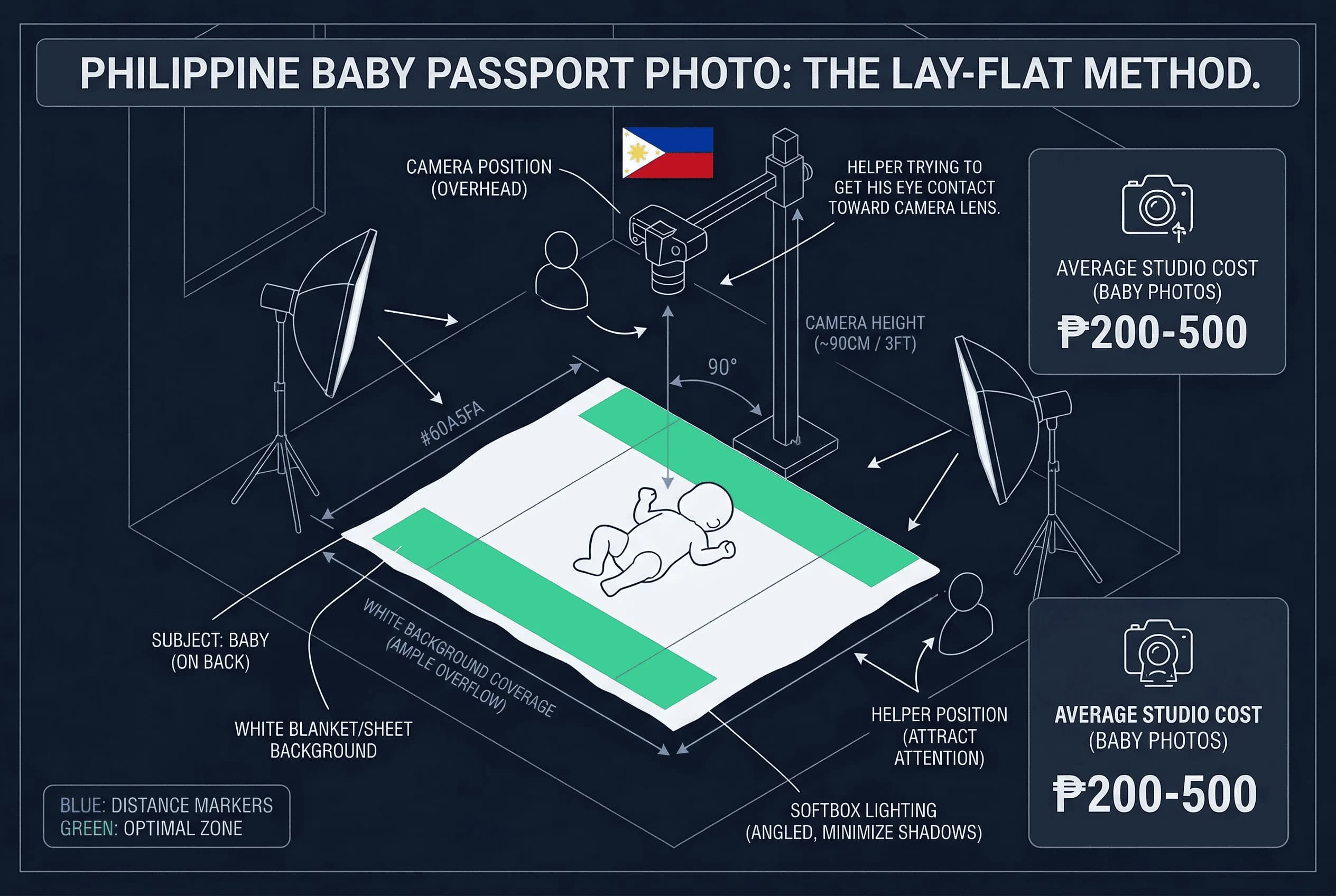
Lay baby on white. For newborns and pre-sitters, photograph them lying on a white blanket or bedsheet. This provides an even backdrop and keeps them comfortable. Ensure the white extends beyond the frame — any non-white showing at the edges causes rejection.
Use a white high chair or seat. Once your baby can sit, position them in a white or light-colored high chair. Cover any non-white parts with white fabric if needed.
Consider professional positioning. Many Filipino photographers specialize in baby passport photos. They have props, backdrops, and techniques specifically designed for infants.
DFA Expression Rules for Philippine Baby Passport Photos
The Philippines accepts natural expressions for children under a certain age:
- Smiles are acceptable
- Looking at the camera or slightly aside is fine
- Minor movement between shots is tolerated
- Eyes can be open or gently closed
However, certain expressions will likely cause rejection:
- Screaming with mouth fully open
- Eyes completely shut
- Extreme glances showing only one eye
- Hands, toys, or objects covering the face
Let your baby be themselves. If that means a slight smile, that's perfectly acceptable.
When to Schedule Your Philippine Baby Passport Photo
Success depends heavily on timing:
Schedule around naps. Photograph your baby when they're typically alert but not overtired. For most infants, this is 60-90 minutes after waking. A tired baby becomes fussy quickly, making a successful shot nearly impossible.
Feed first. A hungry baby is an unhappy baby. Feed your infant 20-30 minutes before the session. The food coma effect often produces calm subjects.
Have one person dedicated to entertaining. Whether it's making funny faces, playing peek-a-boo, or shaking a favorite toy, keep your baby engaged and looking toward the camera.
Accept multiple sessions. Don't pressure yourself to succeed in one attempt. Many parents take photos over several days, keeping only the best frame from each session.
Professional Philippine Baby Passport Photo Services
Filipino cities have numerous photographers experienced with baby passport photos:
DFA-accredited photo studios understand requirements thoroughly. They have proper backdrops, lighting, and patience. Expect to pay ₱300-800 for a session that produces multiple passport-ready images.
Mall photo services offer faster, cheaper options. These work if your baby is generally cooperative. Prices typically range ₱150-300.
Professional portrait studios (₱500-1,500) provide higher quality with more personalized service.
When booking, specify you need a passport photo for a baby. The photographer should understand the 35×45mm requirement and white background necessity.
DIY Tips for Taking Philippine Baby Passport Photos at Home
If photographing at home, these techniques improve results:
Natural window light provides the best results. Position your baby near a large window with indirect sunlight. Avoid direct sun, which creates harsh shadows.
Shoot from above. Photograph downwards onto a baby lying on a white surface. This is the easiest angle. Your phone or camera directly above captures the face clearly.
Use burst mode. Take dozens of shots in rapid succession. Delete the blurry ones immediately. With enough attempts, you'll capture usable frames.
Keep the white background in focus. Verify the white surface behind your baby is completely smooth and flat. Any folds, shadows, or creases will appear in the final image.
Common Philippine Baby Passport Photo Rejection Causes
Understanding what fails helps you avoid those mistakes:
Background issues. The number one problem. Shadows from the baby's head onto the background, or the baby's clothing showing colors other than white.
Incorrect size. Babies are small, making it easy to leave too much empty space around them. Crop carefully to achieve the 35×45mm aspect ratio.
Blurry from movement. Babies move constantly. Use fast shutter speeds and take many shots.
Unnatural forced expressions. If you try to make a crying baby look neutral, the result looks wrong. Accept natural expressions instead.
Head Position and Face Visibility for Philippine Baby Photos
The Philippines requires head height between 60-70% of the photo's vertical space. Achieving this with a baby requires attention:
- Ensure the entire head is visible with no cropping at hairline or chin
- Center the face within the frame
- Leave adequate shoulder room below the head
- Don't zoom in so tight that the head exceeds 70% of the frame
This is where professional help proves valuable. Experienced photographers know exactly how to position infants for compliant results.
Are Glasses Allowed in Philippine Baby Passport Photos?
The Philippines bans all glasses in passport photos, including for babies. If your infant wears prescription glasses, remove them before taking the photo.
Where to Get Baby Passport Photos in the Philippines
DFA (Department of Foreign Affairs) offices. Photo services at DFA offices in Manila, Cebu, Davao, and other cities. Staff understand requirements.
Professional photo studios. Studios near DFA offices. Cost: ₱100–300.
SM/Robinsons mall photo services. Photo services in major malls. Cost: ₱100–200.
DIY at home. Lay baby on white blanket, shoot from above, 20–30 shots in burst mode.
DFA Passport Application Process for Filipino Babies
Apply through the DFA online appointment system. Both parents must consent. You'll need the baby's PSA birth certificate and parents' identification. The same 35×45mm white-background photo is required.
Philippine passports for children are valid for 5 years. Each renewal requires a new photo.
Philippine Baby Passport Photos for OFW Families Abroad
If applying from abroad, the same photo rules apply. Philippine embassies and consulates in Riyadh, Dubai, Hong Kong, Singapore, Tokyo, and Los Angeles follow DFA requirements. Studios abroad may be unfamiliar with Philippine passport requirements — specify "Philippine baby passport photo, 35×45mm, white background, no glasses." Many OFW families apply at consulates — call ahead to confirm photo services are available on-site.
Age-Specific Tips for Philippine Baby Passport Photos
Newborns (0–3 months). Lay on white surface. Eyes open preferred.
Infants (3–12 months). Helper holds attention with toy. Burst mode. Plan 10–15 minutes.
Toddlers (1–3 years). Most challenging. Use car seat or high chair.
Quick Checklist for Philippine Baby Passport Photos
- Photo is 35×45mm
- Background is pure white
- No glasses
- Natural expression acceptable for babies
- Eyes preferably open
- Face centred
- No hands visible
- 300 DPI minimum
Verify your baby's photo with the passportsize-photo.online checker. For size details, see Philippine passport photo size guide. View all Philippine passport photo rules on the Philippines hub.