Passport photos, ID photos, and visa photos all require a front-facing headshot, but they differ in size, background requirements, and submission format. Using the wrong type for your application will result in rejection. These are three distinct document types with different specifications.
Understanding which photo you need prevents wasted time and money. Each document type serves a different purpose and has specific requirements. Getting them confused is one of the more common mistakes people make when applying for travel documents.
This guide explains the differences so you always use the right photo for your specific application.
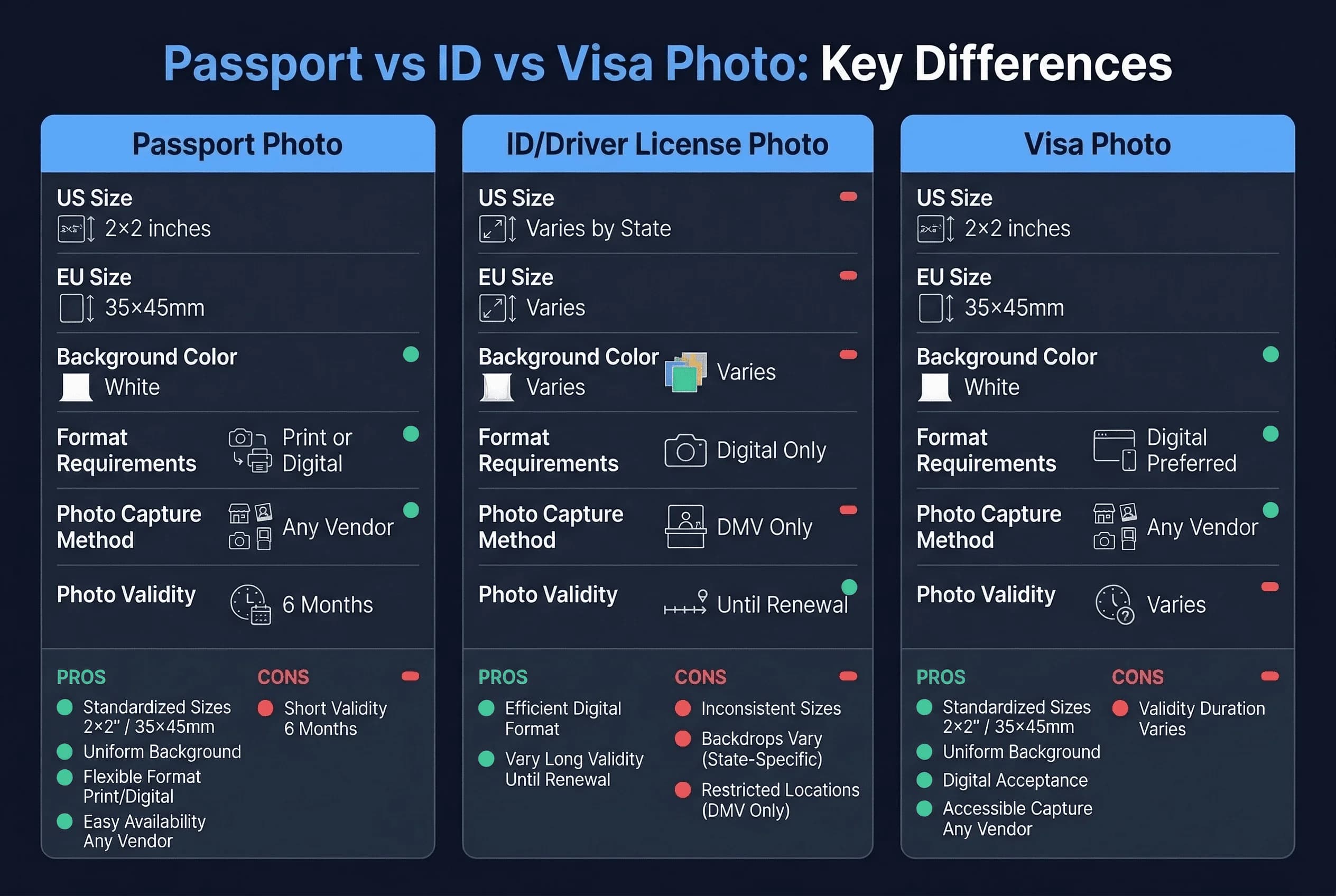
Passport Photo vs ID Photo vs Visa Photo: Side-by-Side
| Feature | Passport Photo | Driver's License Photo | Visa Photo |
|---|---|---|---|
| US Size | 2×2 inches | Varies by state | 2×2 inches |
| EU Size | 35×45mm | Varies by country | 35×45mm |
| Background | White | Varies | White |
| Format | Print or digital | Digital only | Digital preferred |
| Who takes it | Any vendor | DMV only | Any vendor |
| Validity | 6 months (US) | Until renewal | Varies by visa |
Get a compliant passport photo online
Passport Photo Requirements and Standards
Passport photos are the most strictly regulated. They must meet international ICAO standards for machine-readable passports, plus country-specific requirements. These standards exist to ensure passports can be verified by automated systems worldwide.
In the US, passport photos must be 2×2 inches with the face centered and eyes at specific heights. The background must be plain white. You can take them at retail stores, post offices, or yourself at home, as long as the final image meets all specifications.
In most European countries and many others, the standard is 35×45mm (roughly 1.4×1.8 inches). The background requirements are similar — white or light gray. European countries tend to follow ICAO guidelines more closely than the US does.
Passport photos are valid for 6 months in the US and many other countries. Some countries don't enforce a strict expiration but require the photo to represent your current appearance. The practical rule is: if your appearance has changed significantly, get a new photo.
You need a passport photo when applying for or renewing a passport, regardless of the country. This is the most common travel document photo.
ID Photo Requirements: How They Differ from Passport Photos
ID photos typically refer to driver's license or state ID photos. These are handled differently than passport photos in almost every way.
In the US, you cannot take your own driver's license photo. You must visit your state's DMV in person. The photo is taken there and stored in the state's system. There's no DIY option for driver's license photos.
Size requirements for ID photos vary significantly by state. Some states use the same 2×2 format as passports; others use different dimensions. California, for example, uses different dimensions than Texas. There's no national standard within the US.
Background requirements also vary. Some states use white; others use blue or gray. Some have specific requirements about lighting and positioning that differ from passport standards.
International driver's licenses may require photos that meet different standards. If you're getting an international driving permit, check the specific requirements for the countries you'll be driving in.
One key difference: driver's license photos don't expire. Your photo stays on file until you renew, which might be years later. This is why license photos sometimes look outdated compared to your current appearance. There's no six-month rule for ID photos like there is for passports.
Visa Photo Requirements: How They Differ from Passport Photos
Visa photos often use the same dimensions as passport photos for the destination country, but there are important differences. A visa is permission to enter a country, not a travel document itself. It has its own requirements.
US visa photos (for DS-160 forms) must be 2×2 inches, exactly like passport photos. The requirements are nearly identical, and the same photo can often serve both purposes if taken correctly. Many people use the same photo for their passport renewal and a US visa application.
Schengen visa photos typically use the 35×45mm European standard, matching most EU passport photos. If you're applying for a Schengen visa, use the same photo you'd use for a European passport.
Many visa applications now require digital submission rather than printed photos. The file size, dimensions, and format requirements are more specific for digital uploads. This is especially true for online visa applications.
Some countries distinguish between visa photos for tourist visas versus work or student visas, though the photo requirements are usually the same. Always check the specific requirements for your visa type.
Visa validity varies significantly. Some visas require photos within a specific timeframe; others are more flexible. Check the requirements for your specific visa category.
When Do You Need a Passport Photo vs an ID or Visa Photo?
You'll need a passport photo when applying for or renewing a passport, regardless of the country. This is your primary travel identification document.
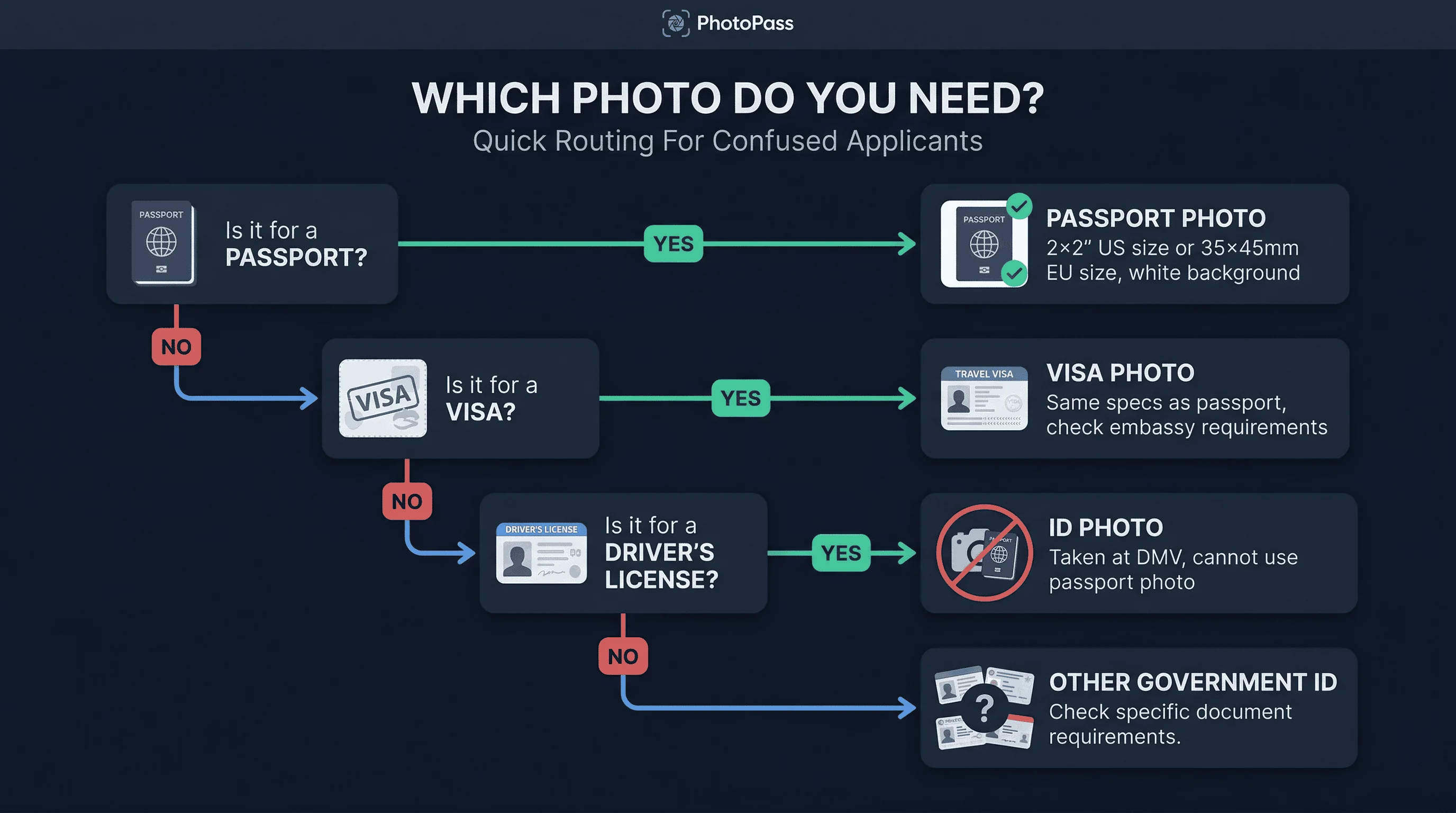
You'll need an ID photo when getting or renewing a driver's license, state ID, or national ID card. These are only available at government facilities. You cannot get an ID photo anywhere else.
You'll need a visa photo when applying for a travel visa, work permit, student visa, or residency permit. These can often be taken at the same places as passport photos, but verify the specific requirements for your visa type.
The confusion usually arises when people apply for multiple documents at once. If you're applying for a passport and a visa simultaneously, you might need two different photos if the requirements differ.
Passport, ID, and Visa Photo Size Differences Explained
The size differences matter more than most people realize. A 2×2 inch photo (US standard) is square. A 35×45mm photo (European standard) is rectangular. The difference seems small but can matter if you're not careful.
For US documents, stick with 2×2 inches. For most European and Asian documents, use 35×45mm. These are the two most common standards.
If you're unsure, check the specific requirements for your document. Don't assume — the wrong size gets rejected immediately.
Print vs Digital Format Differences Across Photo Types
Passport photos can be printed or digital, depending on the application method. Many countries now accept digital submissions for passport applications.
ID photos are almost always digital. They're stored in government databases and printed on the ID card. You never receive a printout.
Visa photos are increasingly digital-only. Many countries require you to upload the photo as part of the online application process. Check the file format requirements carefully.
Practical Advice for Managing Multiple Photo Types
Keep digital copies of your passport-style photo. Store them in a format that allows you to resize for different countries without losing quality. A high-resolution original can be resized for any standard.
When in doubt, use a professional service. They understand the requirements for different document types and can ensure your photo meets the right specifications.
For US visa photo requirements, there's a separate guide that covers the specific differences from passport photos.
For DS-160 photo requirements, the online visa application has specific technical specifications beyond just dimensions. These include file size limits, format requirements, and sometimes specific pose requirements.
Check the official requirements page to confirm exactly which photo type you need for your specific application. For US applications, see our country-specific guide.
Understanding the differences between these photo types ensures you always submit the right one. A few minutes of research prevents delays and frustration.