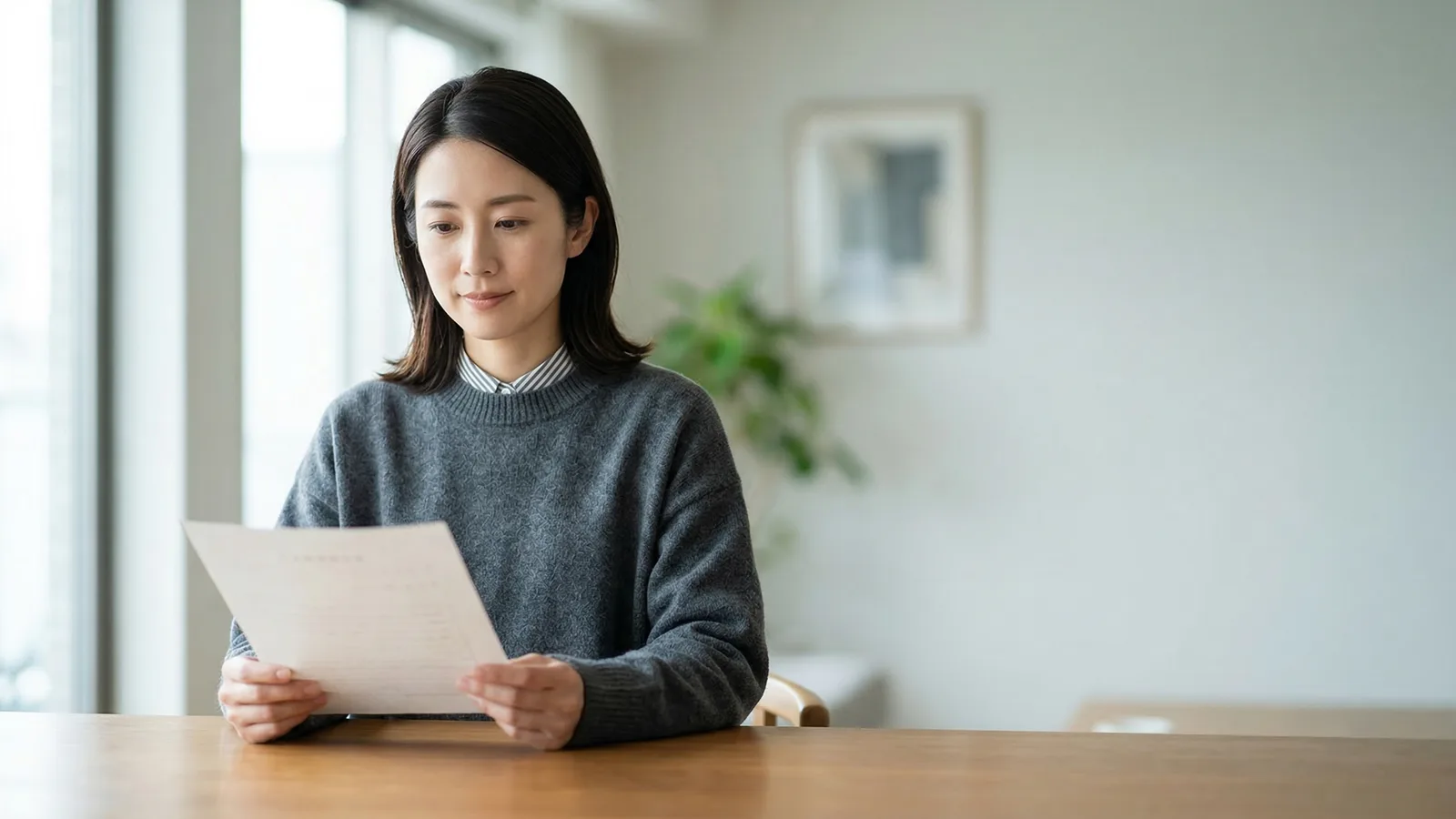
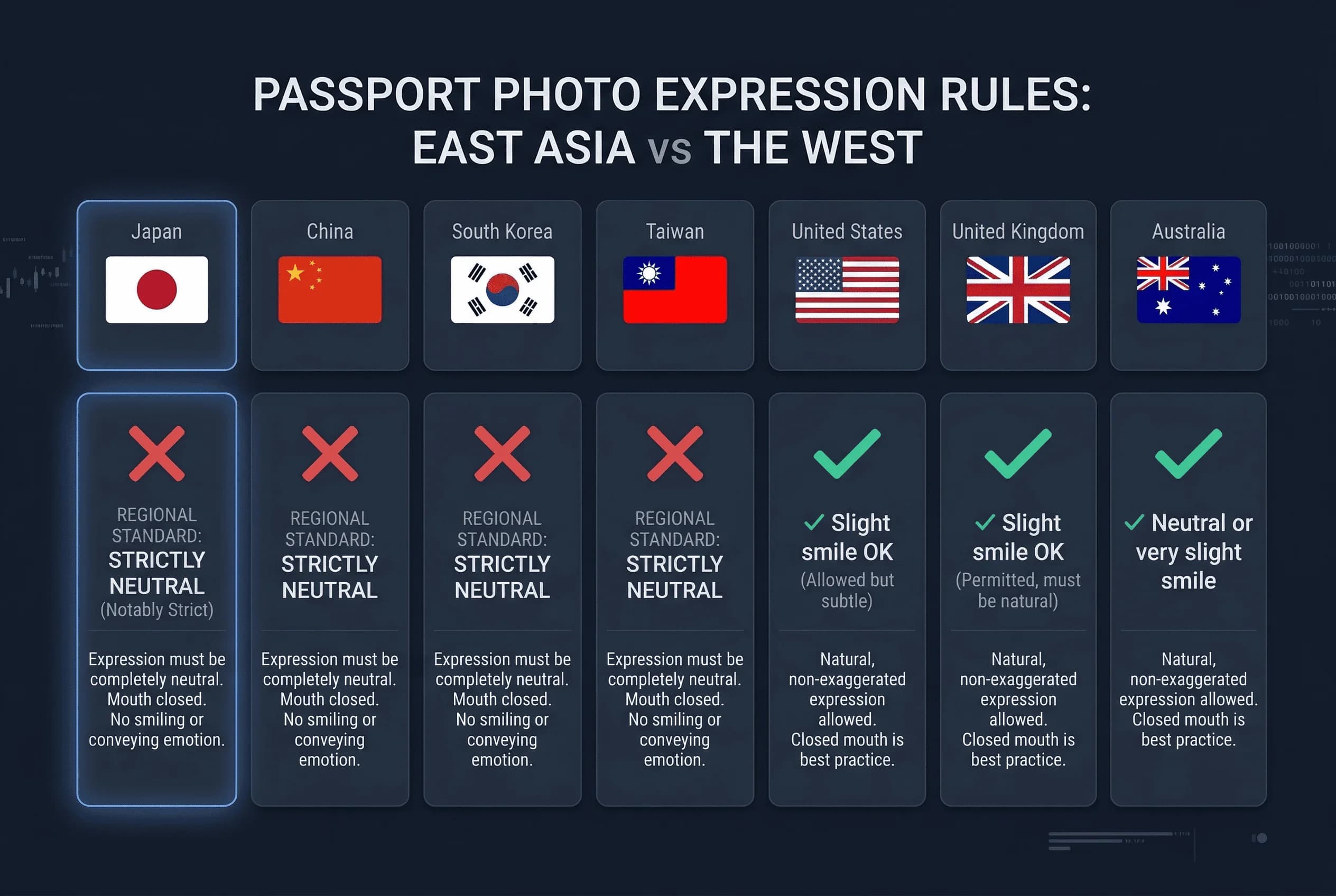
Japan does NOT allow smiling in passport photos. Your expression must be strictly neutral — mouth closed, no hint of a smile. Japan is one of the strictest countries globally when it comes to facial expression in passport photos.
This rule aligns with most countries worldwide. The US is one of the few that allows a slight natural smile. The UK, Australia, France, Germany, and virtually all of Europe and Asia require neutral expression like Japan.
What Does Strictly Neutral Mean for Japanese Passport Photos?
Japan's neutral expression requirement is precisely defined:
- Mouth completely closed
- Teeth not visible
- Corners of mouth not raised
- Lips touching lightly, not pressed together
- Relaxed facial muscles
- Eyes open and focused
Any deviation from this creates a mismatch with the biometric template. Japanese facial recognition systems expect a neutral baseline. Smiling creates discrepancies that cause verification failures.
Get a compliant passport photo online
Why Japan Enforces Neutral Expression So Strictly
Japan was an early adopter of biometric passports. Their facial recognition system was designed around neutral expression templates. The technology expects a consistent baseline.
Additionally, Japan's high population density creates enormous verification demands. The system needs fast, accurate matching. Strict expression requirements reduce false positives and matching errors.
Japanese Smile Rules Compared to Other Countries
Most countries now require neutral expression. This includes:
- Japan: Strictly neutral, no smile — among the strictest enforcement
- China: Neutral, no smile
- South Korea: Neutral, no smile
- Australia: Neutral, no smile
- UK: Neutral, no smile
- France: Neutral, no smile
- Germany: Neutral, no smile
- India: Neutral, no smile
- Brazil: Neutral, no smile
- Canada: Neutral, no smile
The United States is the notable exception — it allows a slight natural smile with mouth closed. This makes the US unusual, not Japan.
If you hold dual citizenship or travel frequently between countries, keeping a neutral expression in all passport photos is the safest approach. A neutral photo satisfies every country's requirements. A smiling photo only satisfies the US and a handful of others.
Tips for a Natural Neutral Japanese Passport Photo
Getting a genuinely neutral expression is harder than it sounds. Most people either over-correct (creating a tense, unhappy look) or under-correct (leaving a subtle smile).
Relax your face completely. The mistake many people make is forcing neutral. This creates tension around the jaw and eyes. Instead, think "resting face" — how your face looks when you're reading a book or watching something without reacting.
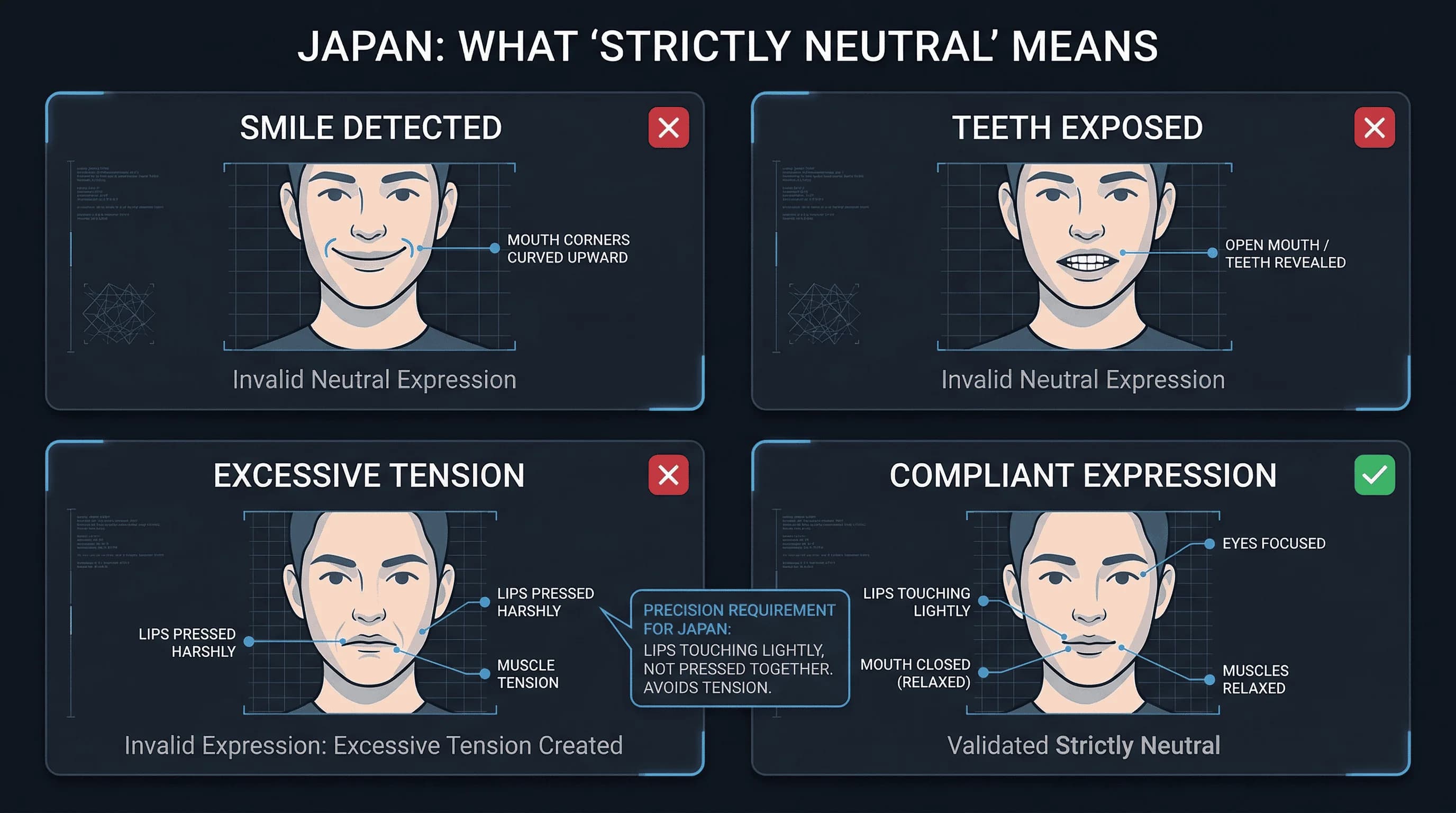
Press your lips together lightly. Not hard. Just enough to close your mouth. Pressing too hard creates an unhappy or tense expression.
Look at the lens. Focus on the camera lens itself, not the screen or viewfinder. This creates a more natural connection.
Take many shots. Your face changes with every breath. Take 15-20 photos. Review each for any trace of a smile.
Common Expression Mistakes in Japanese Passport Photos
The polite smile — When asked to look at the camera, people instinctively smile politely. This fails. Remind yourself: no smile allowed.
Laughing eyes — Even with a closed mouth, crinkled eyes suggest happiness. Keep your eye area relaxed.
Uneven mouth — One corner higher than the other reads as a partial smile. Ensure your mouth is level.
Teeth showing — Some people's teeth show slightly when their lips close. Press your lips firmly over your teeth.
Over-corrected frown — Trying so hard not to smile that you end up looking angry or sad. This is also problematic. Aim for relaxed, not forced.
Chin tension — Pressing your mouth closed too hard creates a dimpled chin or visible jaw tension. The muscles around your chin should be soft.
How Smiling Affects Japanese Passport Facial Recognition
Japanese passport photos must match future verification attempts. When you use your passport at automated gates, the system compares your photo to your live face.
Any expression difference reduces accuracy. A smiling passport photo makes it harder for the system to match you when you're not smiling. This creates practical problems beyond simple rejection — it can slow you down at immigration every time you travel.
Japan's automated gates at Narita, Haneda, Kansai, Chubu Centrair, and other international airports use facial recognition for both Japanese nationals and certain foreign travellers. The system was calibrated for neutral faces. A smiling photo creates a persistent mismatch that cannot be corrected until your next passport renewal. Given that Japanese passports are valid for 5 or 10 years, getting the expression right at the start saves years of potential friction at border control.
What Happens If Japan Rejects Your Photo for Smiling?
If your photo is rejected for expression, you'll need to retake it. This delays your application. The rejection notice from the Ministry of Foreign Affairs (外務省) won't always specify "smile" as the exact reason — it may simply say the photo doesn't meet requirements.
Common rejection triggers related to expression:
- Visible teeth
- Raised mouth corners
- Crinkled eyes ("smiling eyes")
- Visible facial tension from trying too hard to look neutral
- Asymmetric mouth positioning
How to Prepare for a Japanese Passport Photo Expression
Before taking your Japanese passport photo:
- Practice your neutral face in a mirror. Relax your jaw, let your lips close naturally, and breathe out slowly.
- Don't think about something funny. This sounds obvious, but when you're aware of the camera, your face instinctively wants to smile.
- Focus on a point behind the camera. A fixed stare at the lens creates a more naturally neutral expression than looking around.
- Take 15–20 shots. Review each one zoomed in. Even subtle mouth corner raises that look fine on a phone screen will be caught.
Japanese Passport Photo Specifications Summary
For the complete picture, Japan's passport photo requires:
- Size: 35×45mm (413×531 pixels at 300 DPI)
- Background: White (#FFFFFF)
- Expression: Strictly neutral — no smile
- Glasses: Not allowed
- Head height: 70–80% of frame
- Recency: Taken within 6 months
The expression rule works together with the glasses ban and white background requirement. All three serve the same purpose: giving the facial recognition system the clearest possible baseline image.
Japanese Passport Photo Smile Rules for Children and Infants
Even babies and young children must have neutral expressions in Japanese passport photos. This is notoriously difficult — infants don't take direction.
For babies: capture the shot during a calm, alert moment when the baby is looking forward without crying or smiling. Multiple attempts are normal. Japanese consulate staff are generally understanding about infant photos, but the expression rule technically still applies.
For more on children's passport photos, see our Japan baby passport photo guide. Patience and timing are essential — don't rush the process.
Quick Checklist for Japanese Passport Photo Expression
- Mouth completely closed
- No teeth visible
- Corners of mouth level (not raised)
- Eyes open and relaxed (no "laughing eyes")
- Face muscles relaxed (no visible tension)
- No glasses
- White background, no shadows
Verify your expression with the passportsize-photo.online checker. For complete Japan passport details, see the Japan requirements hub. For size specifications, see the Japan passport photo size guide.