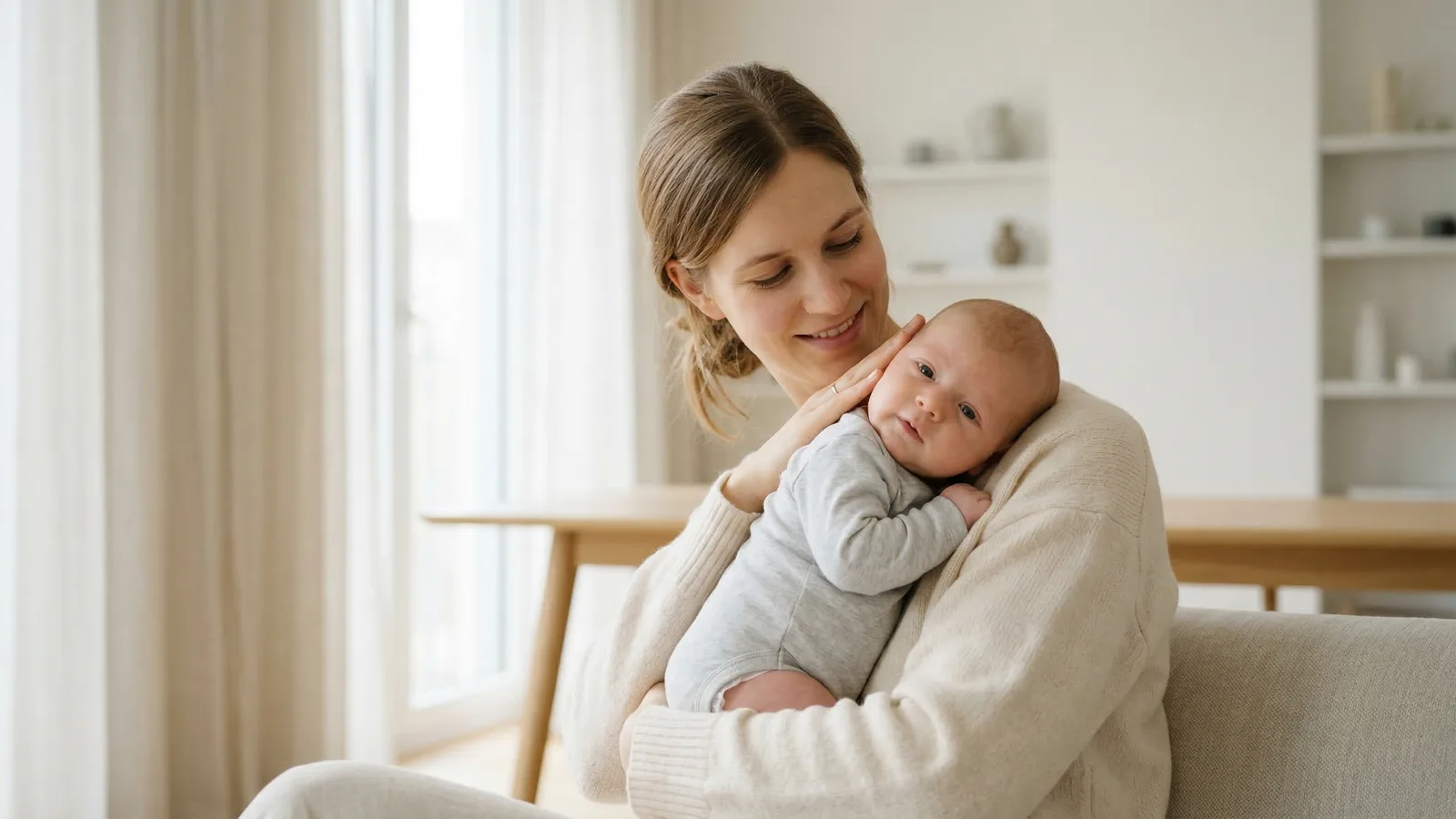
Babies need German passports too. The requirements are similar to adults: 35×45mm at 300 DPI, light grey background, and eyes visible. But getting a newborn to cooperate requires strategy.
Here's what you need to know about German baby passport photos.
Technical Requirements for German Baby Passport Photos
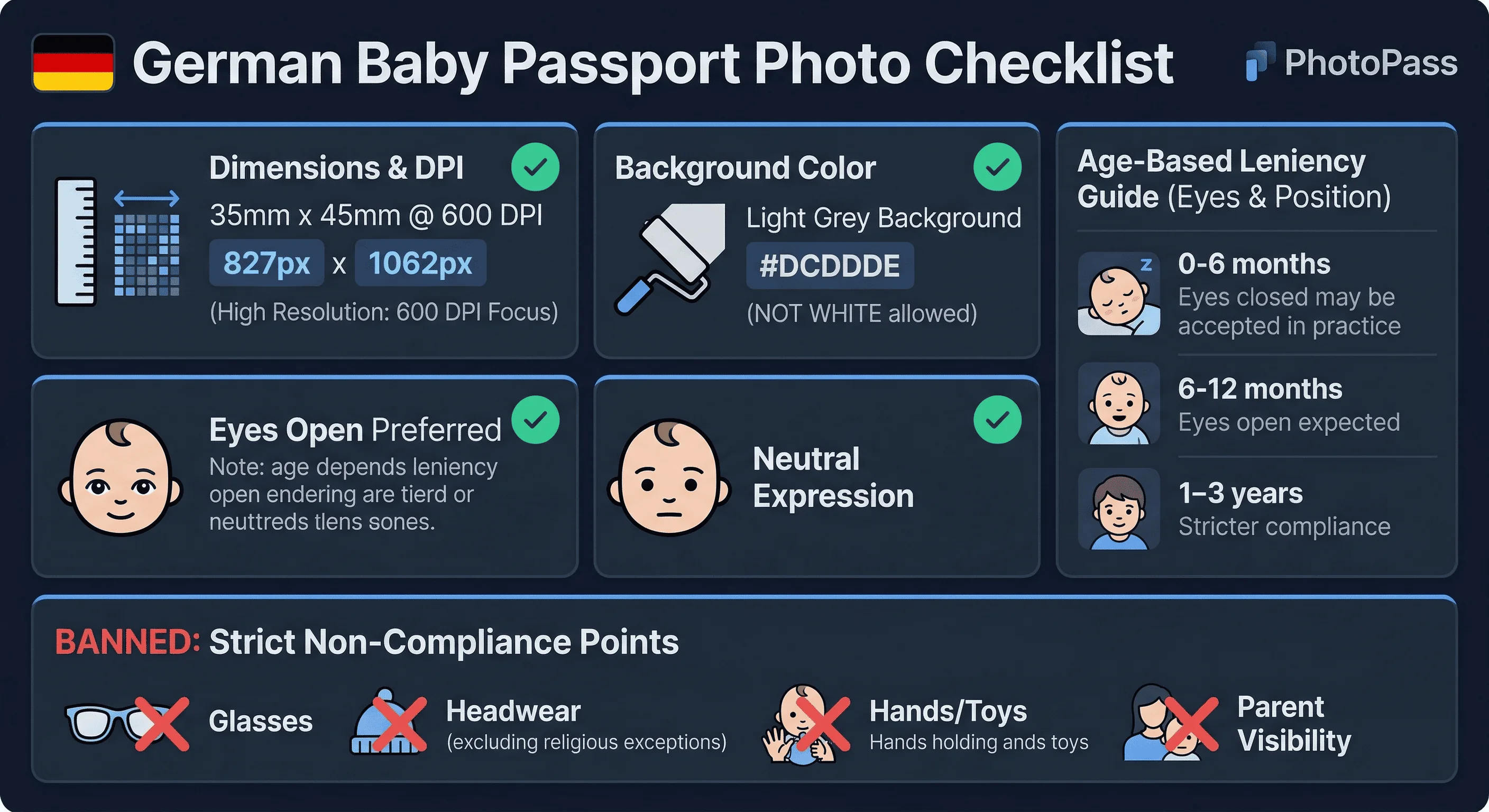
- Size: 35mm × 45mm (413×531 pixels at 300 DPI)
- Background: Light grey (#E6E6E6 / 230,230,230 RGB)
- Eyes: Open and visible
- Expression: Neutral (see below)
The background is critical: Germany requires light grey, not white. This differs from most other countries.
Get a compliant passport photo online
Expression Flexibility for Babies in German Photos
Germany has standard requirements, but some leniency exists for babies.
Newborns (0-6 months): Eyes closed may be accepted in practice, but the system prefers eyes open.
Infants (6-12 months): Eyes open is expected.
Toddlers (1-3 years): More strict. Eyes should be open, neutral expression.
The rule of thumb: do your best. German systems are somewhat understanding about infants, but don't rely on leniency.
How to Take a German Baby Passport Photo
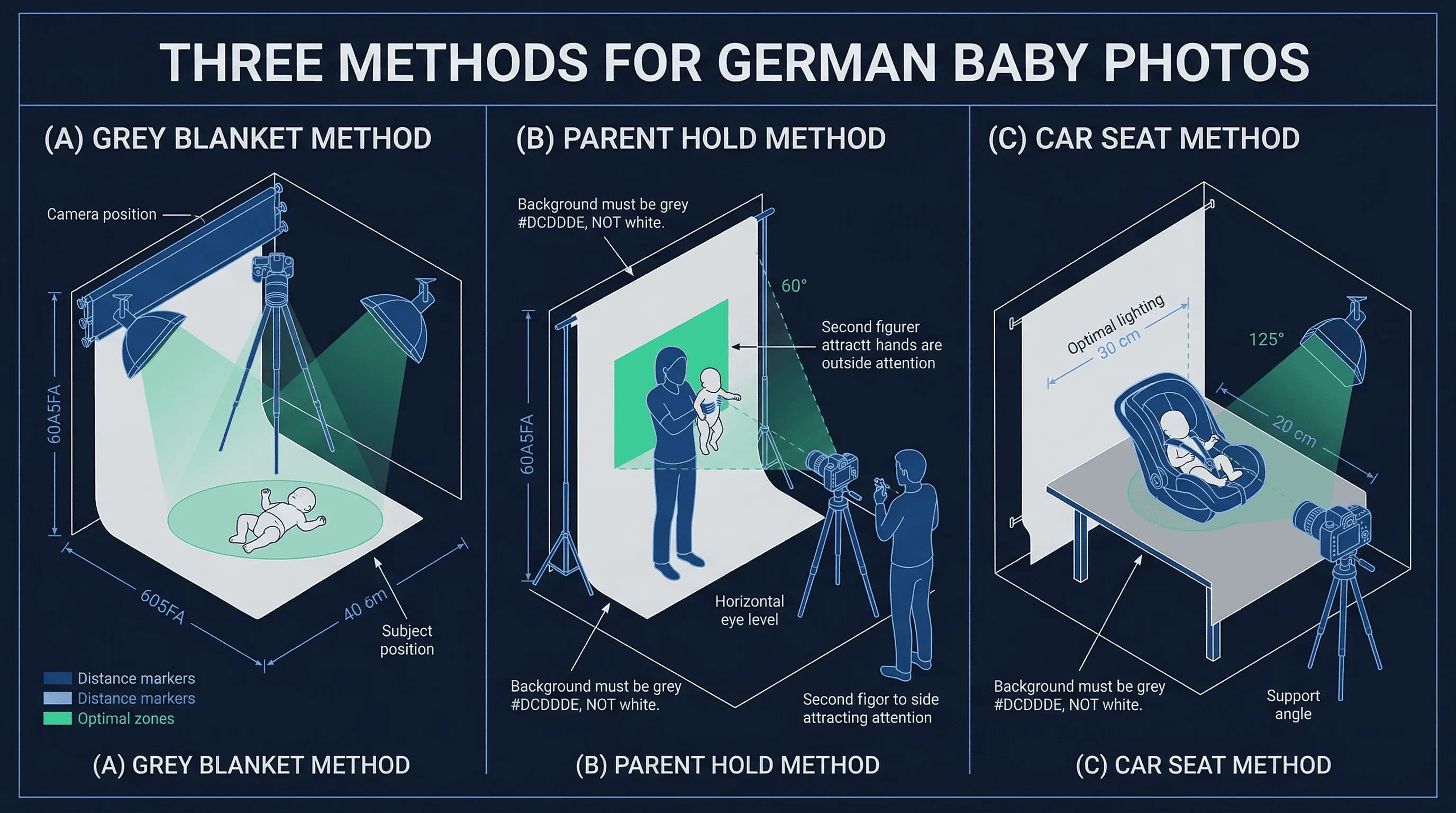
The Grey Blanket Method for Baby Photos
- Lay a light grey blanket on a flat surface (floor or bed)
- Place baby on their back
- Pull the blanket taut beneath baby's chin to extend the grey background behind the head
- Shoot from directly above
- Ensure no shadows
This creates a clean, consistent grey background. Works great for newborns.
The Parent Hold Method for Baby Photos
- Parent wears neutral colors (not white)
- Holds baby at arm's length against a grey background
- Parent's hands completely outside the frame
- Second person attracts baby's attention
- Capture when baby looks at camera
Requires coordination. Practice first.
The Car Seat Method for Baby Photos
- Place car seat on a grey surface
- Remove bright toys or clothing
- Have someone attract baby's attention
- Shoot from front angle
- Ensure grey extends behind baby
The car seat provides support. The surface beneath provides the background.
Country-Specific Tips for German Baby Passport Photos
Light Grey Background Is Mandatory (Not White)
This is the biggest mistake German parents make. White backgrounds are rejected. You must use light grey (#E6E6E6 / 230,230,230 RGB).
300 DPI Minimum Resolution Required
Germany requires at least 300 DPI. Higher resolution is always acceptable and recommended for sharper images. Make sure any service you use produces at least 300 DPI. If resizing yourself, verify your editor's DPI setting.
Head Size Must Be 70–80% of the Frame
Germany requires head height of 70-80% of frame. That's higher than most countries (typically 50-70%).
Your baby's face should fill more of the photo than in other countries.
Prescription Glasses Rules for Baby Photos
If your older baby/toddler wears prescription glasses, German rules apply: prescription glasses are allowed (no glare). This is more permissive than many countries.
Neutral Expression Required for German Babies
No smiling. A neutral or slightly pleasant expression is ideal. A full smile gets flagged.
Common German Baby Passport Photo Rejection Reasons
Wrong Background Color (White Instead of Grey)
Light grey only. White is rejected. This is the #1 cause of German baby photo rejection.
Low Resolution Below 300 DPI
Using too low a DPI. Ensure at least 300 DPI minimum.
Eyes Closed in the Baby's Photo
Less strict for newborns, but eyes open is preferred.
Parent's Hand Visible in the Frame
When holding baby, ensure hands are completely outside the frame.
Shadows on Face or Background
Uneven lighting creates shadows. Use soft, even lighting.
Baby Not Centered in the Frame
Face should be centered with appropriate head size (70-80% of frame).
Timing Your Baby's German Passport Photo Session
For best results:
- Newborns: Best during quiet alert periods
- 3-6 months: Can hold head better, easier to position
- 6-12 months: More active, may need more attempts
- 12+ months: Can follow objects, easier to get eye contact
Younger babies are easier to position but harder to get eyes open. Older babies are the opposite.
Practical Tips for German Baby Passport Photos
Multiple attempts are normal. Take 15-20 photos. Most will have issues.
Natural light is best. Window light produces soft, even illumination.
Turn off flash. Flash Startles babies and causes red-eye.
Grey background, not white. This is critical for Germany.
Dress in plain, dark colours. Dark reds, blues, and greens contrast well against the grey background. Avoid white or light clothing that blends in. Avoid busy patterns.
Remove hats and headbands. These cover the head and are not allowed in passport photos.
Camera Settings for DIY German Baby Passport Photos
Use burst mode (continuous shooting) to capture multiple frames quickly. A shutter speed of 1/200 or faster prevents motion blur from sudden head turns. ISO 400–800 is acceptable indoors if it means a faster shutter speed. Focus on the baby's nearest eye — autofocus on the nearest eye produces the sharpest result. Natural window light provides the softest, most even illumination for baby photos without the harsh shadows that overhead room lighting creates.
Clothing for German Baby Passport Photos
Dress your baby in dark, solid colours that contrast with the light grey background. Dark blue, dark red, dark green, and brown all work well. Avoid grey clothing (it blends with the background), white clothing, and busy patterns. Remove all accessories: bows, headbands, hats, and sunglasses.
What If Your German Baby Passport Photo Keeps Being Rejected?
-
Try again. Babies change quickly. A retake a week later often works.
-
Use a professional. Photostudios and Drogeriemärkte have experience with German passport photos.
-
Wait until baby is older. If nothing else works, waiting can help.
-
Check the DPI. 300 DPI minimum.
Final Checklist for German Baby Passport Photos
Before submitting:
- Background is light grey (#DCDDDE)
- DPI is at least 300
- Baby's eyes are open
- Face is centered
- Head size is 70-80% of frame
- No shadows on face or background
- No parent hands visible
- No hats or headbands
- Neutral expression (no smile)
Where to Get Baby Passport Photos in Germany
Professional photo studios (Fotostudio). Studios in every city. Staff understand the grey background and DPI requirements. Cost: €8–20. Ask for "Passfoto für Baby, 35×45mm, hellgrauer Hintergrund" (baby passport photo, 35×45mm, light grey background).
dm, Rossmann, Müller. Drugstore chains with photo services at many locations. dm's Passbild service is popular and affordable. Cost: €6–12.
Photo booths (Fotoautomat / Passbild-Automat). Available at Bürgeramt offices and shopping centres. Not recommended for babies — automatic face detection is designed for adults.
DIY at home. Use a grey blanket or grey card as backdrop. Natural window light works best. Shoot from directly above for newborns.
German Passport Application Requirements for Babies
Applications are submitted at the Bürgeramt (citizens' office) or Einwohnermeldeamt (residents' registration office). Both parents must consent. You'll need the baby's Geburtsurkunde (birth certificate) and both parents' Personalausweis or Reisepass.
German passports for children under 12 are valid for 6 years. The Kinderreisepass (children's travel document) is valid for 1 year and has different photo requirements. Ensure you know which document you need.
German Baby Passport Photos for Citizens Abroad
If applying from abroad, the same photo rules apply. German embassies and consulates worldwide follow the same grey-background and DPI requirements.
Verify your baby's photo with the passportsize-photo.online checker. For size details, see German passport photo size guide. View all German passport photo rules on the Germany hub.