DV lottery photos must be exactly 600×600 pixels in JPEG format, with a maximum file size of 240KB. The photo must have been taken within the last six months. These aren't suggestions — getting any of these wrong means automatic disqualification with no second chances.
The Diversity Visa (DV) lottery program makes 55,000 immigrant visas available annually to people from countries with low immigration rates to the United States. Each year, millions enter the lottery. Thousands lose their chance due to non-compliant photos. Unlike other immigration processes that might grant do-overs, the DV lottery provides one shot.
If you're entering from the US or planning to immigrate there, understanding US passport photo requirements helps contextualize DV photo rules alongside other document needs.
The Stakes: Why DV Lottery Photo Compliance Matters
The DV lottery operates on strict numerical limits. Each region has a maximum number of visas available. Once those visas are allocated, the program closes for that year.
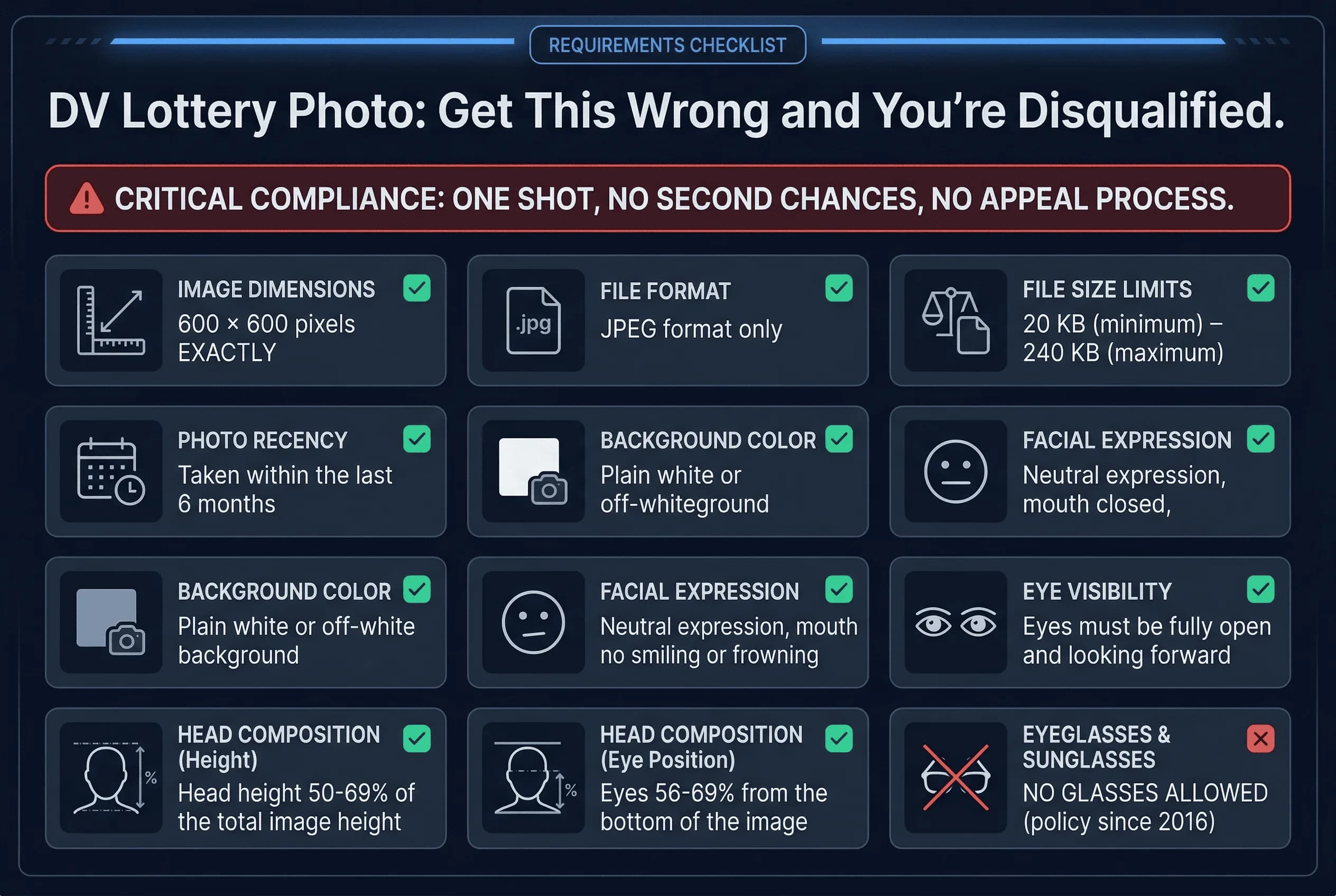
Your photo is the first thing officials check. If it doesn't meet every specification exactly, your entry gets disqualified. There is no appeal process for photo-related rejections. You're simply removed from the lottery pool.
This harsh reality means your photo deserves as much attention as every other part of your entry. One small error destroys months of hope.
Get a compliant passport photo online
Exact DV Lottery Photo Technical Requirements
Your DV lottery photo must meet these precise specifications:
Dimensions: Exactly 600×600 pixels (square) Format: JPEG (.jpg) File size: Maximum 240KB (minimum 20KB) Photo age: Taken within last 6 months Background: White or off-white Expression: Neutral, mouth closed Eyes: Open, clearly visible Head height: Between 50% and 69% of image height Eye height: Approximately 56% from bottom
These specifications align with US visa and passport requirements. However, the DV lottery enforces them more strictly than most other applications.
The No-Glasses Rule: Post-2016 Change
Since 2016, glasses are prohibited in DV lottery photos. This change aligned the lottery with passport and visa requirements. Many applicants still submit photos with glasses, not knowing about the rule change.
The prohibition exists because glasses cause reflection, glare, and shadow issues that complicate facial recognition. Even clear glass frames without visible reflection can cause problems with automated matching systems.
If you wear glasses for vision correction, switch to contact lenses for your photo. If contacts aren't possible, you must remove glasses and accept blurred vision during the photo session.
How to Take a Compliant DV Lottery Photo at Home
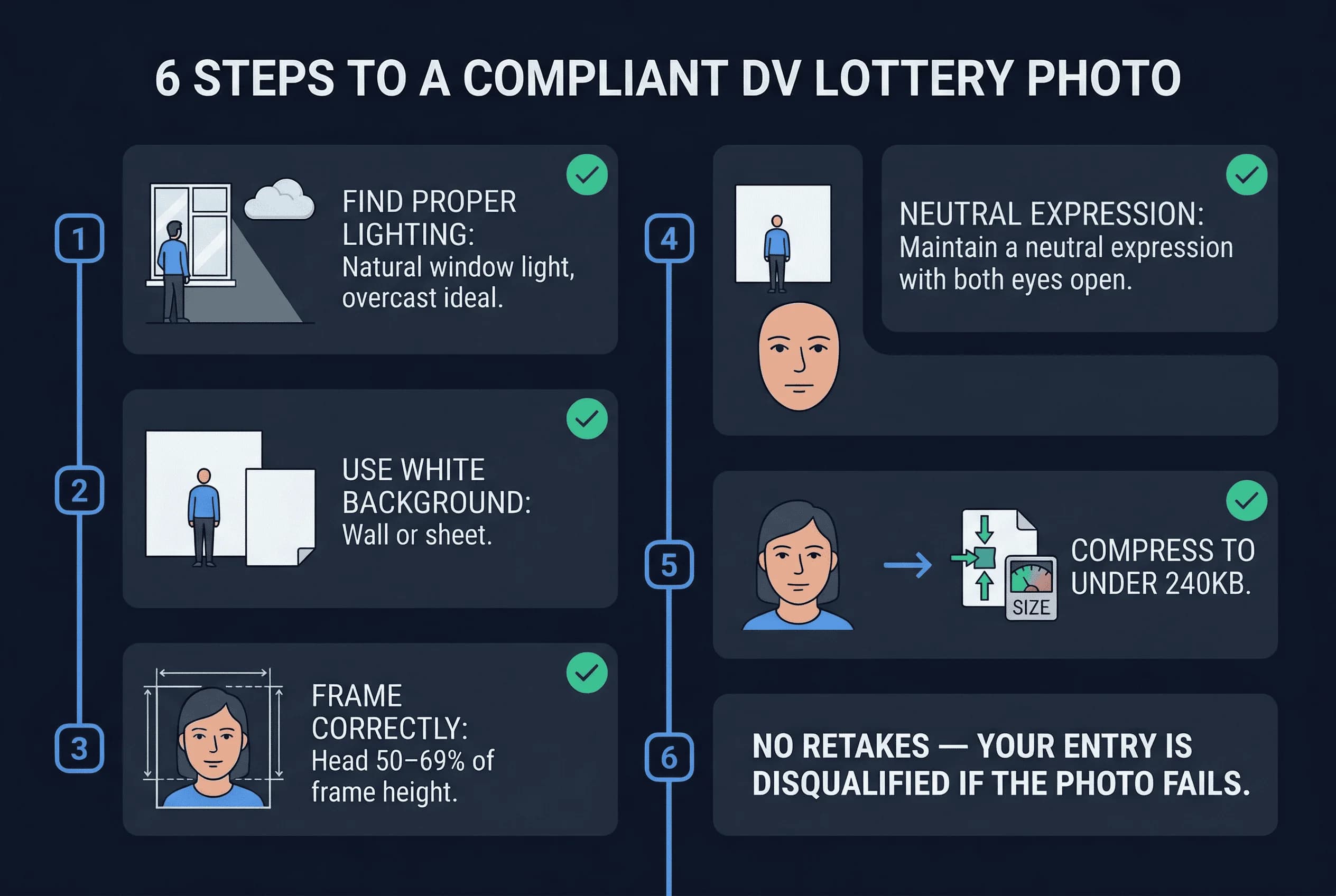
Follow these steps to ensure compliance:
Step 1: Find proper lighting
Natural light from a window works best. Position yourself facing the light source. Avoid harsh midday sun that creates shadows. Overcast days provide ideal diffused lighting.
Step 2: Use a white background
Stand against a white wall or use a white sheet as backdrop. Ensure no patterns, objects, or other colors appear behind you.
Step 3: Frame correctly
Your head should be centered and occupy 50-69% of the photo height. This translates to your head being large enough to fill most of the frame but not so large that any part gets cropped.
Step 4: Maintain a neutral expression or natural smile
Look directly at the camera with a straight face. No smiling, no frowning. Both eyes must be open and visible.
Step 5: Resize to exactly 600×600
Use photo editing software to resize precisely. Don't approximate. The system rejects anything that's not exactly 600×600 pixels.
Step 6: Compress to under 240KB
JPEG compression reduces file size. Aim for around 100-200KB to ensure the file passes the size check while maintaining image quality.
Use our passport photo checker to verify compliance before submission. This free tool helps identify issues before they cause disqualification.
Using the State Department's Photo Tool
The Kentucky Consular Center provides a free photo validation tool at ceac.state.gov. This tool checks your photo against DV lottery requirements before you submit your entry.
The tool performs these checks:
- Dimensions (must be exactly 600×600)
- File size (must be under 240KB)
- Face detection (must find a face)
- Eye position (must be correctly placed)
- Head size (must be within range)
The tool doesn't check everything. It won't catch background color issues or subtle expression problems. However, it catches the most common errors and gives you a chance to fix them before submission.
Run your photo through this tool as many times as needed. There's no limit on attempts.
Common DV Lottery Photo Disqualification Reasons
These photo issues cause the most rejections:
Wrong dimensions. The 600×600 requirement is exact. Photos that are 600×400 or any other non-square dimensions fail immediately. Many smartphone cameras default to 4:3 or 16:9 aspect ratios.
Oversized file. Photos over 240KB get rejected. High-resolution images from modern phones easily exceed this limit. Compression is essential.
Old photo. Photos older than six months violate requirements. The entry system compares submission date against photo date metadata.
Glasses. Despite being a well-known rule, glasses continue causing rejections. Remove all eyewear for the photo.
Wrong aspect ratio. The photo must be square. Resizing without maintaining aspect ratio creates rectangular images that fail.
Insufficient contrast. Photos that are too dark or too light fail automated checks. Ensure even lighting across your face.
Children and Family DV Lottery Photo Requirements
Each family member needs their own photo for DV lottery entry. This includes children, even infants. Photos of children present unique challenges:
Infants: The baby should be lying on a white sheet or in a car seat covered with white material. An adult should hold the baby from behind, keeping their hands outside the frame.
Young children: Same positioning rules apply. The child should face the camera directly with both eyes open. Getting a neutral expression from a toddler requires patience.
Teenagers: Same rules as adults. Makeup should be minimal or nonexistent. The photo should represent natural appearance.
Professional vs DIY Photos for the DV Lottery
Professional photographers understand DV lottery requirements. Many passport photo services can produce compliant images. Expect to pay $15-30 for a set of prints with digital files.
DIY photos work if you follow the rules carefully. Smartphone cameras now produce sufficient resolution. The key is proper editing to achieve exact dimensions and file size.
Consider professional photos if you're uncertain about editing skills. The cost is worthwhile when the stakes are this high.
What Happens After DV Lottery Photo Submission
Once you submit your DV lottery entry, you cannot change your photo. The confirmation number you receive locks in your entry exactly as submitted.
If your photo has issues that weren't caught during submission, you'll learn during the interview stage. At that point, providing a new compliant photo may be required, but you've already passed a major hurdle.
Keep digital copies of every photo you submit. If you're selected, you'll need additional photos for the interview and visa application. These must meet similar but slightly different requirements.
Photo vs Interview Stage Requirements
The photo you submit with your initial entry differs from photos needed later:
Initial entry photo
- 600×600 pixels
- JPEG under 240KB
- Simple background acceptable
- Can be taken at home
Interview/visa photos
- 2×2 inches (50×50mm) for physical prints
- Different framing requirements
- Must be professionally taken
- Two identical copies required
Many winners are surprised by the different requirements at interview stage. Prepare by understanding both sets of requirements.
Countries with High DV Lottery Photo Rejection Rates
Some countries have higher rates of photo-related rejections due to local photography practices:
Nigeria: Many local photo studios don't understand US requirements. Photos often feature colored backgrounds or improper sizing.
Pakistan: Similar issues with local standards not aligning with US specifications.
Bangladesh: Background and expression standards frequently cause problems.
Ethiopia: Limited access to proper photo equipment leads to compliance issues.
If you're applying from these or similar countries, consider using international passport photo services or taking your own photo following US specifications precisely.
Understanding the Selection Process
The DV lottery uses random computer selection. But your photo determines whether you can complete the process:
Entry period: October-November annually Selection notification: Following May Interview scheduling: 6-12 months after selection Photo deadline: Set by interview appointment
A non-compliant photo means you never receive selection notification. Your entry exists in the system but gets filtered out before winners are even selected.
Key DV Lottery Dates and Photo Deadlines
Mark these important dates:
Entry opening: First week of October Entry closing: First week of November Results available: Following May Interview period: October through September of following year Photo deadline: At interview appointment
The photo you submit must be recent. Taking your photo in October ensures it meets the six-month rule through the following spring interview season.
Why DV Lottery Photo Rules Are So Strict
The DV lottery photo requirements exist for several reasons:
Security: Photos help prevent fraud and identity theft. Consistent standards make automated matching possible.
Efficiency: Strict requirements mean fewer errors, faster processing, and lower costs for everyone.
Fairness: Everyone competes under the same rules. Strict standards ensure equal treatment.
Integration: DV photos feed into larger immigration databases used throughout the visa process.
Understanding why these rules exist helps applicants take them seriously.
Tips for a Successful DV Lottery Photo Submission
Follow these final recommendations:
Take your photo after reading all requirements. Don't rely on memory alone.
Use the State Department tool multiple times. It catches most problems.
Keep original files at full resolution. You can always compress more but can't recover lost quality.
Get a second opinion. Have someone else review your photo against the requirements.
Don't wait until the last minute. Technical issues can prevent on-time submission.
Related Articles
- DS-160 Photo Requirements — Related US visa photo requirements
- Green Card Photo Requirements — Similar US immigration photos