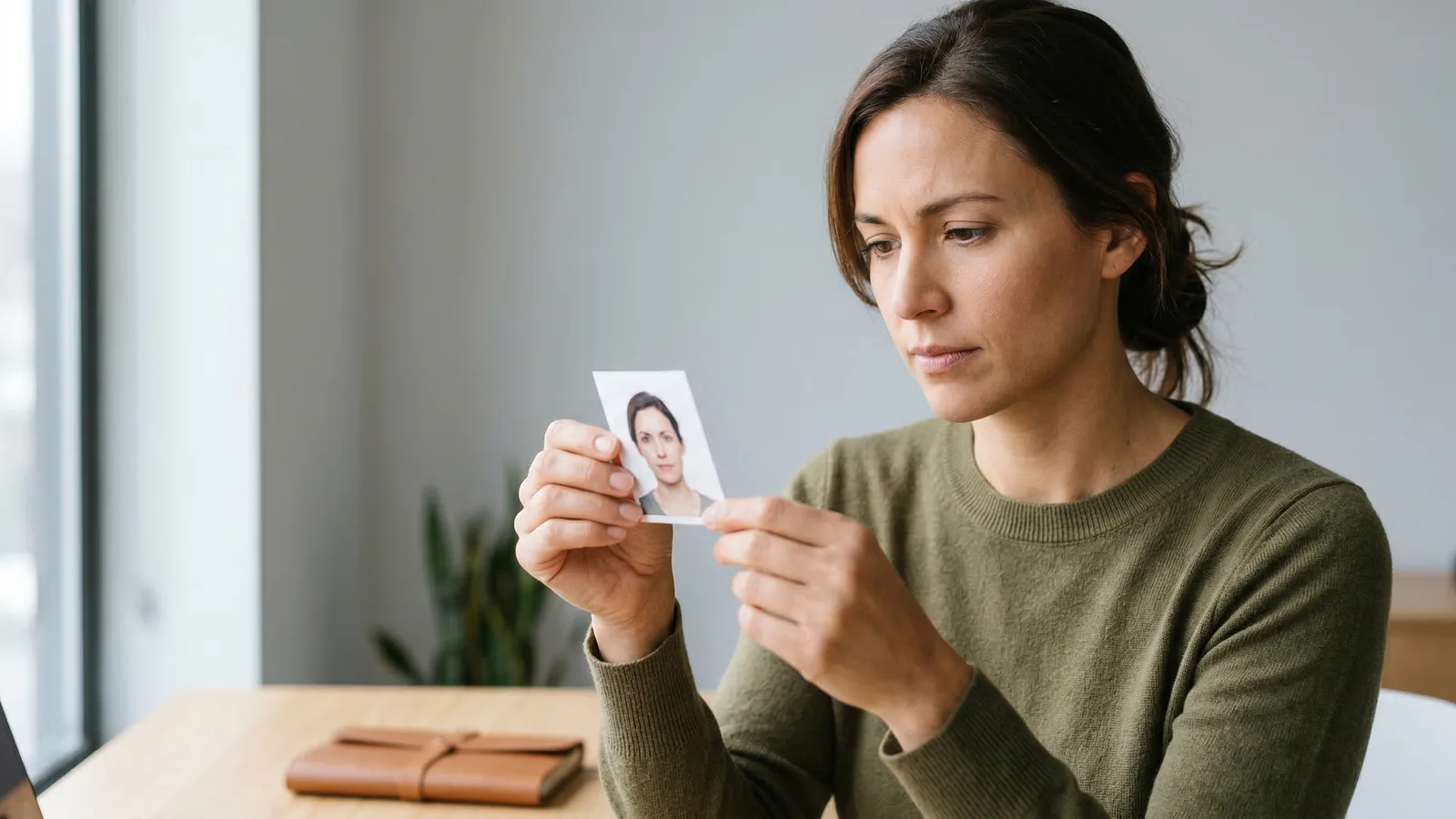
Yes — you can wear everyday makeup in a passport photo. The rule is straightforward: your face must be clearly recognizable. Normal makeup that represents how you look on a typical day is permitted. There's no requirement to remove your makeup or appear completely bare-faced.
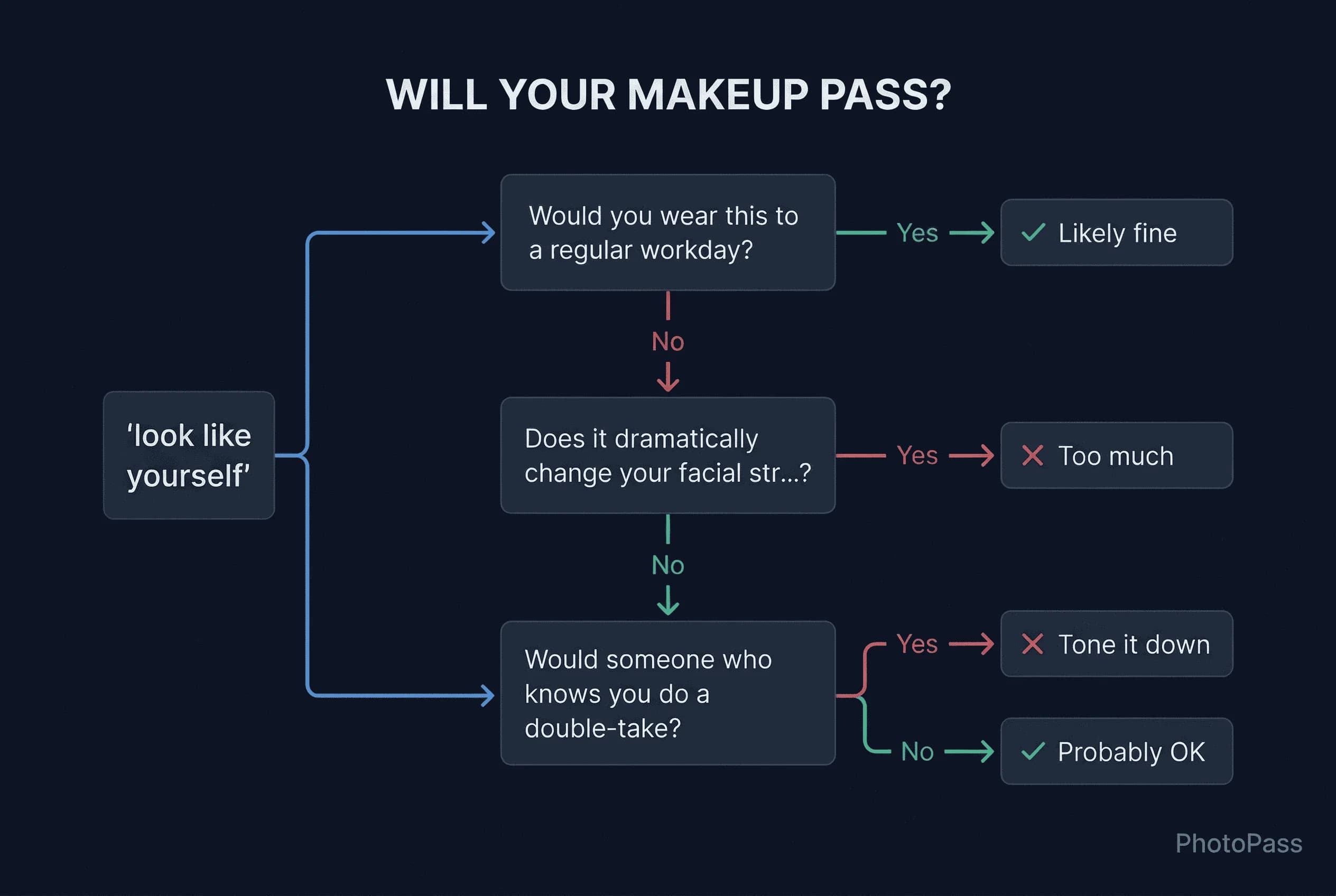
The confusion comes from where the line is. What counts as "everyday" versus what crosses into "altered appearance"? That's where people get into trouble. The key is looking like yourself, not looking like a different version of yourself.
This question comes up frequently because many people wear makeup daily and don't want to look dramatically different in their passport photo. Others worry that wearing makeup might get their photo rejected. The answer is nuanced but clear: normal makeup is fine, dramatic makeup is risky.
What Makeup Is Allowed in Passport Photos?
Foundation, concealer, and regular skin coverage are completely fine. If you'd wear it to work or a casual outing, it's fine for your passport photo. The same goes for tinted moisturizer, BB cream, or any base product you regularly use.
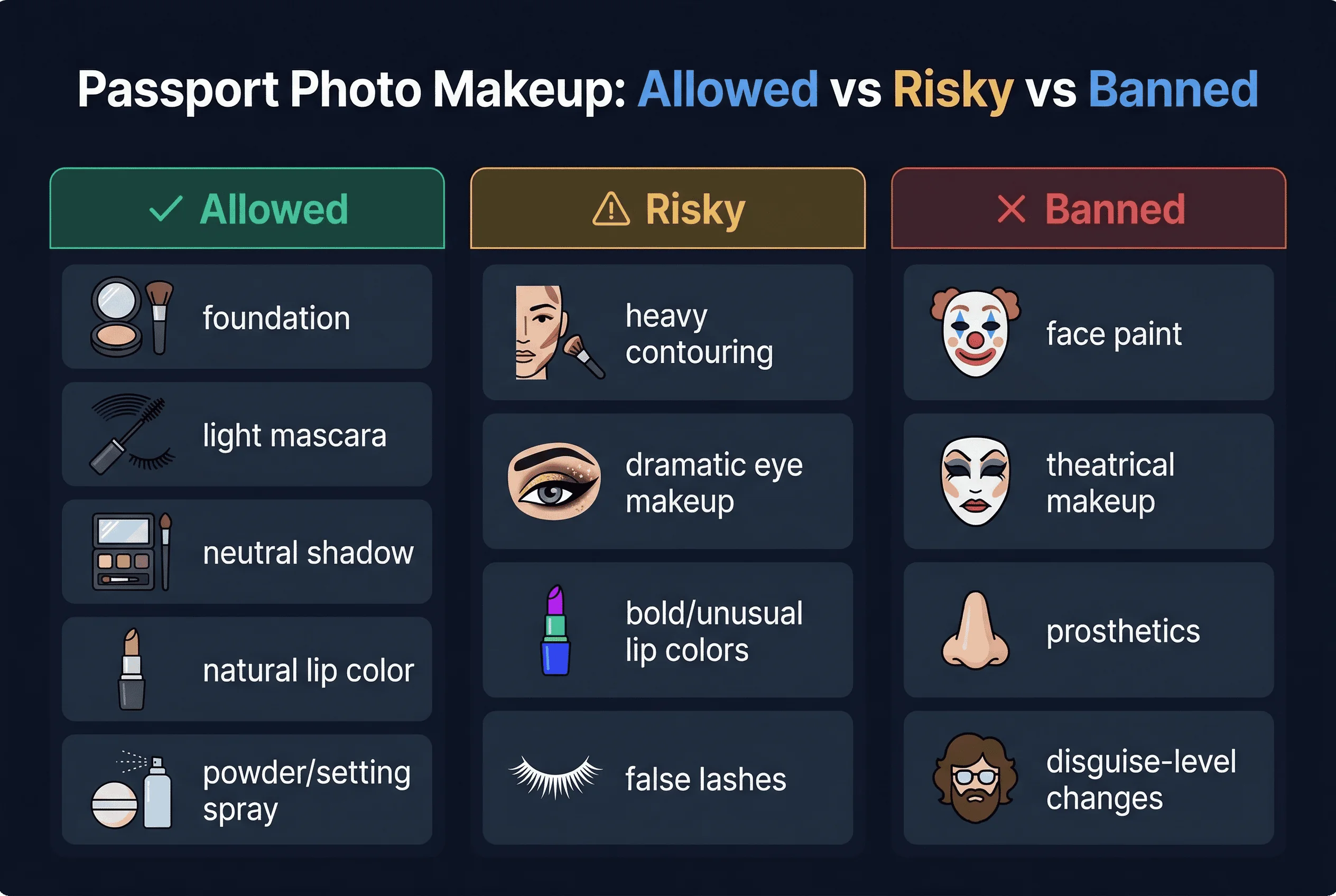
Light eye makeup — mascara, eyeliner, neutral shadow — is allowed. The key word is "light." A natural look that enhances what you already have passes easily. Brown mascara, light eyeliner, and neutral shadows are all acceptable.
Lipstick and lip gloss in natural shades are permitted. Deeply pigmented or unusual colors (black, blue, bright red) might draw scrutiny, but they're not automatically banned. Natural-looking pinks, nudes, and berries are always safe.
Powder, setting spray, and basic grooming products are all acceptable. There's no requirement to go bare-faced.
Contouring is a gray area. Light contouring that enhances your natural bone structure is usually fine. Heavy contouring that dramatically reshapes your cheekbones or jawline crosses into risky territory. The issue isn't the makeup itself — it's whether the final photo still looks like you.
Get a compliant passport photo online
What Makeup Is Risky for Passport Photos?
Heavy contouring that dramatically reshapes your cheekbones or jawline can be a problem. The issue isn't the makeup itself — it's whether the final photo still looks like you. If someone who knows you well would do a double-take, it's too much.
Dramatic eye makeup — heavy false lashes, intense smokey eyes, bright colors — is risky. These styles can obscure the natural shape of your eyes or create an unnatural look that doesn't match your day-to-day appearance. If you wouldn't wear it to work, don't wear it for your passport photo.
Bold lipstick in unconventional colors (black, blue, neon) is technically allowed but often flagged. Officers may question whether it's an accurate representation of your appearance. When in doubt, stick to colors that look natural.
Special occasion makeup, like what you'd wear to a formal event or costume party, definitely crosses the line. Your passport photo should represent your everyday appearance, not your glam-night appearance.
What Makeup Is Banned in Passport Photos?
Face paint, theatrical makeup, or anything that makes you look like a different person is prohibited. The passport photo must show your actual face. If you look in the mirror and don't recognize yourself, that's a problem.
Disguises, prosthetics, and extreme looks that alter your recognizable features will get rejected. This seems obvious, but some people have tried. The rules exist for identification purposes.
Non-removable cosmetics like permanent tattoos or dermal fillers that permanently change your face structure aren't the passport office's concern — those are part of your current appearance. The issue is only with temporary makeup that creates a false impression.
Passport Photo Makeup Rules by Country
Most countries follow the same basic rule: recognizable appearance. The US, UK, Canada, and Australia all allow everyday makeup with the same general restrictions. The rules are strikingly consistent across English-speaking countries.
Some countries are stricter about religious or cultural markers. If you wear makeup as part of religious practice, that's generally protected, but the photo must still clearly show your face. The key is balance between religious expression and identification needs.
Schengen countries (most of Europe) apply ICAO standards, which are fairly consistent with the US approach. However, individual consulates may have different interpretations. When applying for a Schengen visa, it's best to keep makeup minimal.
Some Middle Eastern and Asian countries have different standards. For example, some countries expect women to wear modest makeup if any at all. When applying for visas to these countries, research the specific cultural expectations.
How Makeup Behaves Differently in Passport Photos
Some products that look perfectly natural in the mirror cause problems specifically in passport photos.
SPF in foundation and moisturisers is the most common surprise. Many foundations and tinted moisturisers contain SPF 15 or higher. The titanium dioxide and zinc oxide in sunscreen formulas reflect light — particularly flash — creating a white, ghostly cast on the face. This effect is invisible in person and in natural light, but becomes obvious in flash photography. If you're getting your passport photo taken at a retail location where flash is used, switch to an SPF-free base or set it with a translucent powder to reduce reflectivity.
Shimmer and glitter particles on cheekbones, brow bones, and eyelids catch light and create bright spots in photos. These highlights can read as hot spots or uneven lighting to automated compliance checks. Matte products photograph more consistently.
Under-eye concealer that's too light creates an inverse panda effect in photos — bright patches under the eyes that look unnatural. Match your concealer to your skin tone rather than going lighter, and blend it thoroughly. Photos are less forgiving than mirrors when it comes to visible concealer edges.
Matte lipstick photographs more predictably than glossy. Lip gloss can create a bright reflection on the lower lip that looks like a light artefact. If you prefer gloss, blot it slightly before the shot.
These are photography-specific issues, not government rules. No passport office will reject you for wearing SPF foundation. But the resulting photo quality might trigger a retake, which wastes time and money.
Tips for Taking a Great Passport Photo with Makeup
Do your makeup exactly as you would for a normal day. Don't use this as an opportunity to experiment with a new look. Your passport photo should be consistent with your everyday appearance.
Take the photo in natural lighting if possible. Harsh artificial light can make makeup look heavier than it appears in person. Window light is usually best. Avoid fluorescent lighting if possible, as it can create colour casts that interact with your makeup tones.
Set your expectations appropriately. Makeup looks different in photos than in person. What looks natural in the mirror can appear heavy in a passport photo. Go lighter than you think you need to — particularly with contouring, blush, and eye makeup.
If you're uncertain, take two versions — one with your normal makeup and one with a lighter application. Compare them against the requirements and use whichever passes more easily. This is especially helpful if you're unsure where the line falls for your usual look.
Consider your overall look: hair, accessories, and clothing. If you're wearing noticeable makeup, make sure the rest of your look is neutral. Everything should work together to create a recognisable version of yourself.
Check your country's official passport photo requirements before your appointment to ensure your makeup choice won't cause issues. For guidance on clothing, see our post on what to wear for a passport photo, or read about hat and headwear rules if that applies.
The bottom line: if you wear the makeup regularly and it represents how you normally look, you're fine. If you're doing something different or dramatic, you're taking a risk.