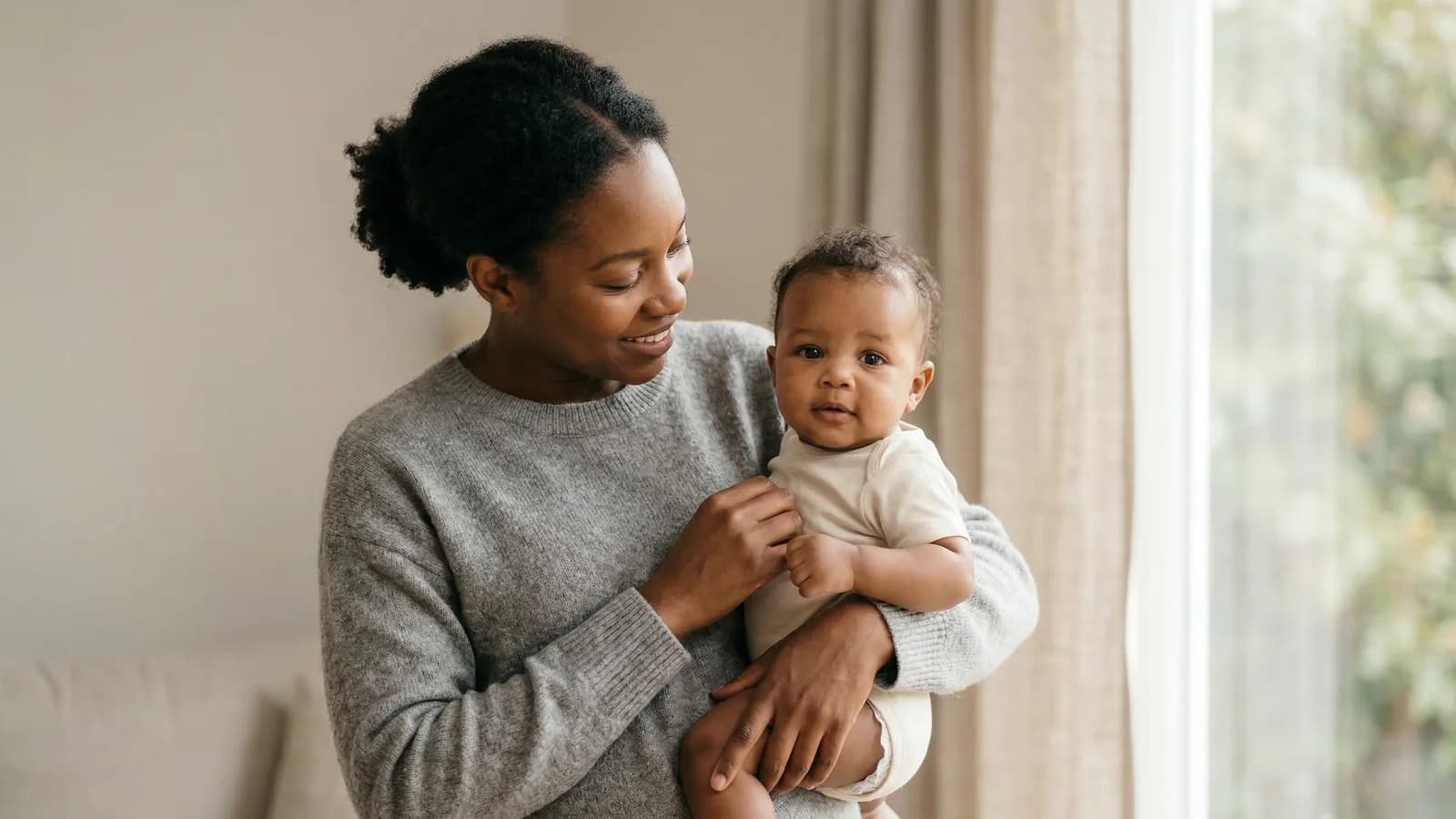
A baby doesn't know what "neutral expression" means. You can't tell a six-month-old to "just look natural." You need to catch the right moment, not create it.
That's the secret most parents figure out too late. You don't direct a baby. You wait, you watch, and you snap at the exact second they happen to be calm.
What Counts as a Neutral Expression for Baby Passport Photos?
Government agencies understand that you can't make a baby smile on command. Most are reasonably flexible with infant photos.
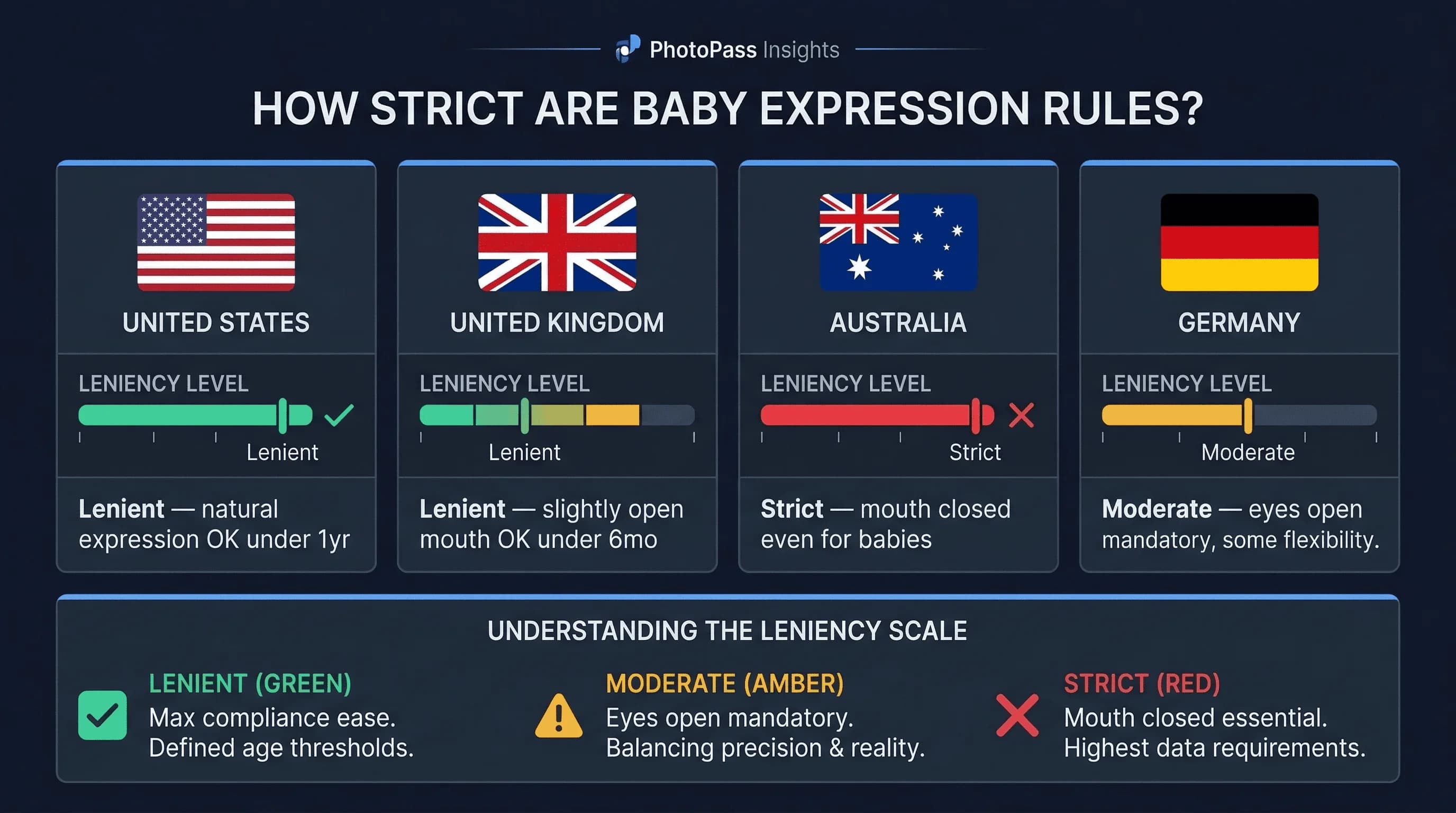
The US State Department accepts "natural expression" for babies under one year. What does that mean in practice? A slightly open mouth is usually fine. A full-on grin is technically outside the rules but often gets approved anyway.
UK passport rules are more specific. For infants under 6 months, the mouth can be slightly open. Eyes must be open, but the UK is slightly more lenient about whether the baby is looking directly at the camera.
Australia takes the strictest approach. Even for babies, they want the mouth closed and a neutral expression. This is unusual — most countries cut parents a break with infant photos, but Australia enforces near-adult standards.
Germany falls somewhere in the middle. Eyes open is mandatory, mouth closed is preferred, but some flexibility exists for younger infants.
The key is this: check your destination country's specific rules. Don't assume anything. What gets approved in the US might get rejected in Australia.
Get a compliant passport photo online
When to Time the Shot for a Baby Passport Photo
When you take the photo matters as much as how you take it.
The best window is right after a feeding. The baby is awake, satisfied, and not yet fussy. This is the alert-calm state every parent chases.
Mid-morning often works well. After the morning nap, after breakfast, before the mid-afternoon crankiness sets in. You've got about a ten to fifteen minute window of peak cooperation.
Never try when the baby is:
- Drowsy — they'll close their eyes the moment you raise the camera
- Hungry — crying is coming, and it's coming soon
- Overtired — fighting sleep makes babies irritable and unpredictable
- Overstimulated — too many toys, too much noise, and they'll look right past the camera
If you've ever taken a baby anywhere — doctor's office, grocery store, family gathering — you know their mood changes fast. The passport photo session needs to match their mood, not force it.
Tricks That Work for Baby Passport Photo Expressions
After thousands of parents have wrestled with this problem, a few techniques consistently bubble to the top.
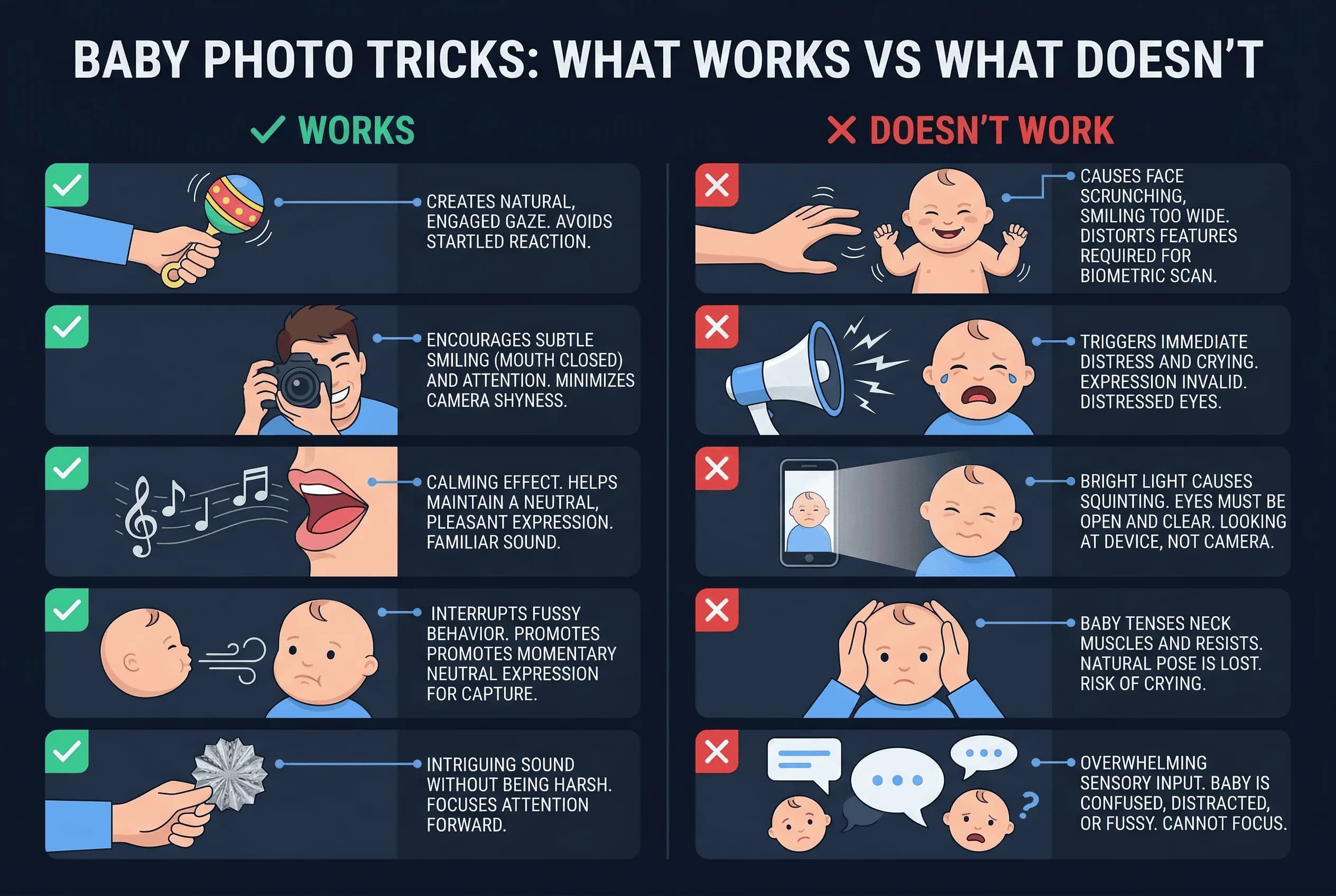
The rattle or noise maker. Hold a rattle, a set of keys, or crinkly paper behind the camera. Shake it gently. The baby will look toward the sound with wide, open eyes. This is your moment.
Peek-a-boo from behind. If there's a second person, have them pop out from behind the photographer. Peek-a-boo games captivate babies. Their eyes go wide with surprise and curiosity.
Singing. A familiar song — something the baby knows from bedtime or bath time — captures attention. The rhythm soothes them while keeping them engaged.
Blowing gently on the face. This triggers a reflex in many babies. The slight stimulation makes them open their eyes wider. It's subtle, it works, and it doesn't startle them.
Crinkly textures. Crinkle toys, tissue paper, or even a plastic bag crumpled softly. The sound and movement draw the baby's eyes toward the camera.
Baby Passport Photo Tricks That Don't Work (and Why)
Just as important are the things that backfire.
Tickling. This causes the baby to scrunch their face. Eyes squeeze shut. Mouth twists. Not helpful.
Loud noises. A sudden loud noise might open their eyes momentarily, but it usually leads to crying. The passport office does not accept crying baby photos.
Screens and phones. Many parents try showing a video on a phone. The baby squints at the bright screen. When you pull it away for the photo, they're still adjusting. Plus, the blue light affects their eyes.
Forcing eye contact. If the baby is looking somewhere else, don't physically turn their head. Wait. Forcing it creates resistance and bad feelings.
Multiple people talking at once. Everyone trying to get the baby's attention creates chaos. Pick one person to make noise. The others stay quiet.
How Many Photos Do You Need for a Baby Passport Photo?
The answer is: more than you think.
Plan to take thirty to fifty photos. Maybe more. The rejection rate for DIY baby passport photos is high, not because the concept is hard, but because getting one frame with everything aligned — eyes open, face centered, no blur, no crying — is genuinely difficult.
Use burst mode on your phone or camera. Hold down the shutter and take a rapid sequence. You'll delete most of them. That's fine. You're looking for that one perfect frame.
Some parents report taking over a hundred photos before getting a usable one. It's not unusual. It's not a failure. It's just how this works.
Remember: the passport office accepts the photo you submit. They don't know how many attempts it took. No one does. What matters is the final result.
How to Pick the Best Frame for a Baby Passport Photo
Once you have your batch of 30–50+ photos, flip through them on a larger screen — a tablet or computer, not your phone. Zoom in on each candidate and check:
- Eyes open? Both eyes must be clearly visible and at least partially open. Shots where one eye is mid-blink are common and must be discarded.
- Mouth position? For strict countries like Australia, look for a frame where the mouth is closed or nearly closed. For the US, a slight natural smile is fine.
- Head angle? The face should be straight-on with no tilt. Babies tend to loll their head to one side — reject any frame where the head is noticeably turned or tilted.
- Motion blur? Even slight blur on the eyes or face disqualifies the photo. Pinch-zoom to 100% to check.
- Shadow on the face? Look under the chin, around the nose, and under the eyes. Even small shadows from overhead lighting cause automated rejection.
Narrow your batch to 3–5 candidates, then run the best one through validation before printing.
A Note About Patience with Baby Passport Photos
This might be the hardest part. Your baby doesn't understand why you're making strange noises or waving toys around. They might get frustrated. They might cry.
That's okay. Take a break. Put the camera down. Comfort your baby. Try again another day if needed.
A stressed parent makes a stressed baby. If you're getting annoyed, the baby feels it. Step back, breathe, and come back to this later.
There's no deadline that can't be extended. The passport application process gives you time. Don't turn this into a battle.
And when you finally get that one good photo — the one where eyes are open and the expression is calm — it'll feel like a small victory. Because it is. Getting a baby to sit still for a passport photo is harder than most things you'll do as a parent. You deserve credit for it.
For more help, run your final photo through a passport photo checker before submitting. And if you're traveling to the UK, make sure to review their specific requirements for infant photos.
If you haven't taken the photo yet and need setup help, our guide on how to take a baby passport photo at home walks through the entire process from start to finish.