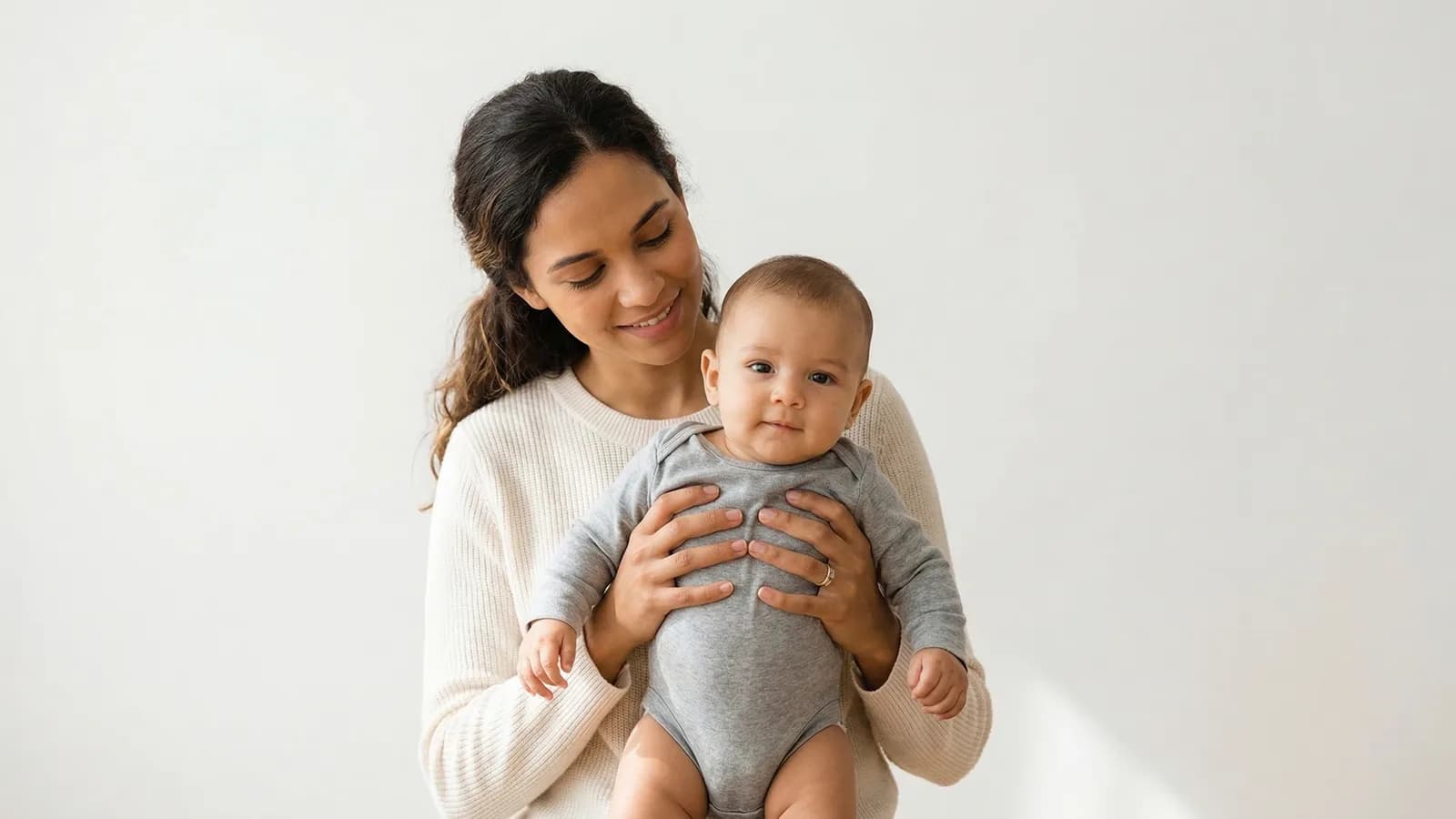
Taking a passport photo of a baby is harder than it sounds. The baby needs to face the camera directly, eyes open, mouth closed, on a plain white background — and they need to be the only person in the frame.
It sounds simple. It isn't. Babies don't sit still. They close their eyes when you least expect it. They make faces when the camera clicks. And unlike adult passport photos where you can just "smile and say cheese," there's no explaining any of this to a six-month-old.
But it can be done. Thousands of parents do it every day. Here's exactly how to get a photo your baby — and the passport office — will accept.
What Are the Rules for Baby Passport Photos?
Baby passport photos follow the same basic specifications as adult photos. In the US, that's a 2×2 inch photo on a white background. Most other countries use 35×45mm. The baby must face the camera straight on. No turning, no tilting.
But here's what makes it easier: most countries are more lenient with infant expressions.
The US State Department accepts "natural expression" for babies under one year. That means a slightly open mouth is usually fine. UK passport rules explicitly allow a slightly open mouth for infants under 6 months. Australia is stricter — they want the mouth closed even for babies.
Eyes, however, are non-negotiable in almost every country. Your baby's eyes must be open. More on that in a moment.
One more thing: the baby must be the only person in the frame. That means no hands supporting the baby's head, no arms visible, no toys or pacifiers. This trips up more parents than you'd think.
Get a compliant passport photo online
Baby Passport Photo Setup That Works at Home
The background is your first challenge. It needs to be plain white, and it needs to be behind the baby — not just under them.
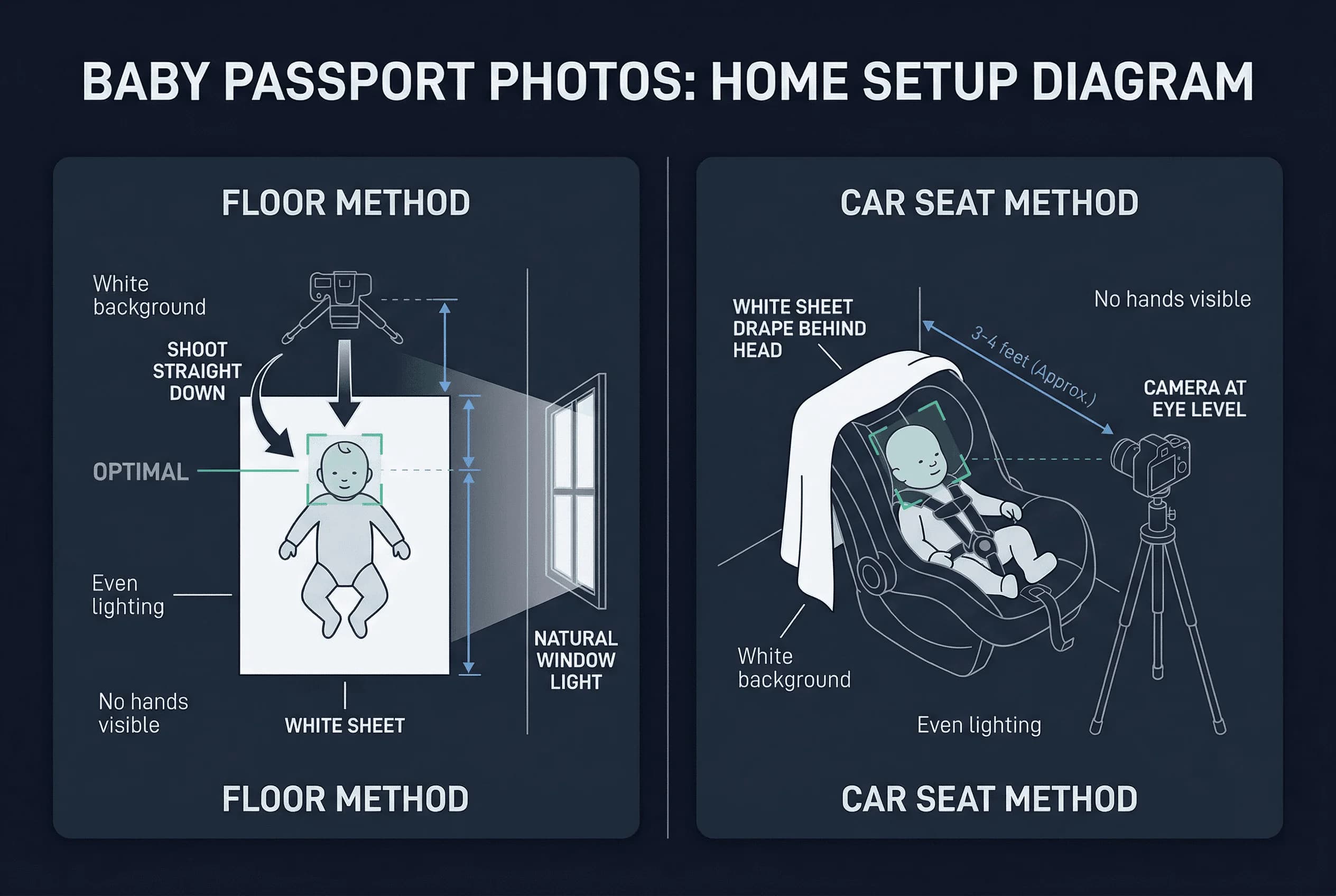
The floor method works best for newborns. Lay a white sheet on a clean floor. Put the baby on their back on the sheet. Stand above them and shoot straight down. The sheet should extend well beyond the baby's head and shoulders so nothing shows at the edges.
The car seat method is a lifesaver for parents who don't have a perfectly white wall or floor. Recline the car seat slightly. Drape a white sheet over the car seat frame so it hangs behind baby's head. Shoot from the front, at baby's eye level. This creates a clean white background without needing a professional setup.
What the baby wears matters more than you'd expect. A white onesie is ideal. Skip the colorful shirts — they'll cast color onto the white background, and the photo will get rejected. Some parents just leave the baby in a diaper for the photo. That's fine too.
How to Get the Shot: Camera, Lighting, and Timing
Now for the hard part: actually capturing the moment.
First, lighting. Natural daylight is your friend. Set up near a large window where soft light pours in. Avoid direct sunlight — it creates harsh shadows. Don't use the flash. The flash startles babies, makes them squint, and can ruin the shot before you've started.
Second, you need help. A second person is essential. One parent holds the baby or manages the car seat. The other operates the camera. But here's the secret: the person behind the camera needs to make noise. Not loud noise — silly noise. Funny faces. Rattles. Blowing raspberries. Anything to get the baby's attention and keep those eyes open.
Third, use burst mode. Take twenty, thirty, fifty photos. Delete the bad ones later. You're looking for one frame where the eyes are open, the face is roughly centered, and there's no blur. The law of averages is on your side if you take enough shots.
Baby Passport Photo Tips by Age (Newborn to Toddler)
Newborns — zero to three months — are the hardest. They sleep a lot. When they're awake, their eyes are often closed. They can't hold their head up. Try to shoot when the baby is alert but calm. Right after a feeding often works well, when they're awake and content but not overstimulated.
Three to twelve months gets easier. The baby can sit with some support. They're more interested in the world around them. The peek-a-boo trick works wonders — have someone behind the camera peek out from behind a blanket, or use a toy that pops up. Get the baby's attention, and click.
One to two years old means a mobile, wiggly toddler. They can't be held still, and they definitely won't do what you tell them. The sticker trick helps: put a small sticker on the camera lens. The toddler will stare at it, curious. That's your moment. Use the fastest shutter speed your camera allows to avoid motion blur.
Common Reasons Baby Passport Photos Get Rejected
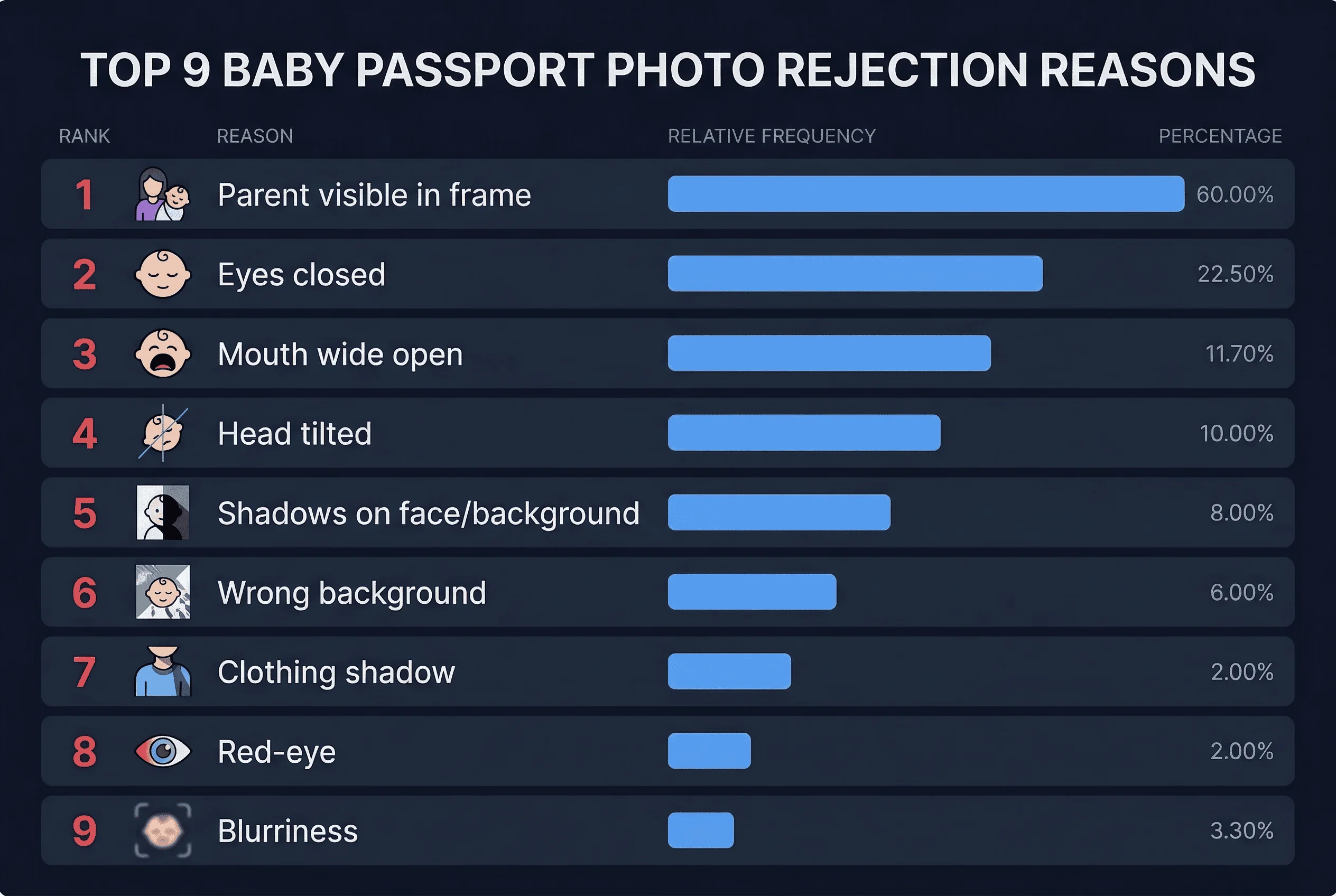
The passport office sees thousands of baby photos every year. They reject most of them. Here's what goes wrong:
- Parent visible in frame — If you're holding the baby, your hands or arms show. Use a timer or the car seat method.
- Eyes closed — The number one reason. Babies blink. You need that one frame where they're open.
- Mouth wide open — A slightly open mouth is often fine for infants. Wide open is not.
- Head tilted — Babies flop. You need the head straight on.
- Shadows — If someone is holding the baby, their body blocks the light and creates shadows. Shoot near a window with the light in front of the baby.
- Wrong background — Anything that's not plain white or light grey gets rejected. No patterns, no furniture, no textured walls.
- Clothing shadow — Even a plain onesie can cast a shadow on the white background if the lighting angle is wrong. Check for any dark patches near the edges.
- Red-eye — Babies' eyes reflect light differently. If you use flash, you might get red-eye that looks like glowing pupils.
- Blurriness — Even slight motion blur gets rejected. Use plenty of light so your camera can use a fast shutter speed.
Before you submit, run the photo through a passport photo checker to catch any issues. It's easier to retake the photo at home than to deal with a rejection letter from the passport office.
Real Parent Stories: What Worked for Baby Passport Photos
Sometimes hearing how other parents pulled this off helps more than any guide.
Sarah, mom of a 4-month-old, tried the floor method six times before getting a usable photo. "I learned that my baby kept closing her eyes right when I clicked. So I'd make a loud noise just before pressing the button. That split-second surprise kept her eyes open long enough."
Michael, dad of a 1-year-old, used the car seat method. "Our daughter was crawling everywhere. We couldn't get her to sit still. The car seat was the only thing that worked. We'd recline it, drape a white sheet over the handle, and shoot from the front. Took about forty photos to get one good one."
Jessica, mom of newborn twins, had the hardest job. "I had to take two separate passport photos on different days. Each baby was different. One was easier, the other kept squinting. I learned to time it right after feeding when they were alert but calm."
Technical Settings for Baby Passport Photos on a Smartphone
Your smartphone can take a passport-quality photo. But there are settings to check.
First, turn off any beauty mode or filter. These smooth out skin and change how the face looks. Passport offices can reject photos that appear digitally altered.
Second, set your resolution high. Most phones default to plenty of resolution, but check that you're not shooting in some low-power saving mode.
Third, lock focus on the baby's face. Tap on their face on the screen before taking the shot. This ensures the eyes are sharp.
Fourth, avoid digital zoom. Get closer to the baby physically. Digital zoom degrades image quality.
Fifth, check the aspect ratio. US passports need 2×2 inches. That means a square image. Make sure your final crop gives you enough room around the baby's face without cutting off ears or chin.
When Is the Best Time to Take a Baby Passport Photo?
Timing matters more than you might think. Here's what experienced parents recommend.
Morning sessions tend to work best. Between 9 and 11 AM, babies are usually alert after their morning feed but before they get overtired. The natural light from a morning window is soft and even.
Avoid the witching hour — that period in the late afternoon when babies are notoriously fussy. You'll spend an hour fighting tears and won't get a single usable shot.
If your baby has a predictable schedule, work around it. Some parents schedule passport photo time right after a nap and a feeding. That's the golden window when the baby is calm, alert, and cooperative.
What to Do When Your Baby's Passport Photo Keeps Failing
Some parents get lucky and get a perfect photo on the first try. Most don't. If you're frustrated, that's normal.
Give yourself permission to take breaks. Put the camera down, comfort the baby, try again another day. Passport offices give you time to renew. There's no exam you're failing.
If you've tried multiple times and still can't get a usable photo, consider a professional photographer who specializes in passport photos. Yes, it costs money — typically $30 to $60 — but they know the requirements and have the right equipment. Some photographers even have setups specifically for babies.
Ready to Take Your Baby's Passport Photo?
Your baby's passport photo doesn't need to be perfect. It needs to meet the requirements. That means white background, eyes open, face centered, baby solo in the frame.
Take your time. Set up properly. Use the burst mode. Delete the bad ones. You'll find that one frame that works.
And when it arrives — that tiny passport with your baby's photo on it — it'll be worth every shot you took.
For more specific tips on getting your baby to cooperate, check out our guide on baby passport photo expressions. And if you're traveling internationally, make sure you understand the US passport requirements before you submit.