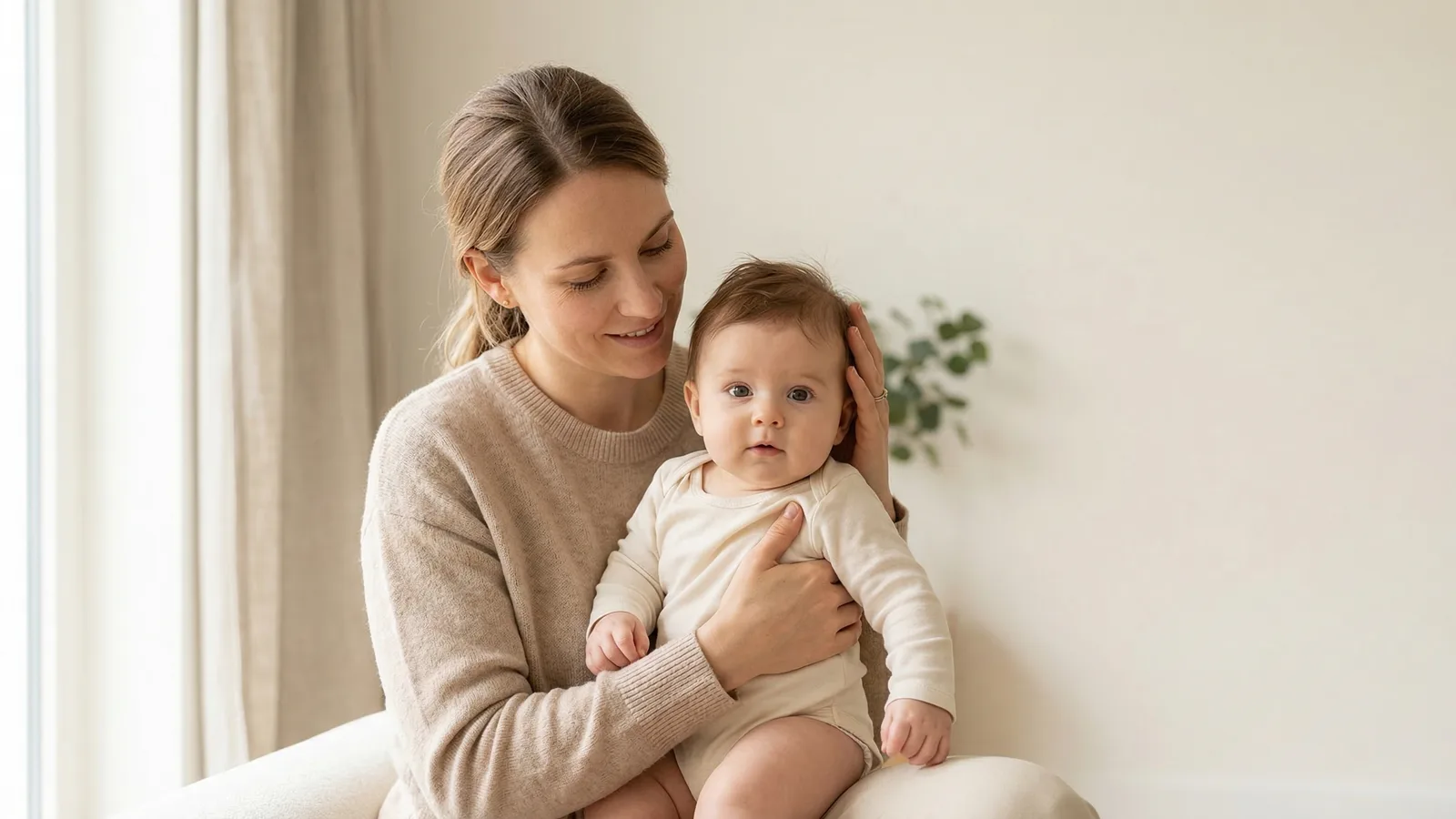
Every country requires babies and infants to have their own passport photo. But here's what many parents don't realize: the rules on expression, eye visibility, and facial support vary significantly between countries. What gets approved in one place gets rejected in another.
Before you submit your baby's photo, check where you're applying. One country's tolerance is another country's dealbreaker.
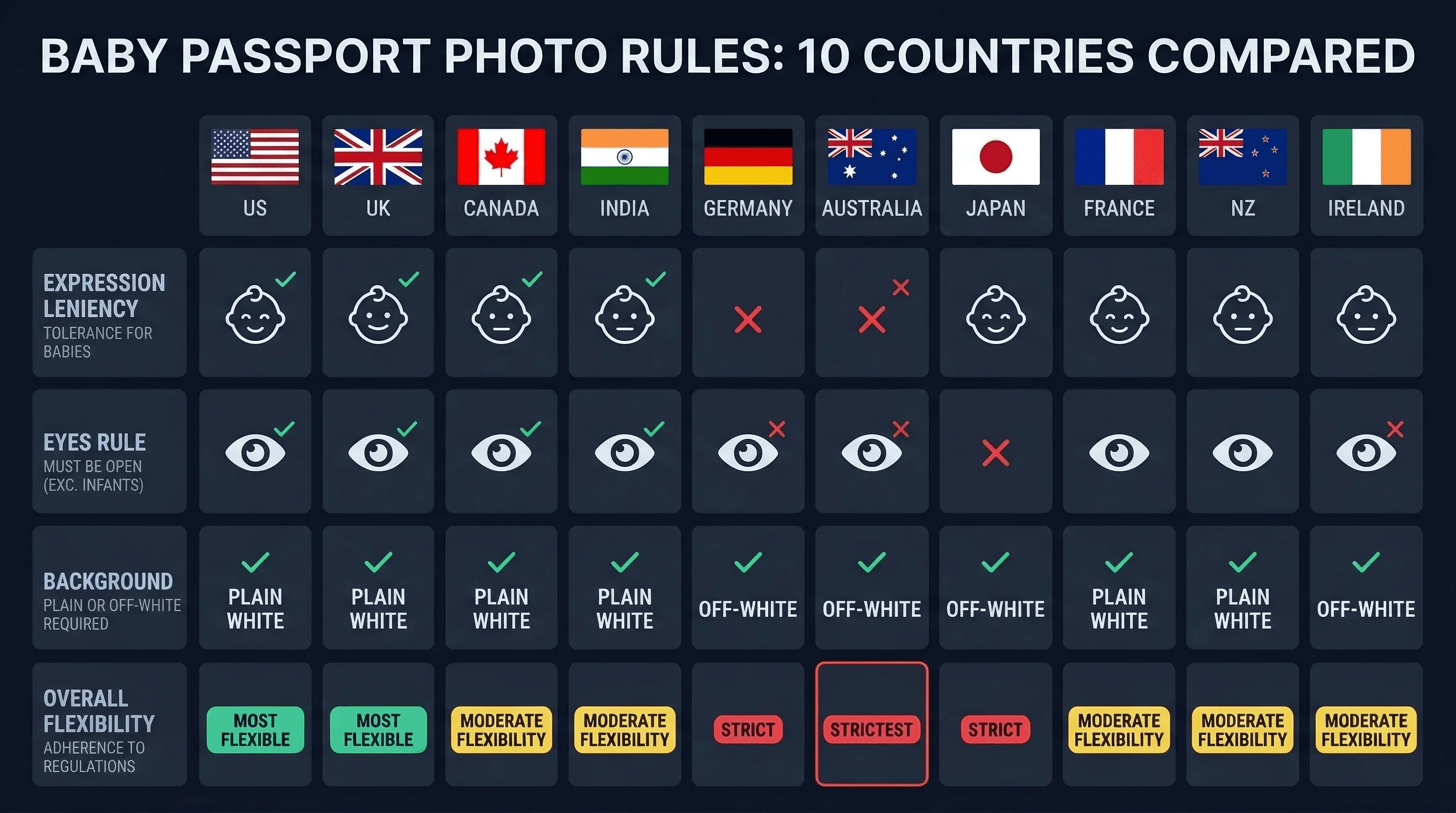
How Infant Passport Photo Rules Compare by Country
Here's a breakdown of passport photo requirements for infants across ten major countries:
| Country | Expression | Eyes | Background | Age Flexibility |
|---|---|---|---|---|
| US | Natural expression | Open | White | Most flexible |
| UK | Neutral, mouth slightly open allowed under 6 months | Open | Light grey | Very flexible |
| Canada | Neutral expression | Open | White | Flexible |
| India | Neutral | Open | White | Moderate |
| Germany | Mouth closed preferred | Open | Grey | Strict |
| Australia | Neutral, mouth closed | Open | White | Strictest |
| Japan | Neutral | Open | White | Strict (size rules) |
| France | Neutral | Open | White | Moderate |
| New Zealand | Neutral | Open | White | Moderate |
| Ireland | Neutral | Open | White | Flexible |
Get a compliant passport photo online
United States: Lenient Baby Photo Rules and 2×2 Inch Format
The US is among the most forgiving when it comes to baby passport photos. The State Department accepts "natural expression" for infants, which gives parents room to work with.
A slightly open mouth is generally approved. The baby must be the only person in the frame. Eyes must be open — there's no exception for newborns in US rules, though some flexibility exists in practice.
The US uses the 2×2 inch format. The photo must be in color, taken within the last six months, and show the baby facing the camera directly.
United Kingdom: Grey Background and Newborn Eye Exceptions
UK passport rules explicitly address infants. For babies under 6 months, the mouth can be slightly open. For babies under one month in exceptional circumstances, the UK actually allows eyes to be closed — this is rare and not well-known.
The UK uses a light grey background rather than pure white. This is important: if you take a photo with a white background for a US passport and then try to submit the same photo for a UK passport, it might get rejected.
UK baby passport photos must be taken with the baby facing the camera. No head tilts, no turned faces.
Canada: Flexible Rules and No Direct Eye Contact Required
Canada accepts infant photos with some flexibility. The mouth can be slightly open. Eyes must be open. The background must be white.
Canada has a useful rule: the baby doesn't need to be looking directly at the camera. This helps with younger infants who have trouble maintaining eye contact. The face just needs to be clearly visible.
India: Adult Standards Apply to Infant Passport Photos
India applies mostly adult standards to infant photos. White background, neutral expression, eyes open. The specifications are the same as for adults, though in practice some flexibility exists.
One thing to note: Indian passport photos must be printed on matte paper. This is a physical requirement, not just a digital one.
Germany: Strict Mouth-Closed Rule and Grey Background
Germany is stricter than most. Eyes must be open. The mouth should be closed, even for infants. The background is grey, not white.
German passport photos also have specific requirements about the size in the frame — the face of the head must take up a certain percentage of the photo. This can be tricky with babies, whose proportions are different from adults.
Australia: The Strictest Infant Passport Photo Rules
Australia enforces near-adult standards for infants. This makes Australian passport photos one of the hardest for babies.
The mouth must be closed. Eyes must be open. No exceptions for newborns. The background must be white.
If you're applying for an Australian passport for your baby, plan extra time and take more photos than usual. The rejection rate for baby photos is higher here than in most other countries.
Japan: Precise Head-Size Rules for Infant Passport Photos
Japan has very specific requirements about head size in the photo. The face must occupy between 71% and 80% of the frame. This is measured precisely.
For adults, this is straightforward. For babies — whose heads are proportionally larger — it's genuinely challenging. You may need to stand farther back and crop carefully to hit the right percentage.
Japan also requires a plain white background and neutral expression. No leniency for infants on the expression rule.
France: Professional Photographer Required for Infant Photos
France takes a middle path. Eyes must be open. The background must be white. Expression should be neutral, though some flexibility exists for younger babies.
French passport photos must be taken by a professional photographer or at an approved photo booth. This actually makes the process easier for parents — you don't have to wrestle with DIY photos. Just find a photographer who knows the requirements.
Which Countries Are Most Lenient with Infant Passport Photos?
The United States and United Kingdom are the most forgiving. Both understand that you can't control a baby's expression. Both allow some flexibility with mouth position. The UK goes further with its newborn eye-closed exception.
Canada and Ireland are also relatively flexible. They understand that infant photos require patience and some allowance for imperfection.
Which Countries Have the Strictest Infant Photo Rules?
Australia tops the list. No mouth-open exception. No newborn flexibility. Strict white background requirements. Plan for multiple attempts.
Germany is strict on the mouth-closed rule and has specific background color requirements. Japan is strict on the head-size measurement.
If you're applying for passports in multiple countries, start with the strictest country's requirements and work backward. A photo that meets Australian standards will almost certainly meet American or British standards.
Universal Rules That Apply to All Baby Passport Photos
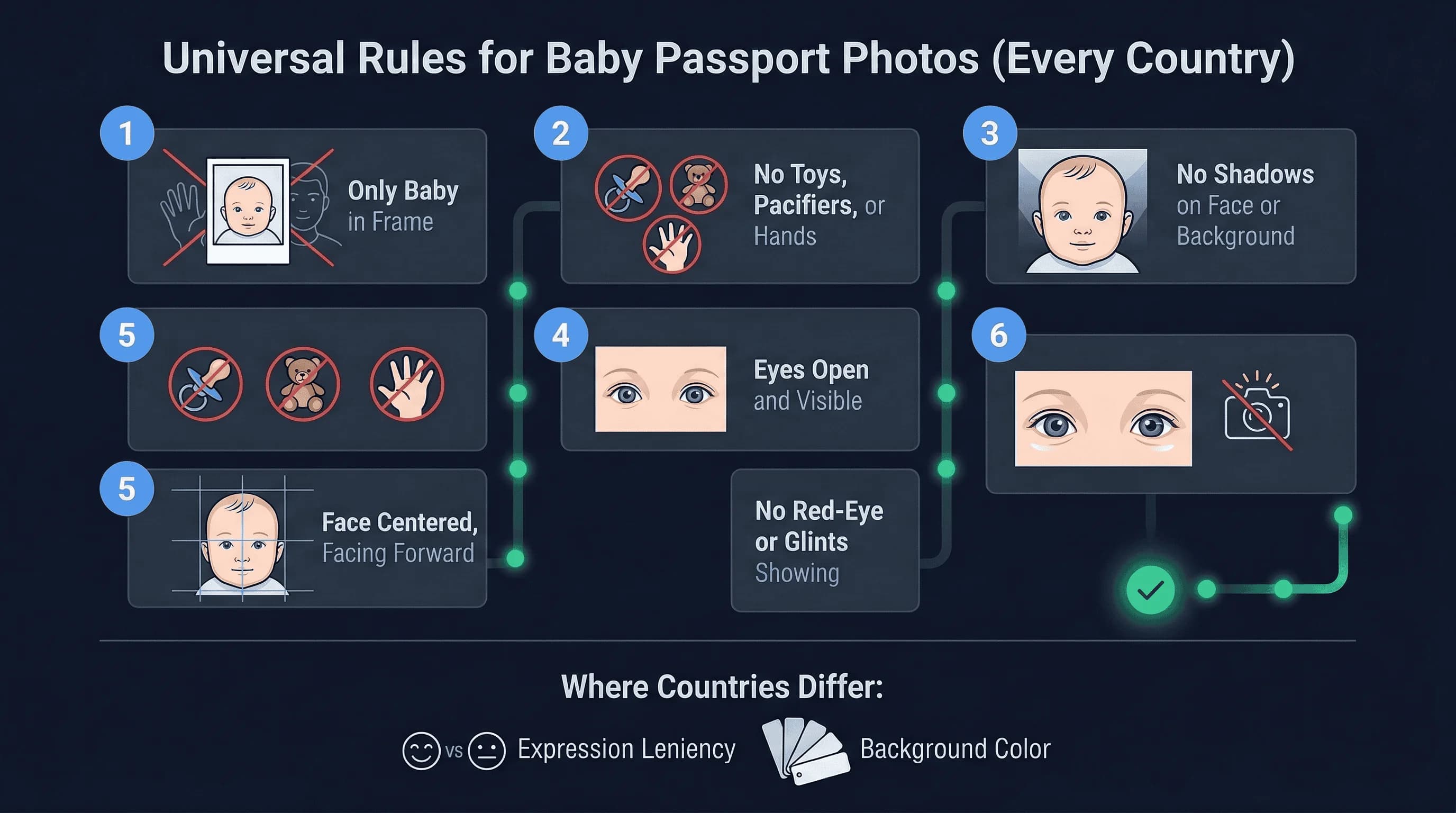
No matter where you're applying, these rules never change:
- The baby must be the only person in the frame
- No toys, pacifiers, or hands visible
- No shadows on the face or background
- Eyes must be open and visible
- The face must be centered and facing forward
- No red-eye or glints on the eyes
The variation comes in on expression leniency and background color. Everything else is universal.
What Infant Passport Photo Rules Mean for Your Application
If you're applying for a US passport, breathe easy. The rules are forgiving. If you're applying for an Australian passport, start early and expect to take many photos.
When in doubt, check your country's official passport website. Requirements change. The information here is accurate as of early 2026, but official sources always take precedence.
For more help, use a passport photo checker to verify your photo meets requirements before you submit. If you're applying for a US passport, check the US requirements to ensure compliance. For tips on actually taking the photo, see our guide to baby passport photos at home.
How to Submit Infant Passport Photos for Different Countries
One practical challenge: if you're applying for passports in two different countries, you likely need two different photos. Even if the baby looks perfect in one, the background color or specifications might not match the other country's requirements.
US and UK are close enough that one photo often works for both — just check the grey versus white background issue. But US and Australia? Different photos. UK and Germany? Different photos.
Start with the strictest country's requirements and create a photo that hits all those marks. Then check if it works for other countries you're applying to. Sometimes it does. Sometimes you'll need a separate session.
When to Start the Infant Passport Photo Process
Don't wait until last minute. Baby passport photos take longer because of the retakes. Build in extra time — at least a week or two beyond what you'd normally budget.
If you're traveling soon and need the passport fast, some countries offer expedited processing for an additional fee. Factor this into your timeline.
And remember: the photo is just one part of the application. Gathering birth certificates, citizenship documents, and consent forms takes time too. Start the passport photo process early so you can retake if needed without rushing.