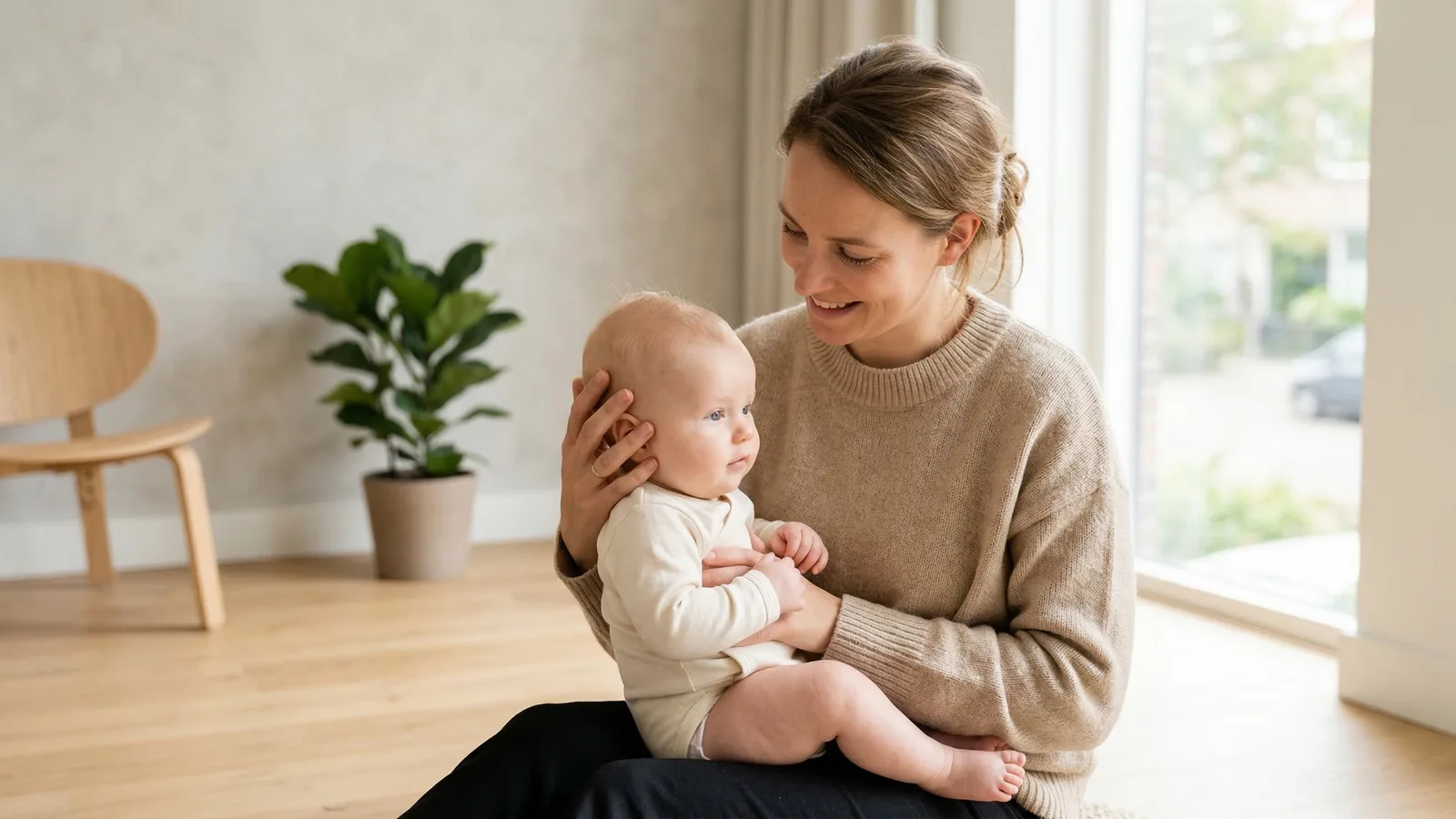
The Netherlands requires passport photos for applicants of all ages, including newborns and infants. Municipal offices (gemeenten) process passport applications for children from birth, but photographing babies presents unique challenges that differ significantly from adult portrait sessions.
Understanding these challenges helps parents work through the process successfully. The technical requirements remain similar — white background, proper dimensions, correct file format — but achieving compliance requires different approaches when your subject can't follow instructions or sit independently.
Dutch Infant Passport Photo Requirements Explained
The Netherlands applies standard passport photo dimensions (35×45mm) to all applicants regardless of age. The background must be plain white. This applies to infant photos too.
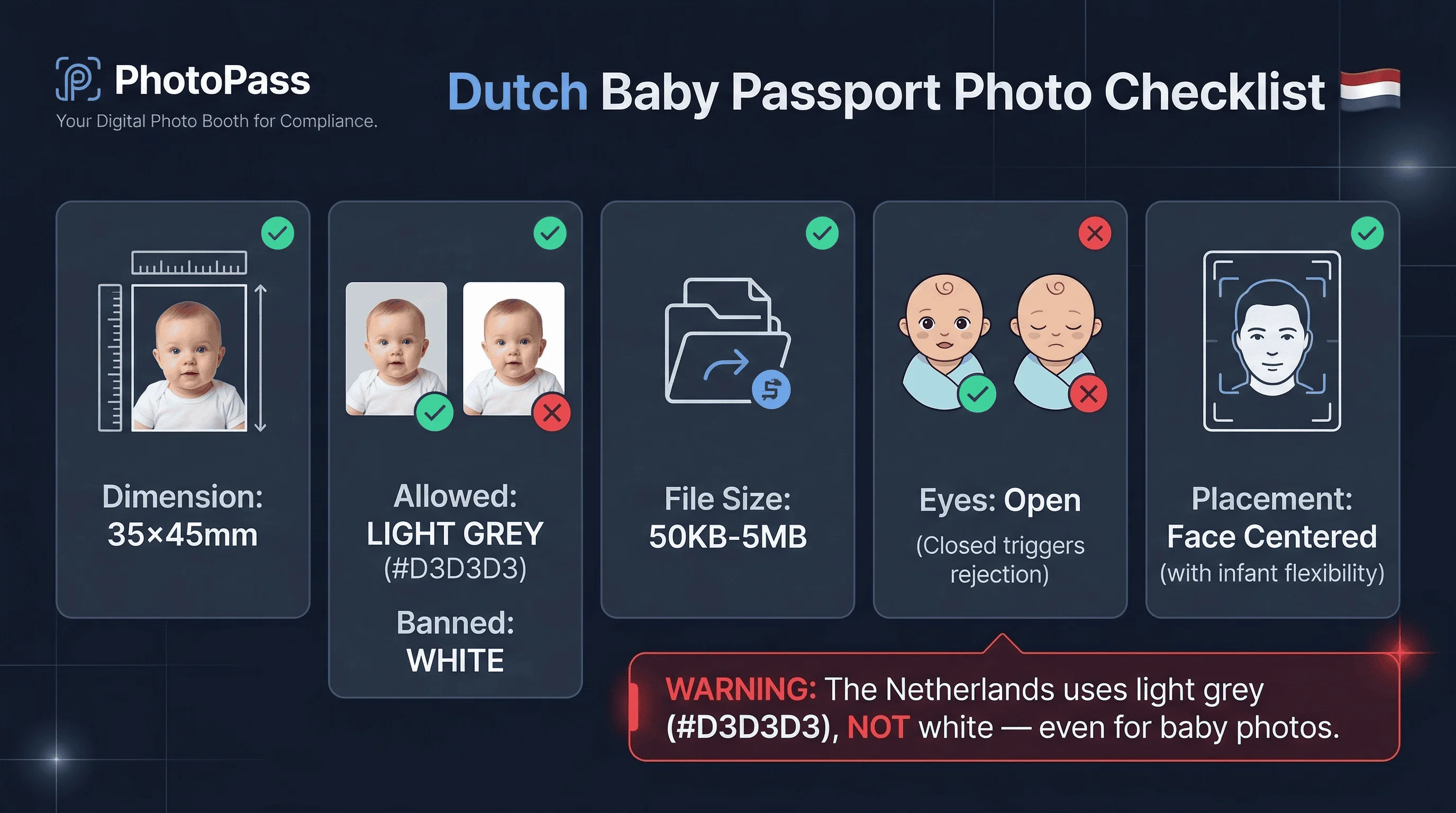
Digital submissions should meet municipal office requirements. File sizes typically range from 50KB to 5MB. Check with your specific municipality for exact requirements.
The head height requirement of 60-80% adjusts for infants. Babies have different facial proportions than adults, and Dutch authorities evaluate infant photos with developmental flexibility. However, the face must remain clearly visible and properly centered.
Get a compliant passport photo online
White Background Rules for Dutch Baby Passport Photos
Dutch passport photos require a plain white background. This applies to infant photos as well.
Professional studios experienced with Dutch passport photos understand how to achieve a uniform white with infant subjects. They have techniques for lighting and positioning that work with babies.
At-home attempts must use a pure white background. Off-white, cream, and grey are rejected. Use a white blanket, foam board, or white wall with even lighting.
How to Photograph Newborns for Dutch Passport Photos
Newborn photography requires careful preparation. Schedule sessions when babies are typically calm — often shortly after feeding. Bring necessary supplies including diapers, feeding bottles, and comfort items.
Use a white blanket or backdrop as your background. Lay your baby on their back on the white surface. Photograph directly from above with the camera pointed straight down. This angle produces the most natural-looking infant photos.
A helper is essential. One person manages the baby while another operates the camera. The helper should attract the baby's attention upward toward the lens with toys or sounds.
Ensure both eyes are visible and open. Closed eyes from sleeping trigger rejection. Time shots to capture alert moments.
Tips for Dutch Passport Photos of Older Infants and Toddlers
As babies grow more active, photography becomes increasingly challenging. Toddlers won't sit still or follow directions. Professional passport photo studios have experience managing these situations.
Consider professional studio services. In the Netherlands, infant passport photos typically cost €10-25. The expertise often justifies the investment.
If attempting at-home photos, use a high chair or car seat for support. Position the seat against a white surface and photograph from directly in front. Remove any visible straps after positioning.
Keep sessions brief and positive. Multiple quick attempts often work better than extended sessions.
Common Mistakes Parents Make with Dutch Baby Photos
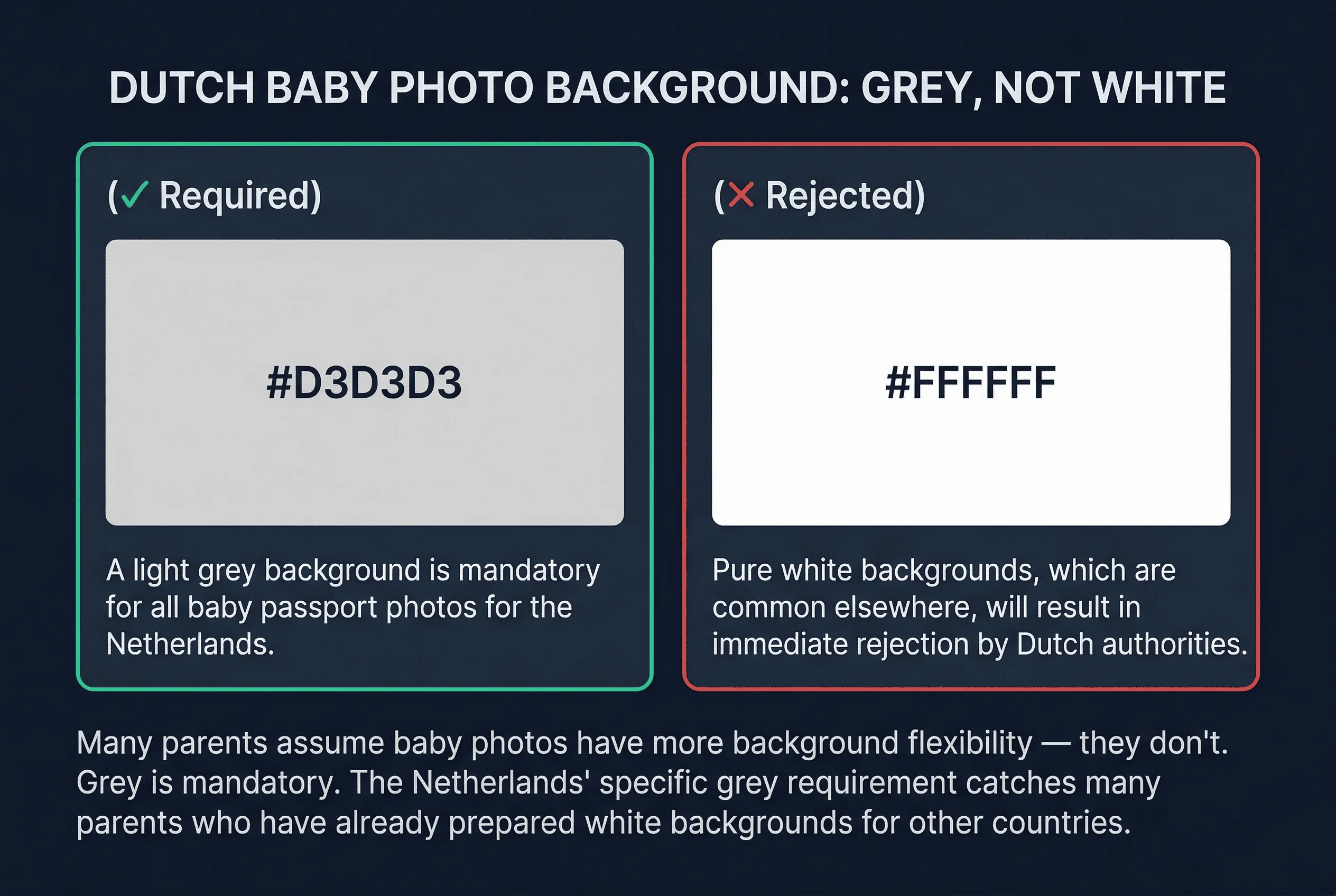
Using off-white or grey backgrounds is the most common error. Dutch passport photos require pure white. Non-white backgrounds are rejected.
Including supporting hands or arms in the frame creates problems. The baby must appear alone against the white background.
Facial expression issues also cause rejections. A natural, relaxed, neutral expression is required.
Professional Dutch Studios for Baby Passport Photos
Professional passport photo studios understand Dutch requirements. They know the white background requirement and can achieve it consistently. They also understand infant photography challenges.
Pharmacy photo services may not always produce the correct background. Verify their experience with Dutch passport photos before using their services.
Dedicated passport photo studios in larger cities typically have the best expertise. Ask specifically about Dutch passport requirements.
Verifying Your Dutch Baby Passport Photo Before Submission
Before submitting, examine the photo at full resolution. Verify the background is pure white with no shadows or colour casts. Confirm both eyes are open and visible. Check that your baby's face is properly centred.
Use our passport photo checker to validate your image against Dutch requirements. This automated tool identifies common issues that cause rejection.
Start the passport process early. Processing times vary by municipality. Building in buffer time prevents travel plan disruptions.
Are Glasses Allowed in Dutch Baby Passport Photos?
The Netherlands bans all glasses in passport photos, including for babies. If your infant wears prescription glasses, remove them before taking the photo.
Where to Get Baby Passport Photos in the Netherlands
Professional photo studios (fotostudio). Studios in Amsterdam, Rotterdam, The Hague, Utrecht, Eindhoven, and other cities. Cost: €10–25. Ask for "pasfoto voor baby, 35×45mm, witte achtergrond" (baby passport photo, 35×45mm, white background).
Pasfotomaat / Photomaton kiosks. Available at train stations and shopping centres. Not recommended for babies — automatic face detection fails with infants.
Etos, Kruidvat, Hema. Some locations offer photo services. Quality varies.
DIY at home. Most practical for babies:
- Lay baby on white blanket
- Use natural window light plus desk lamp
- Shoot from directly above
- Take 20–30 shots in burst mode
Age-Specific Tips for Dutch Baby Passport Photos
Newborns (0–3 months). Easiest to photograph. Lay on a white surface and photograph from directly above. Eyes open is preferred but authorities show some leniency for very young babies. Take at least 20 shots.
Infants (3–12 months). More alert and wiggly. Have a helper hold the baby's attention with a colourful toy above the camera. Use burst mode on your camera. Plan for the session to take 10–15 minutes.
Toddlers (1–3 years). Most challenging age. They resist sitting still and may cry when positioned. Use a high chair or car seat for support. Engage them with a favourite toy held just above the camera lens. Don't make them laugh — keep the expression neutral.
Clothing Recommendations for Dutch Baby Passport Photos
Dress your baby in dark colours that contrast with the white background. Dark reds, blues, and greens photograph well. Avoid white or cream clothing that blends into the background. Remove bows, headbands, and accessories that distract from the face.
Dutch Passport Application Process for Babies at the Gemeente
Applications are submitted at the gemeente (municipal office). Both parents must consent. You'll need the baby's geboorteakte (birth certificate) and both parents' identification. The same 35×45mm white-background photo is required.
Dutch passports for children under 18 are valid for 5 years. Each renewal requires a new photo.
Dutch Baby Passport Photos for Families Living Abroad
If applying from abroad, the same photo rules apply. Dutch embassies and consulates in London, Berlin, Washington DC, Brussels, Paris, and Sydney follow the same requirements. Studios abroad may be unfamiliar with Dutch passport requirements — specify "Dutch baby passport photo, 35×45mm, white background."
Do Not Digitally Edit Dutch Baby Passport Photos
Do not digitally alter the baby's photo. Do not change the background colour, add a white background, or remove objects. Always take the photo correctly from the start.
Camera Settings for DIY Dutch Baby Passport Photos
Use burst mode. Shutter speed 1/200 or faster. ISO 400–800. Focus on the baby's nearest eye.
Quick Checklist for Dutch Baby Passport Photos
- Photo is 35×45mm
- Background is pure white
- No glasses or eyewear
- Neutral expression
- Both eyes open and visible
- Baby's face centred
- Face height is 60–80% of frame
- No hands or supports visible
- No shadows
- Sharp, not blurry
- 300 DPI minimum
Verify your baby's photo with the passportsize-photo.online checker. For size details, see Dutch passport photo size guide. View all Dutch passport photo rules on the Netherlands hub.