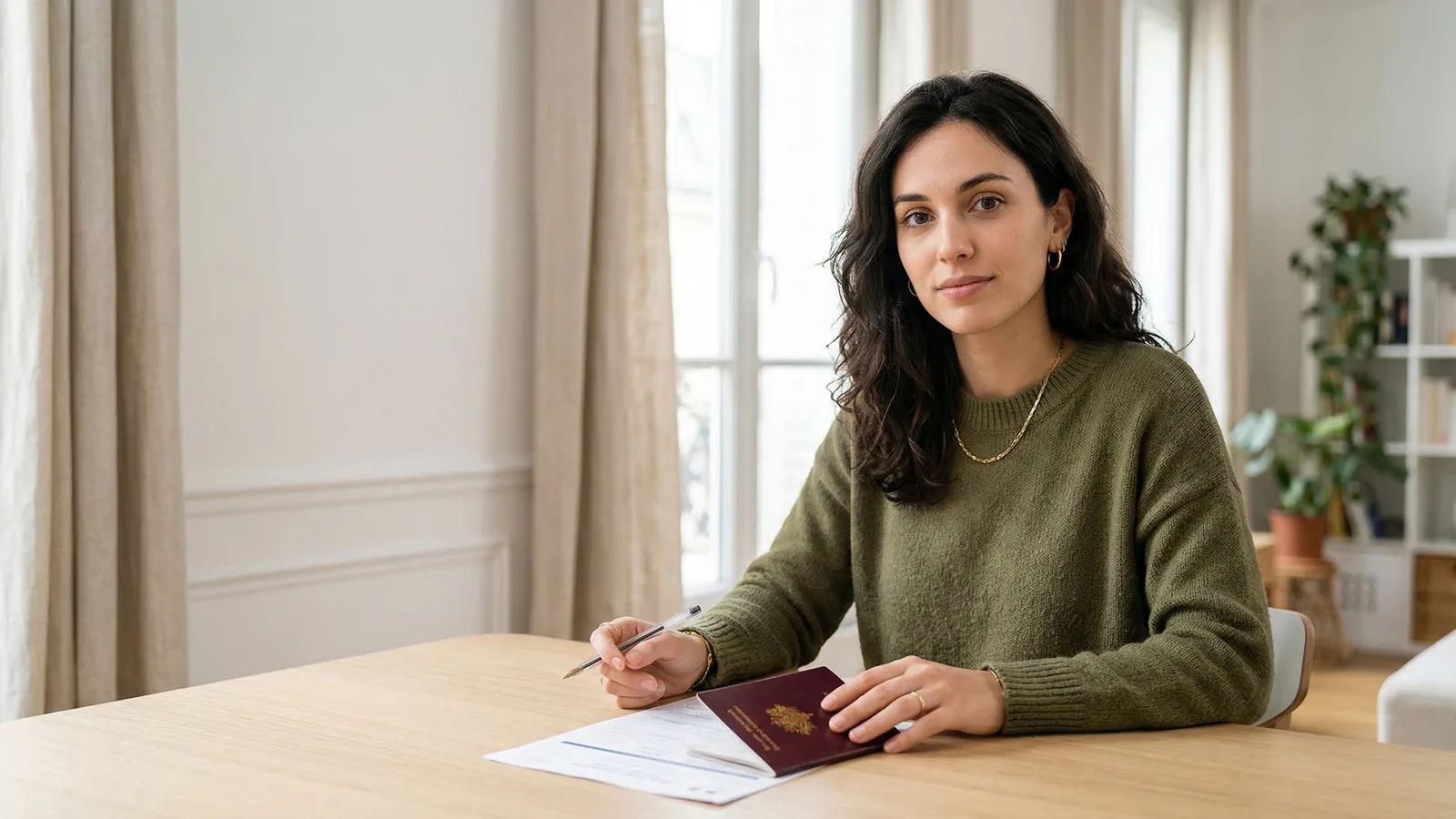
France does NOT allow smiling in passport photos. Your expression must be neutral, with your mouth closed. This is one of the most strictly enforced rules in French passport photography.
Attempting to submit a photo with any hint of a smile leads to automatic rejection. French authorities use automated facial recognition. A smiling face doesn't match the biometric template they'll create from your neutral expression.
What Does Neutral Expression Mean for French Photos?
Neutral doesn't mean blank or angry. It means:
- Mouth closed, lips touching lightly
- Teeth not visible
- No corners of mouth turned up
- Natural jaw position, not clenched
- Relaxed facial muscles
Think "resting face" — the expression you have when you're not thinking about the camera. Most people look neutral without trying.
Get a compliant passport photo online
French Passport Photo Smile Rules vs Other Countries
France shares its no-smile policy with most major countries. Japan, China, Brazil, and Australia all require neutral expression. This makes French requirements align with global standards.
The US is the rare exception — it permits a slight natural smile. The UK, Germany, Canada, India, and virtually all of Europe and Asia require neutral expression, just like France.
If you hold multiple passports, keep a neutral expression for all photos. A neutral face satisfies every country's requirements, including the US.
How to Test Your Neutral Expression Before the Photo
Before your official photo, practice in a mirror. Find your neutral face — the one where your mouth is closed but not pressed shut.
Here's a test: say "Emma" (sounds like "M"). Your lips should part slightly and return to neutral. This tests whether you're naturally closing your jaw or forcing it.
Another method: think about something boring. The DMV. Taxes. Your mind wanders, and your face relaxes into natural neutrality.
Common Expression Mistakes in French Passport Photos
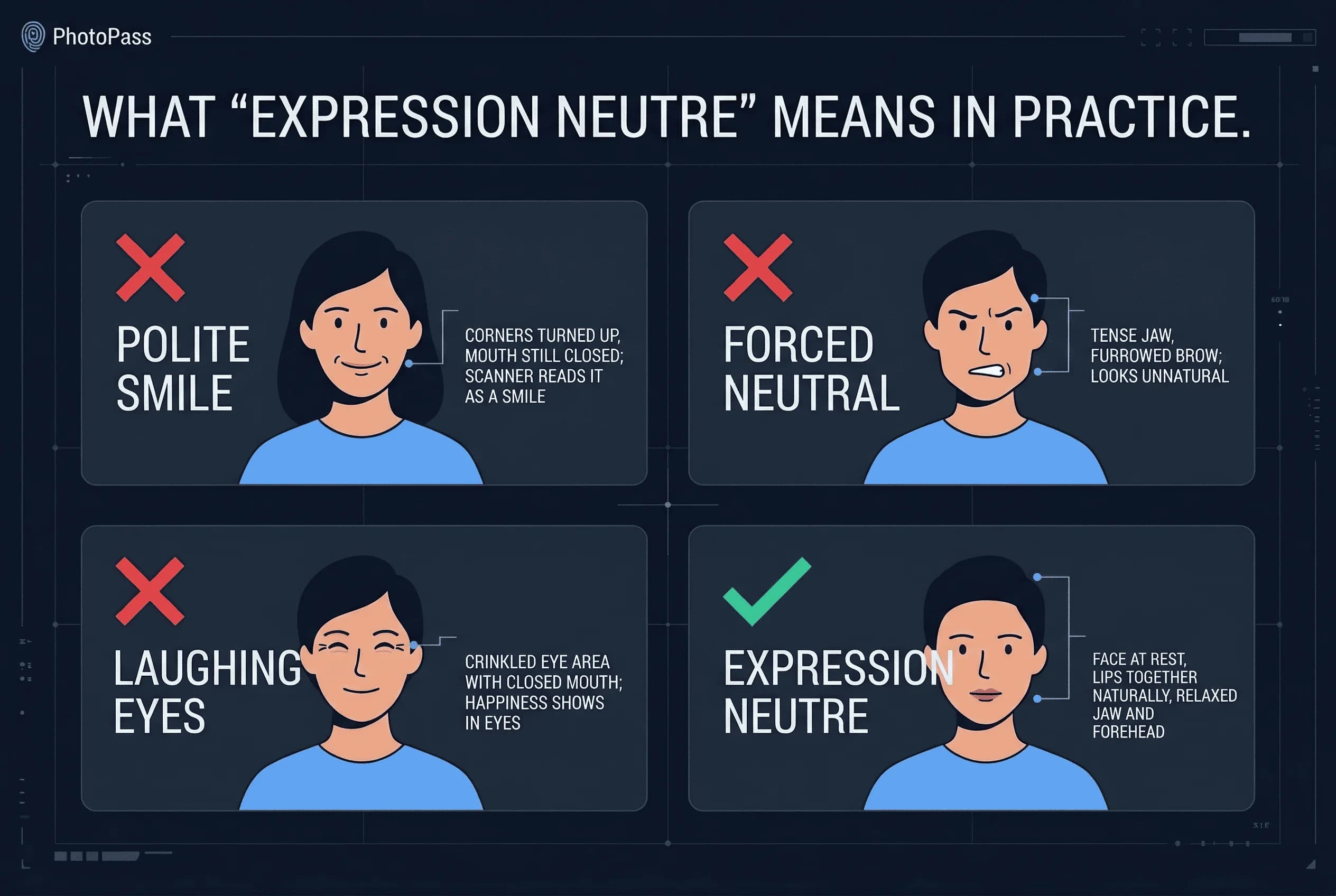
Attempting a polite smile — French culture values politeness, and the instinct to smile when photographed is strong. But your polite smile reads as a smile to the scanner. Consciously override it: pas de sourire.
Forcing "neutral" too hard — Trying to look neutral often creates a tense, unnatural look — pressed lips, furrowed brow, rigid jaw. This is also problematic. Aim for relaxed, not rigid.
Not checking teeth — Some people's teeth show slightly when their mouth is closed. Press your lips together firmly but without creating visible tension.
Laughing eyes — Even with a closed mouth, crinkled eyes suggest happiness. Keep your eye area relaxed. If your eyes naturally crinkle, try looking slightly above the camera lens.
Over-corrected frown — Looking angry or sad because you're trying not to smile. This draws attention during automated review and human verification.
Asymmetric mouth — One corner of the mouth higher than the other reads as a partial smirk. Check both sides in a mirror before the session.
Photography Tips for a Neutral French Passport Photo
Ask your photographer to remind you to relax your face between takes. The muscles need time to release after smiling. If you've been chatting and smiling, pause for 30 seconds and let your face return to baseline.
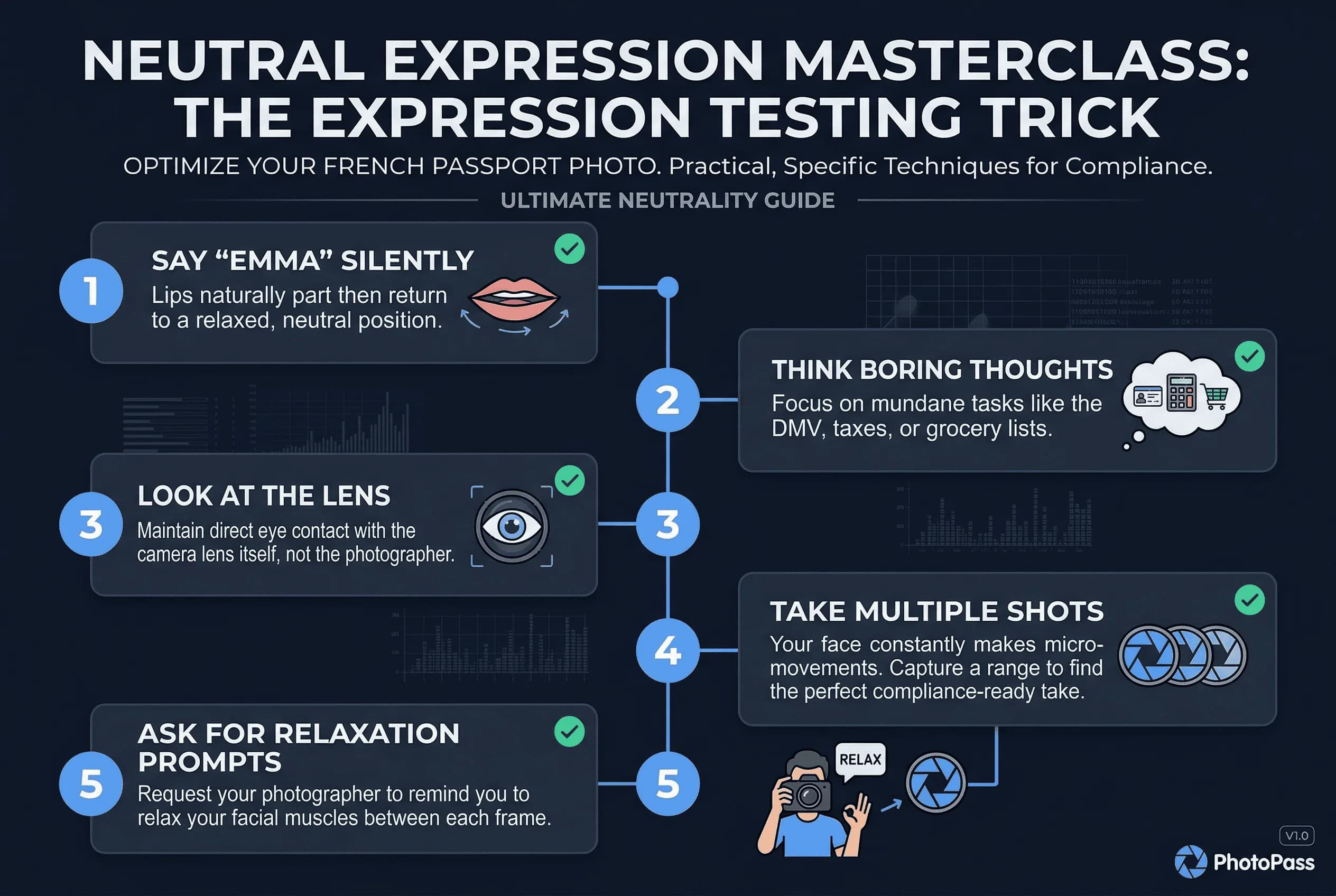
Look at the camera lens, not the photographer. Focusing on a physical point creates a more natural, centred gaze.
Take 15–20 shots. Your face changes with every breath. Review each on a larger screen — phone screens are too small to catch subtle mouth corner raises. Select your best 3–4 frames and compare them side by side.
Breathe out before each shot. Exhaling relaxes the facial muscles. Inhaling creates tension. Ask your photographer to count "1, 2, breathe out" before each click.
Use a photomaton (photo booth) as a last resort. French photomatons in train stations and shopping centres are calibrated for ANTS compliance. They give you instant feedback if your expression fails. However, the lighting quality is basic — a dedicated photo studio produces better results.
What Does Expression Neutre Mean for the ANTS System?
The French term is "expression neutre" — neutral expression. The ANTS system instructions define this as: mouth closed, lips together naturally, no visible teeth, no raised eyebrows, no furrowed brow.
This is not the same as looking blank or unhappy. A neutral expression is relaxed. Your face at rest, not your face trying to look serious. The difference matters because forced seriousness creates tension around the jaw and forehead that looks unnatural and can affect biometric matching.
People with a natural resting expression that looks like a slight smile — sometimes called "resting smile face" — should focus on relaxing the corners of their mouth. Don't pull them down. Just let them rest. A mirror helps you find the difference between your neutral and your mild smile.
Why Expression Matters for French Facial Recognition
The facial recognition software analyzes your expression to create a biometric template. This template matches your face against future identity verification attempts at French border control.
Any discrepancy between your photo's expression and your actual face causes problems at automated e-gates. The system expects a neutral baseline. A smiling passport photo creates a geometric mismatch — your cheek positions, eye aperture, and mouth shape all shift when you smile. That mismatch triggers manual verification every time you pass through a French airport.
What Happens If France Rejects Your Photo for Smiling?
If your photo is rejected for expression at the ANTS portal or préfecture, you'll receive a notification that the photo doesn't meet specifications. The rejection notice may not explicitly say "smile" — it may reference "expression non conforme" (non-compliant expression).
You'll need to submit a new photo. ANTS allows re-uploads, but each rejection cycle adds processing time. For urgent travel, this can mean missing deadlines.
Common expression-related rejection triggers:
- Any visible teeth
- One or both mouth corners raised
- Crinkled "smiling eyes" (yeux qui sourient)
- Visible facial tension from over-correcting
- Asymmetric mouth positioning
French Passport Photo Expression Specifications Summary
For the complete picture, France's passport photo requires:
- Size: 35×45mm (413×531 pixels at 300 DPI)
- Background: White (#FFFFFF)
- Expression: Strictly neutral — expression neutre
- Glasses: Not allowed
- Head height: 32–36mm in print
- Recency: Taken within 6 months
Expression Rules for French Children's Passport Photos
Even young children must have neutral expressions. For infants, French authorities are somewhat more lenient — capturing a baby's neutral moment is recognised as difficult. However, parents should still aim for a calm, alert face with mouth closed.
For toddlers and older children, the neutral expression rule applies normally. Distract the child with something calm (not a toy that provokes laughter), then capture the shot quickly.
Smile Rules for French Citizens Renewing Abroad
If applying for or renewing your French passport at a consulat de France abroad, the same expression neutre rule applies. Photo studios overseas may not know French-specific requirements — always specify "expression neutre, pas de sourire, bouche fermée."
Quick Checklist for French Passport Photo Expression
- Bouche fermée (mouth closed)
- No teeth visible
- Mouth corners level (not raised)
- Eyes open and relaxed
- No "laughing eyes"
- Forehead smooth (no raised eyebrows)
- Face relaxed, not tense
- No glasses
Verify your expression with the passportsize-photo.online checker. For complete France passport details, see the France requirements hub. For size specifications, see the France passport photo size guide.