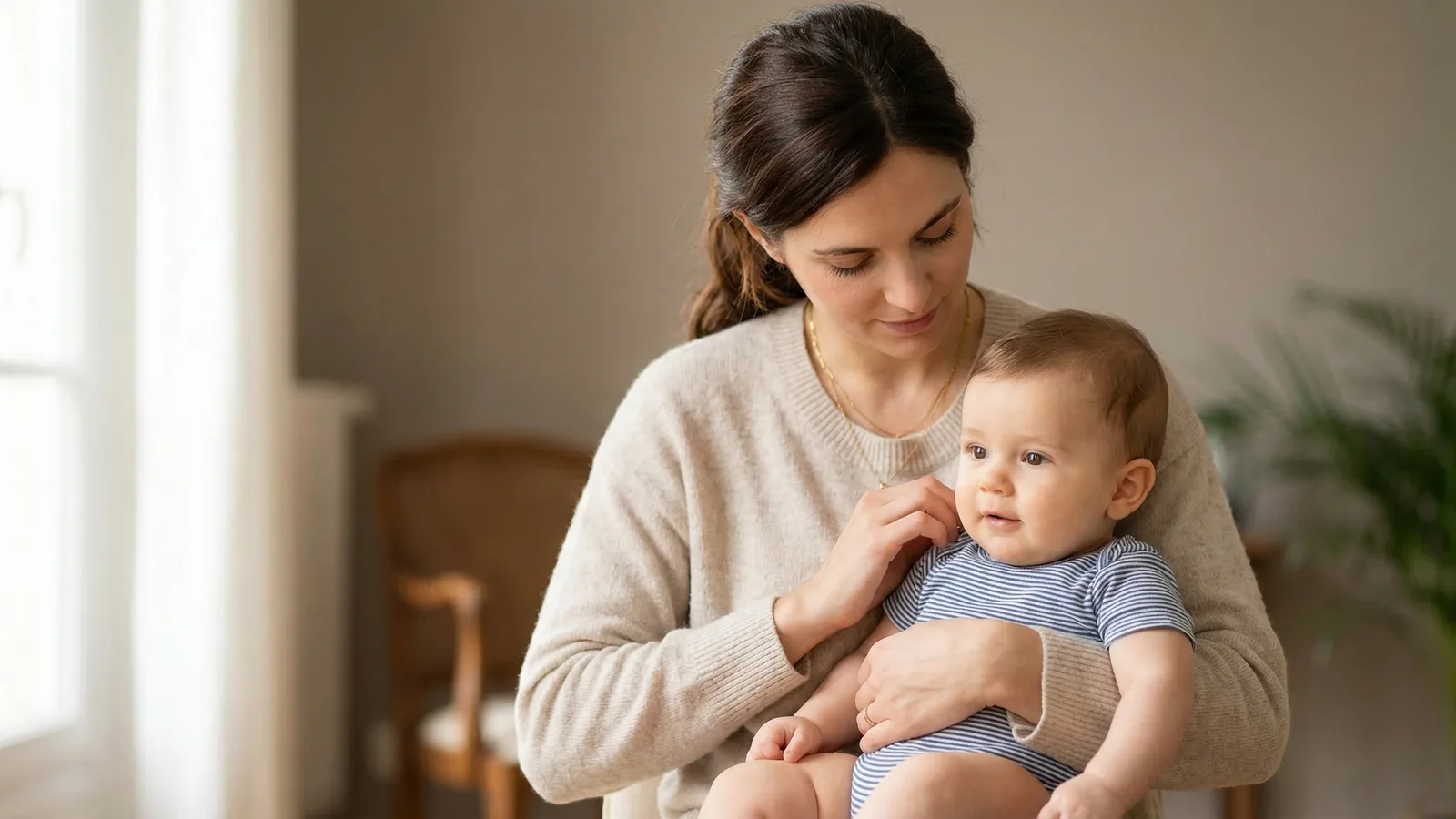
France allows baby passport photos with more flexibility than adult photos. The ANTS (Agence Nationale des Titres Sécurisés) understands that infants cannot maintain neutral expressions on command. However, certain rules still apply — and violations cause rejection.
This guide covers everything from exact specifications to practical tips for photographing a wiggly baby.
French Baby Passport Photo Size and Dimensions
Baby passport photos in France follow standard adult dimensions: 35×45mm. The photo must be printed at 300 DPI, yielding 413×531 pixels.
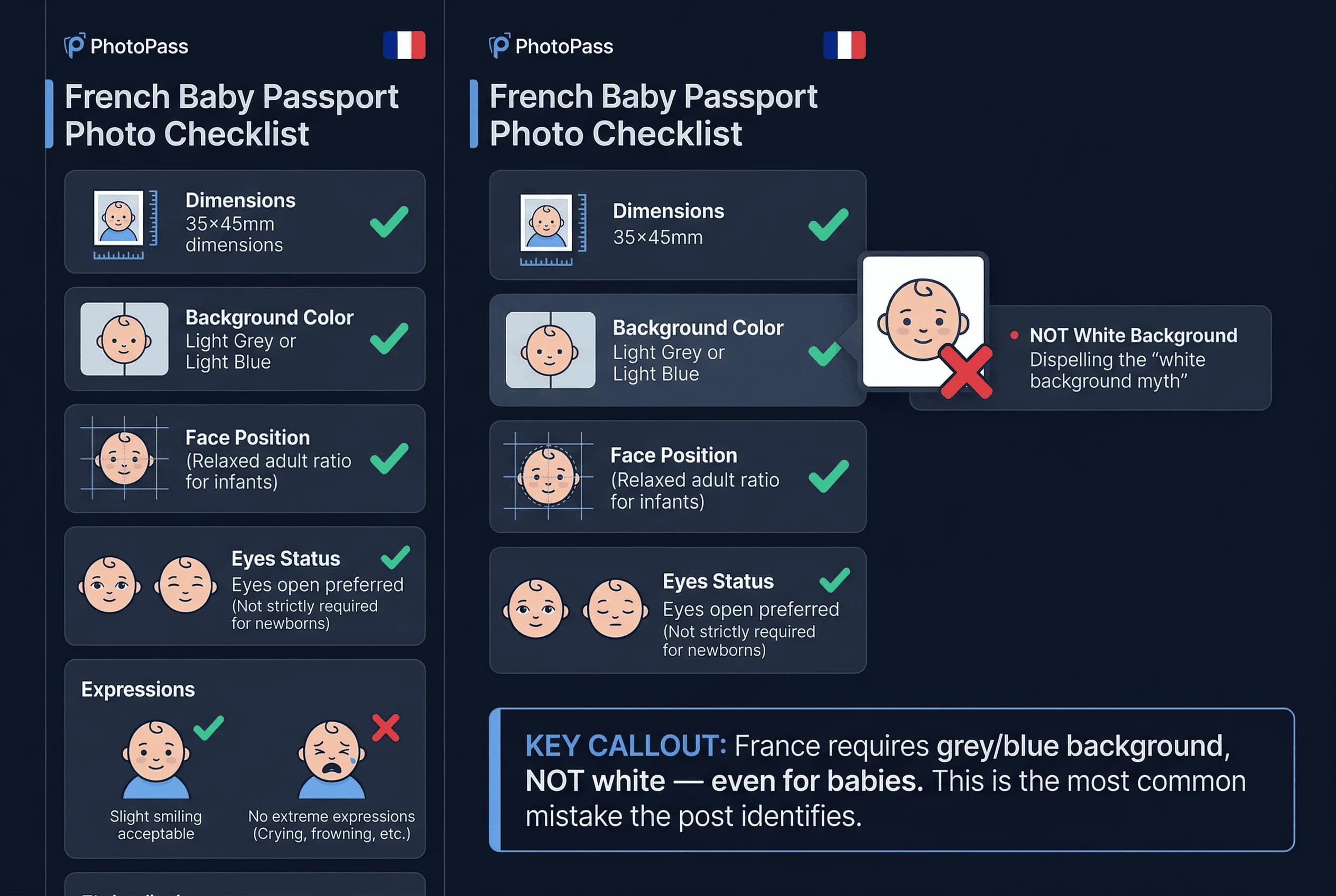
However, the face-to-frame ratio differs for infants. French authorities allow more flexibility. The baby's face should be clearly visible and centred, but the strict 70-80% adult ratio doesn't strictly apply to newborns.
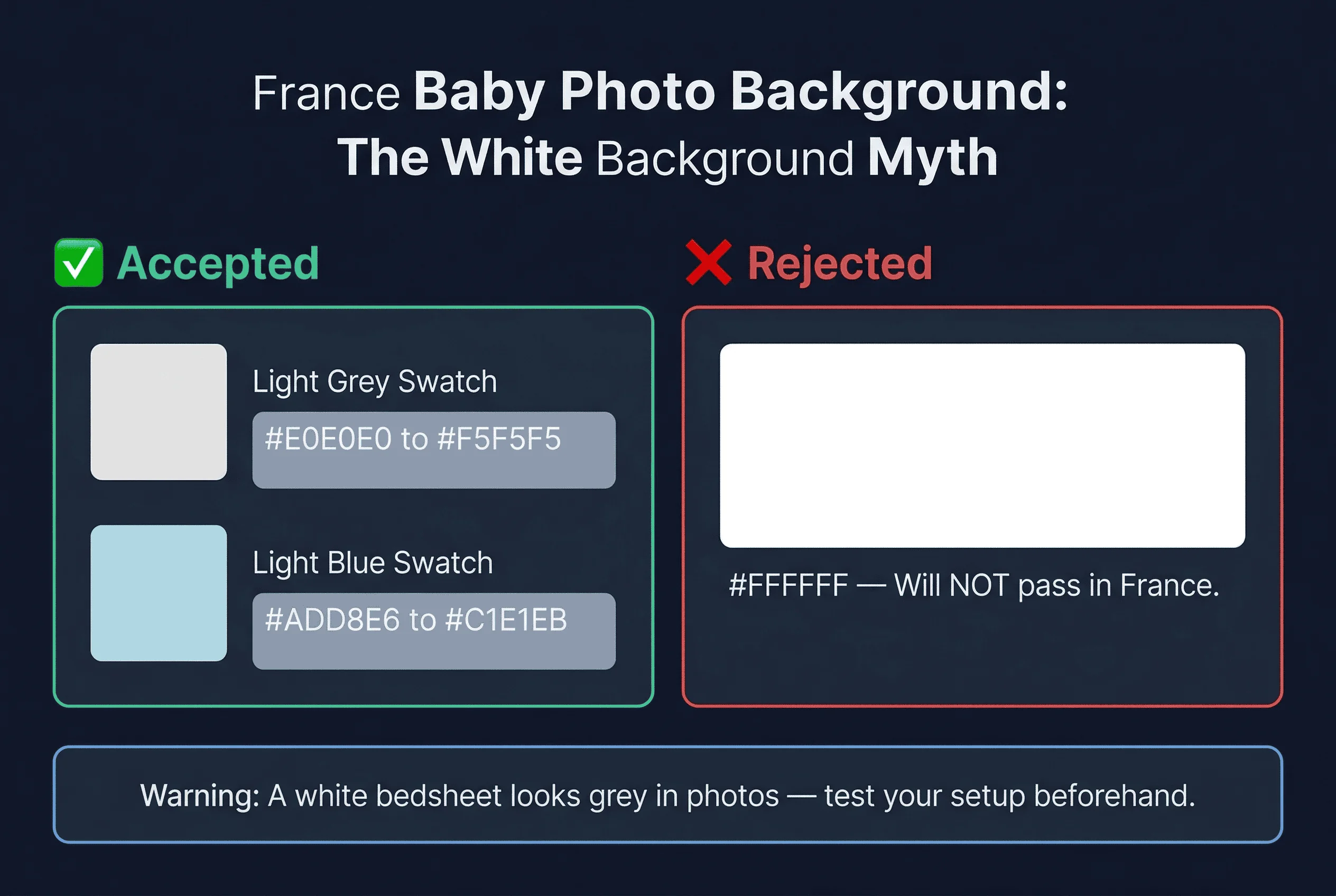
The background must be white — the same as adult photos. Off-white, grey, and coloured backgrounds are rejected.
Get a compliant passport photo online
Expression Rules: What France Allows for Baby Photos
France permits expression flexibility for babies that would never work for adults. Here's what passes:
- Eyes open — preferred but not strictly required for very young infants
- Neutral or smiling — slightly smiling is acceptable
- Mouth open or closed — either works
However, "flexible" doesn't mean "anything goes." Extreme expressions still fail. A screaming baby with distorted features gets rejected. A sleeping baby with closed eyes faces possible rejection.
The key is natural. A content baby with relaxed features passes. A baby mid-cry fails.
Setup Tips That Actually Work for Baby Passport Photos
Photographing a baby requires patience and planning. Here's what works:
Timing Is Everything for Baby Photos
Schedule the photo session when your baby is typically calm. After a feeding but before nap time. Most babies have a 30-60 minute window of contentment.
Have everything ready before waking the baby. Lights positioned, background set, camera on. You get one good chance.
The Floor Method for Baby Passport Photos
Lay your baby on a white blanket on the floor. This provides a solid background and allows for overhead shots. The baby can't crawl away, and you can shoot straight down.
Position yourself directly above. Your phone or camera should be parallel to the baby's face, not angled.
Capture the Baby's Eyes Open First
Infants often close their eyes unexpectedly. Take multiple shots rapidly. Review each immediately. Delete failures and reshoot.
Ten shots minimum. Twenty isn't excessive. You're looking for one perfect frame.
White Background Required for French Baby Photos
France requires a plain white background for baby passport photos — the same as adult photos. Off-white, cream, grey, and coloured backgrounds are all rejected.
A white wall or white blanket works. Ensure even lighting so the white reads as pure white without shadows or colour casts.
Clothing Guidelines for French Baby Passport Photos
Dress your baby in contrasting colours to the white background. Dark reds, blues, greens, and browns photograph well.
Avoid white or cream clothing. It blends into the white background and may confuse automated systems. Solid dark colours photograph best.
Remove bows, headbands, and elaborate outfits. Keep it simple. The photo should show the baby's face clearly.
Are Glasses Allowed in French Baby Passport Photos?
France bans all glasses in passport photos, including for babies. If your infant wears prescription glasses, remove them before taking the photo. This applies to all types of eyewear — prescription frames, sunglasses, and tinted lenses.
Common French Baby Passport Photo Rejection Reasons
Closed eyes — While sometimes accepted, open eyes are strongly preferred. Try to capture eyes open.
Shadows — Poor lighting creates shadows on the face or background. Use even, diffused lighting from directly in front.
Blurriness — Babies move. High shutter speed helps. Review images on your camera's zoom view to check sharpness.
Wrong background colour — Off-white, cream, or grey backgrounds fail. France requires pure white.
Photomaton Alternatives for French Baby Passport Photos
In France, photomaton booths sometimes accommodate babies. However, the machines aren't designed for infants. The automatic face detection often fails.
Many parents prefer home photos for babies. You have unlimited attempts. No strangers watching. No time pressure.
If using a professional photographer, call ahead. Explain you need an infant passport photo. Ask if they've shot French baby passports before. Experience matters.
Digital Submission for French Baby Passport Photos
The ANTS portal accepts digital uploads for baby passport applications. File requirements mirror adult submissions:
- JPEG or PNG format
- 20KB to 500KB file size
- Minimum 413×531 pixels
- No older than six months
Take more photos than you need. Digital storage is free. Embarrassment from deleting dozens of baby photos costs nothing. Rejection costs time and money.
When to Start the French Baby Passport Photo Process
Begin passport photo planning early. Processing takes time. If your first submission fails, you need buffer for reshoots.
For newborns, some parents wait until the baby can hold their head up. Earlier photos are possible but more challenging. There's no minimum age for a French passport photo, but practical considerations matter.
Where to Get Baby Passport Photos in France
Professional photo studios (photographe professionnel). Studios in every city and town. Ask for "photo de passeport pour bébé, 35×45mm, fond blanc" (baby passport photo, 35×45mm, white background). Cost: €5–15.
Photomaton booths. Look for the "agréé ANTS" sticker indicating ANTS approval. Not recommended for babies — automatic face detection is designed for adults and often fails with infants.
DIY at home. The most practical option:
- Lay baby on white blanket
- Use natural window light plus a desk lamp
- Shoot from directly above
- Take 20–30 rapid shots in burst mode
Age-Specific Tips for French Baby Passport Photos
Newborns (0–3 months). Easiest to photograph. Lay them on a white surface. Eyes open preferred but authorities show some leniency at this age.
Infants (3–12 months). Have a helper hold the baby's attention with a colourful toy above the camera. Use burst mode.
Toddlers (1–3 years). Most challenging. Use a favourite toy held just above the camera lens to get a brief moment of calm.
French Passport Application Requirements for Babies
Applications are submitted at the mairie (town hall) or préfecture. Both parents must consent. You'll need the baby's acte de naissance (birth certificate), livret de famille, and both parents' identification. The same 35×45mm white-background photo is required.
French passports for children under 5 are valid for 5 years. Each renewal requires a new photo.
French Baby Passport Photos for Citizens Abroad
If you're applying for your baby's French passport from abroad, the same photo rules apply. French embassies and consulates in London, Washington DC, Brussels, Berlin, Montreal, and Sydney all follow ANTS requirements.
Camera Settings for French Baby Passport Photos
Use burst mode. Shutter speed 1/200 or faster. ISO 400–800. Focus on the baby's nearest eye. Natural daylight produces the most even illumination.
Quick Checklist for French Baby Passport Photos
Before submitting your baby's French passport photo:
- Photo is 35×45mm
- Background is pure white
- No glasses or eyewear
- Neutral or slightly smiling expression (for babies)
- Eyes preferably open
- Baby's face is visible and centred
- No shadows on face or background
- Photo is sharp and not blurry
- 300 DPI minimum resolution
- No bows, headbands, or head coverings
Verify your baby's photo meets all French passport requirements with the passportsize-photo.online checker. For size details, see French passport photo size guide. View all French passport photo rules on the France hub.