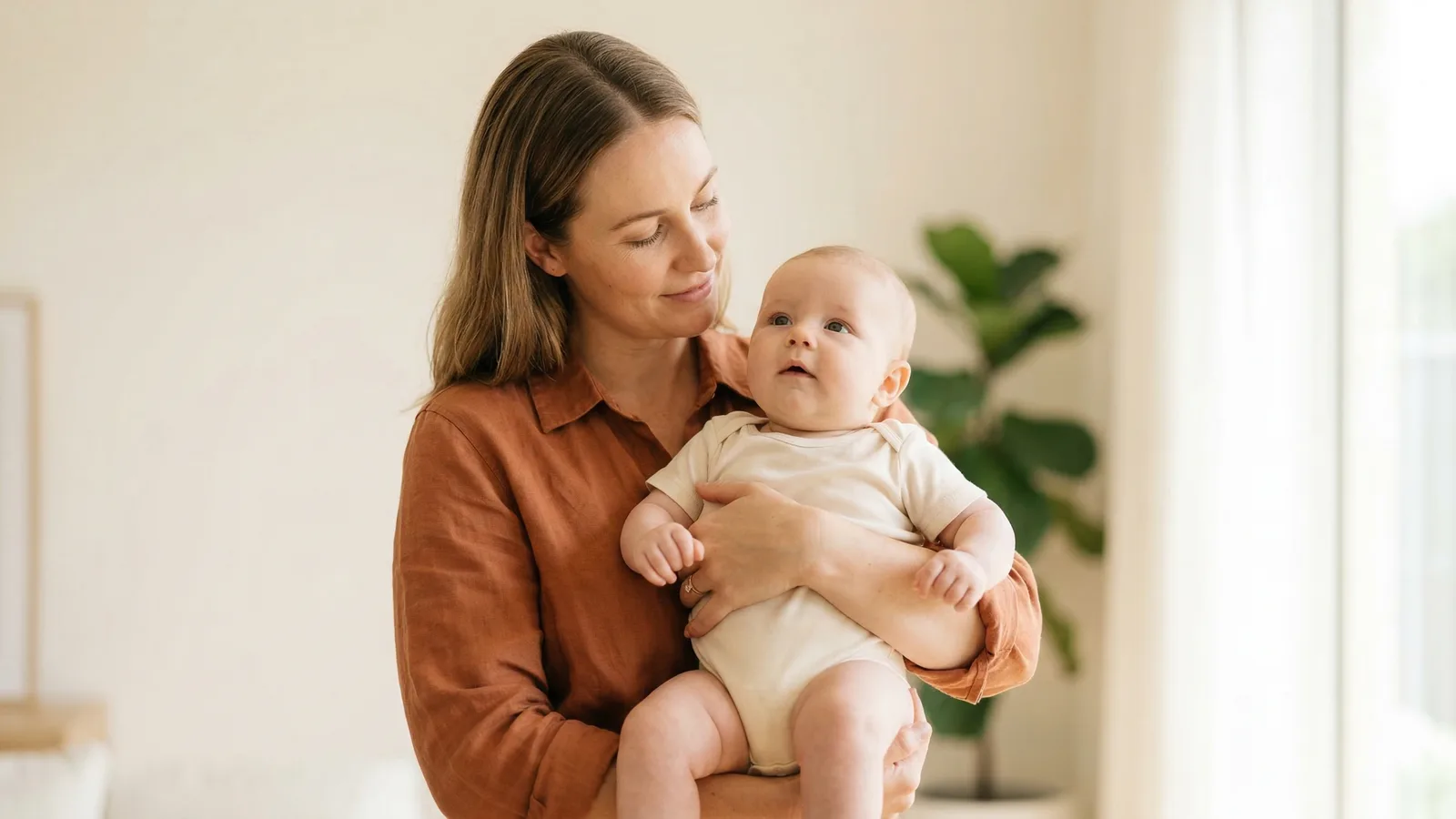
Australia permits baby passport photos with more flexibility than adult photos, but some unique requirements apply. Beyond standard specifications, Australia has a guarantor requirement that catches many parents off guard.
This guide covers everything from dimensions to the guarantor process.
Australian Baby Passport Photo Dimensions (35×45mm)
Australia uses standard 35×45mm passport photos for adults and children alike.
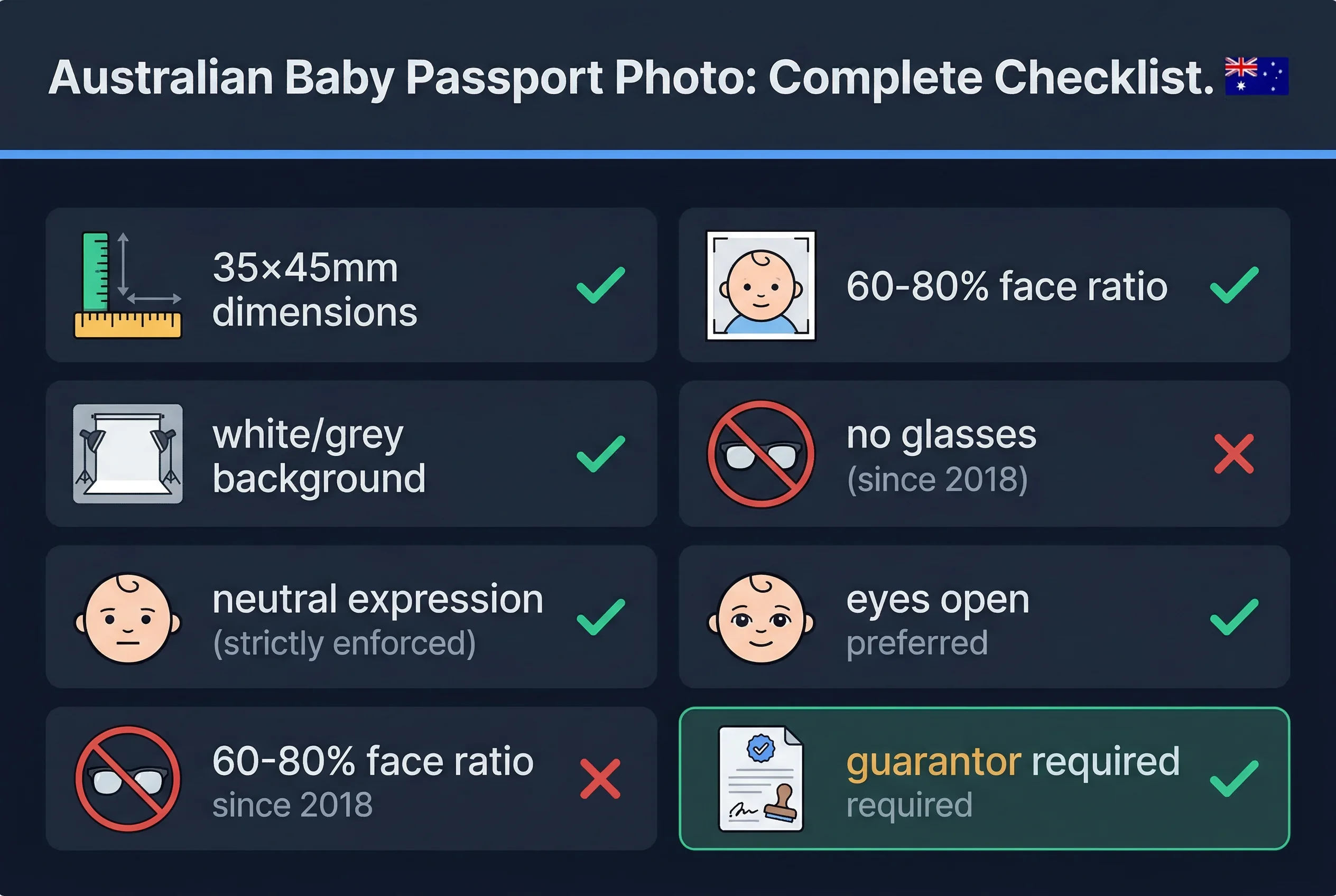
At 300 DPI, this translates to 413×531 pixels.
The size is straightforward. The challenges lie elsewhere.
Get a compliant passport photo online
White or Grey Background for Australian Baby Photos
Australia accepts white or light grey backgrounds. This flexibility helps with home photography.
Use either:
- Pure white (#FFFFFF)
- Light grey (#E0E0E0 range)
Ensure even lighting without shadows.
What Expression Is Allowed in Australian Baby Passport Photos?
Australia is AMONG THE STRICTEST countries for expression enforcement — even for babies. While some flexibility exists, it's limited.
What typically passes:
- Eyes open (strongly preferred)
- Neutral or very slightly relaxed expression
- Mouth closed
What typically fails:
- Visible smile (even slight)
- Screaming with distorted features
- Eyes closed in older infants
The key is near-neutral. Australia rejects smiles more strictly than most countries.
Does Australia's No Glasses Rule Apply to Babies?
Since 2018, Australia bans all glasses — including for babies. This rule applies to infants.
If your baby wears infant glasses, they'll need to remove them for the passport photo. This may require pediatrician guidance if removing glasses distresses the baby.
The Australian Passport Guarantor Requirement for Babies
Australia requires a guarantor for passport applications. This applies to baby photos too.
What this means
- Someone must certify the photo is a true likeness
- The guarantor writes their details on the back of one photo
- The guarantor must have known the applicant for at least 12 months
For babies
- A parent can be guarantor if they have an Australian passport
- The guarantor must sign the back of one printed photo
- Digital submissions still require guarantor information
This catches many parents unprepared. Factor this into your timeline.
Face-to-Frame Ratio for Australian Baby Photos
Australia allows 60-80% face-to-frame ratio. This provides flexibility.
For babies, this accommodates various head sizes. Position for clear facial visibility.
Photography Tips for Australian Baby Passport Photos
Timing Your Baby's Photo Session
Photograph during a calm window. After feeding, before nap. Have equipment ready.
Setting Up the Background and Lighting
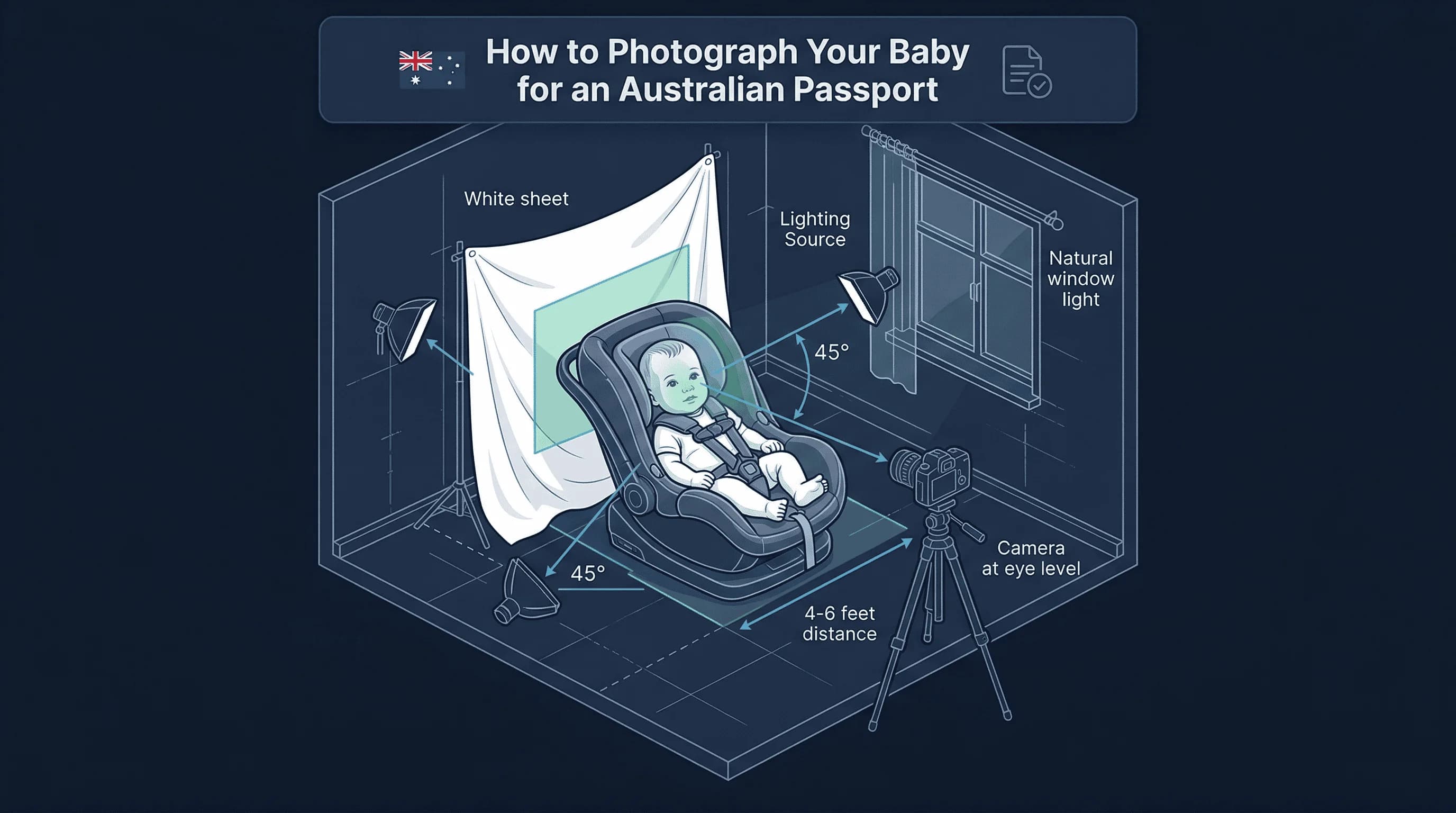
Lay baby on a white or light grey surface. Ensure even lighting.
Capture Rapidly with Burst Mode
Take many photos. Review each. Delete failures immediately.
Plan for 20-30 attempts.
Clothing for Baby Passport Photos
Dress in contrasting colours to the background. Dark reds, blues, and greens show well against white. Avoid white or cream clothing that blends into the background. Also avoid clothing with hoods, high collars, or anything that obscures the chin or jawline.
Use a Helper for Better Results
Have a second person present. One person holds the baby's attention (toy, noise, or gentle touch near the camera) while the other operates the camera. This doubles your success rate for getting the baby to look forward with eyes open.
Common Australian Baby Passport Photo Rejection Reasons
Smile — Even slight smiles fail. Australia's enforcement is strict.
Eyes closed — Open eyes strongly preferred.
Wrong background — Ensure white or light grey.
Guarantor issues — Missing guarantor information delays processing.
DFAT Infant Exemptions for Australian Baby Photos
The Department of Foreign Affairs and Trade (DFAT) grants limited exemptions for infants. Babies under 12 months may have slightly open mouths. Eyes must still be open and visible. Newborns under 4 weeks receive the most flexibility — DFAT acknowledges that very young babies cannot control their expressions.
These exemptions are informal. They're applied at the reviewer's discretion, not as written policy. Don't rely on them. Aim for full compliance and treat any leniency as a bonus.
Where to Get Baby Photos in Australia
Australia Post. Most Australia Post branches offer passport photo services. Staff are trained on DFAT requirements and will reshoot if needed. Cost: AUD $19.95. This is the most popular option because Australia Post also processes passport applications.
Officeworks. Photo printing services at Officeworks stores across Australia. You can print passport-sized photos from digital files. Cost: varies by location.
Professional photography studios. Studios in Sydney, Melbourne, Brisbane, Perth, Adelaide, and other cities. Cost: AUD $15–30. Ask for "Australian baby passport photo, 35×45mm, white background."
Pharmacies. Some pharmacies offer passport photo services, particularly in shopping centres.
DIY at home. The most practical option for babies:
- Use the car seat method: recline a car seat, drape a white sheet behind the baby's head
- Shoot from directly in front using natural window light
- Take at least 30 shots — you need one frame with eyes open, mouth closed, face centred
- White background is the safest choice per DFAT requirements
Age-Specific Tips for Australian Baby Passport Photos
Newborns (0–4 weeks). DFAT is most lenient at this age. A sleeping newborn with slightly closed eyes may pass, but eyes open is always preferred. Lay the baby on a white blanket and photograph from directly above.
Infants (1–12 months). More alert. Have a helper hold the baby's attention with a colourful toy above the camera. Use burst mode. Avoid using flash — it startles babies and creates harsh shadows.
Toddlers (1–3 years). Most challenging age. They resist sitting still and may smile reflexively. Engage them with a favourite toy but don't make them laugh — Australian requirements reject smiles. Use a calm, neutral distraction.
Camera Settings for DIY Australian Baby Passport Photos
Use burst mode (continuous shooting). A shutter speed of 1/200 or faster prevents motion blur from sudden head turns. ISO 400–800 is acceptable indoors. Focus on the baby's nearest eye. Natural window light from a north-facing window (in the Southern Hemisphere) provides soft, even illumination.
Applying Online via the Australian Passport Office
The Australian Passport Office (APO) accepts online applications. You can upload a digital photo. The system performs automated checks, but DFAT reviewers also manually assess baby photos. Upload the highest quality image possible — at least 300 DPI.
Australian Baby Passport Photos for Citizens Abroad
If you're applying for your baby's Australian passport from abroad, the same photo rules apply. Australian embassies and high commissions in London, Washington DC, Wellington, Singapore, Tokyo, and Jakarta all follow DFAT requirements.
Studios abroad may be unfamiliar with Australian requirements. Specify: "Australian baby passport photo, 35×45mm, white background, no smile."
Australian Passport Renewal for Children Under 16
Australian passports for children under 16 are valid for 5 years. Each renewal requires a new photo. Babies' faces change rapidly — budget for multiple photo sessions over the early years.
Quick Checklist for Australian Baby Passport Photos
Before submitting your baby's Australian passport photo:
- Photo is 35×45mm
- Background is white (safest choice)
- No glasses or eyewear
- No smile — neutral expression
- Eyes preferably open
- Baby's face is visible and centred
- Face height is 60–80% of frame
- No shadows on face or background
- Photo is sharp and not blurry
- 300 DPI minimum resolution
- Guarantor has signed the back of one printed photo
Verify your baby's photo meets all Australian passport requirements with the passportsize-photo.online checker. For size details, see Australian passport photo size guide. View all Australian passport photo rules on the Australia hub.