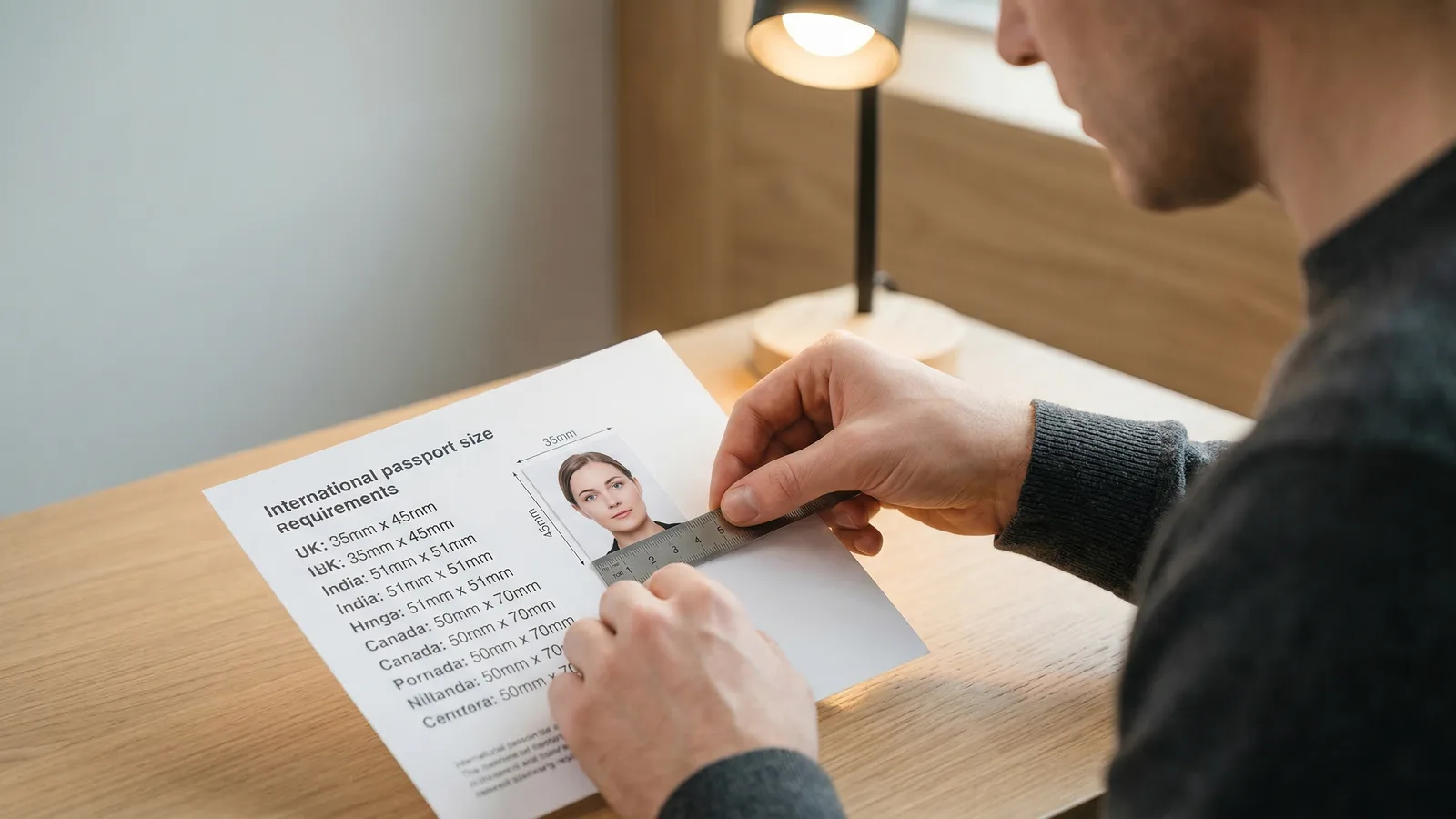
US passport photos must be 2×2 inches (51×51mm), with the head measuring between 1 and 1.38 inches from chin to top of head (50–69% of the frame). Most other countries use a 35×45mm rectangle, which looks slightly different but serves the same purpose. Understanding these dimensions matters because a photo that's perfect for one country's passport might get rejected for another.
The variation exists because each country sets its own identification standards. The US uses a square format; most of Europe and Asia prefer rectangular photos that allow more of the shoulders and chest to appear. The 2×2 inch standard dates back to when passports were smaller books, and the format stuck even as document sizes changed.
When you're applying for passports from multiple countries or traveling frequently, knowing these differences becomes practical. A traveler with both US and European passports needs two different photo sizes. Anyone renewing a non-US passport while in America needs to specify the correct destination country to their photo vendor.
Passport Photo Sizes by Country: Inches, mm, and Pixels
| Country | Inches | Millimeters | Pixels (300 DPI) |
|---|---|---|---|
| United States | 2×2 | 51×51 | 600×600 |
| United Kingdom | 35×45 | 35×45 | 413×531 |
| Canada | 2×2.8 | 50×70 | 591×827 |
| Australia | 35×45 | 35×45 | 413×531 |
| Germany | 35×45 | 35×45 | 413×531 |
| France | 35×45 | 35×45 | 413×531 |
| India | 1.4×1.4 | 35×35 | 413×413 |
| China | 33×48 | 33×48 | 389×567 |
| Japan | 35×45 | 35×45 | 413×531 |
| Brazil | 2×2.8 | 50×70 | 591×827 |
United States uses 2×2 inches (51×51mm), with the face taking up roughly half the vertical space. This is one of the few countries that uses a square format, which sometimes surprises travelers used to rectangular photos.
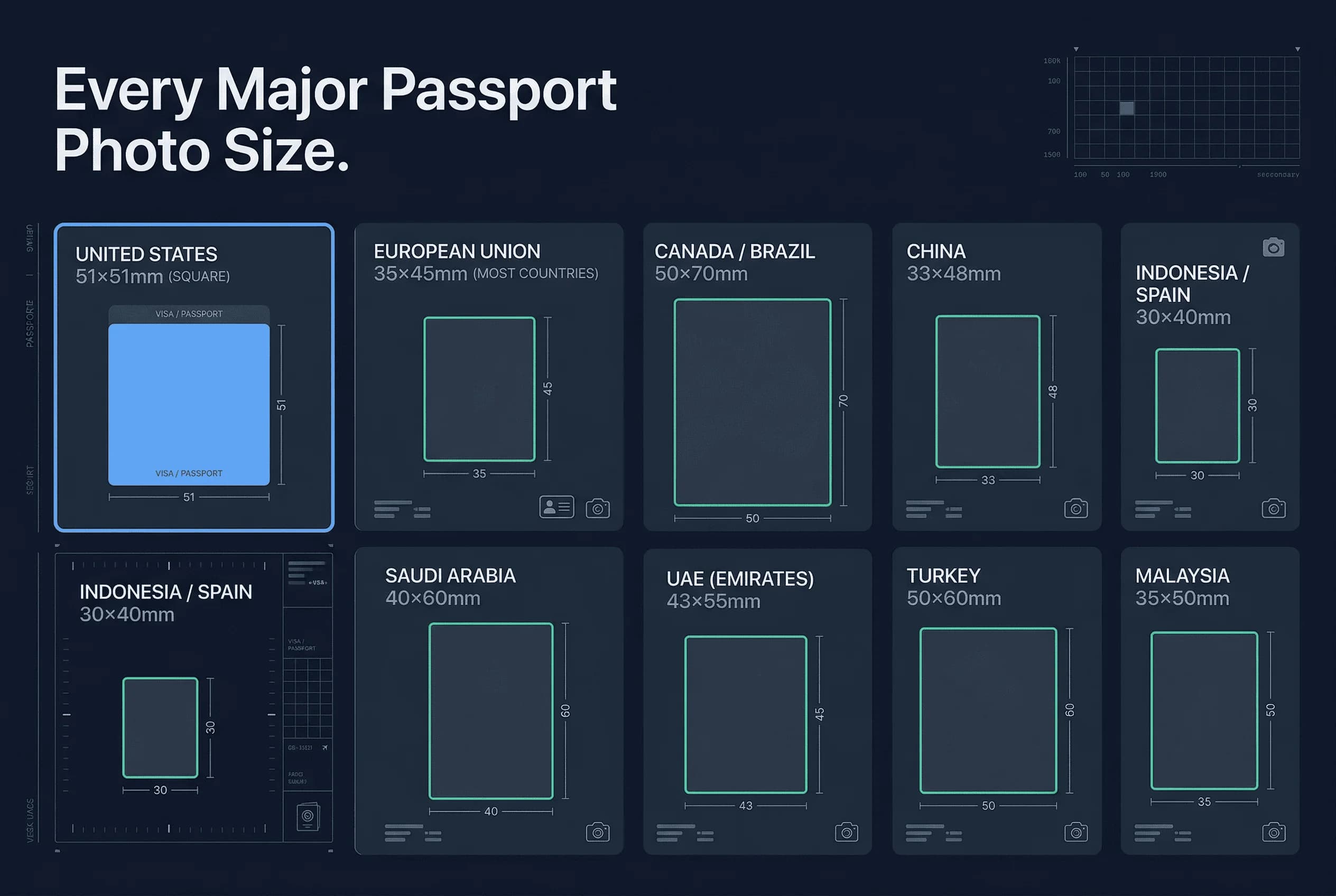
United Kingdom adopted the European standard of 35×45mm. The UK is relatively relaxed about exact specifications but expects the photo to look recent and accurately represent your current appearance.
Canada uses 50×70mm (591×827 pixels at 300 DPI), which is a vertical rectangle — significantly different from the US square format. This is the same size as Brazil. A US 2×2 inch photo will not work for a Canadian passport application, and vice versa.
Australia follows the ICAO-recommended 35×45mm standard. The country's passport service is known for being particular about photo quality even if the dimensions are straightforward.
Germany uses 35×45mm and has additional requirements about background color (light gray rather than pure white) and facial expression. German passport photos are notoriously strict.
France also uses 35×45mm with similar European standards. The French are particular about even lighting and no shadows on the face or background.
India uses 35×35mm (413×413 pixels at 300 DPI) — a square format like the US but smaller. This is an unusual dimension that differs from both the US standard and the common European 35×45mm rectangle. India requires a white background and has tightened its photo requirements in recent years.
China uses 33×48mm, which is slightly narrower than the standard European size. This is one of the few countries with a genuinely unique dimension, so travelers to China need specifically-sized photos.
Japan follows the 35×45mm standard but allows digital submission and has specific requirements for online uploads. Japanese passport photos are known for requiring a neutral expression with eyes open.
Brazil uses 50×70mm (591×827 pixels at 300 DPI), the same dimensions as Canada. This is larger than the European 35×45mm standard and produces a vertical rectangle that shows more of the chest and shoulders.
Get a compliant passport photo online
Why Do Passport Photo Sizes Differ Between Countries?
Every country developed its photo standards independently, based on historical ID systems and document layouts. The US settled on 2×2 inches decades ago because it fit neatly onto the biographical data page of the passport book. The square shape made sense when passports were smaller documents, and changing it would require updating every piece of passport infrastructure.
European countries adopted 35×45mm as part of ICAO (International Civil Aviation Organization) recommendations, though not all follow it strictly. The ICAO sets international standards for machine-readable passports, focusing on facial proportions and image quality rather than exact dimensions. Countries have flexibility to adjust based on their document design.
Some countries like China and the UK developed their own standards based on historical practices. China uses 33×48mm, reflecting older document formats. The UK historically used various sizes before settling on the modern standard.
The good news is that the international community continues to work toward standardization. Many countries now accept photos that meet ICAO guidelines, which reduces the complexity for international travelers.
Digital vs Print Passport Photo Dimensions
For digital submissions, you need to consider resolution, not just size. The standard is 300 DPI (dots per inch), which ensures print quality. Higher DPI produces sharper images but creates larger file sizes. Most online submission systems have file size limits.
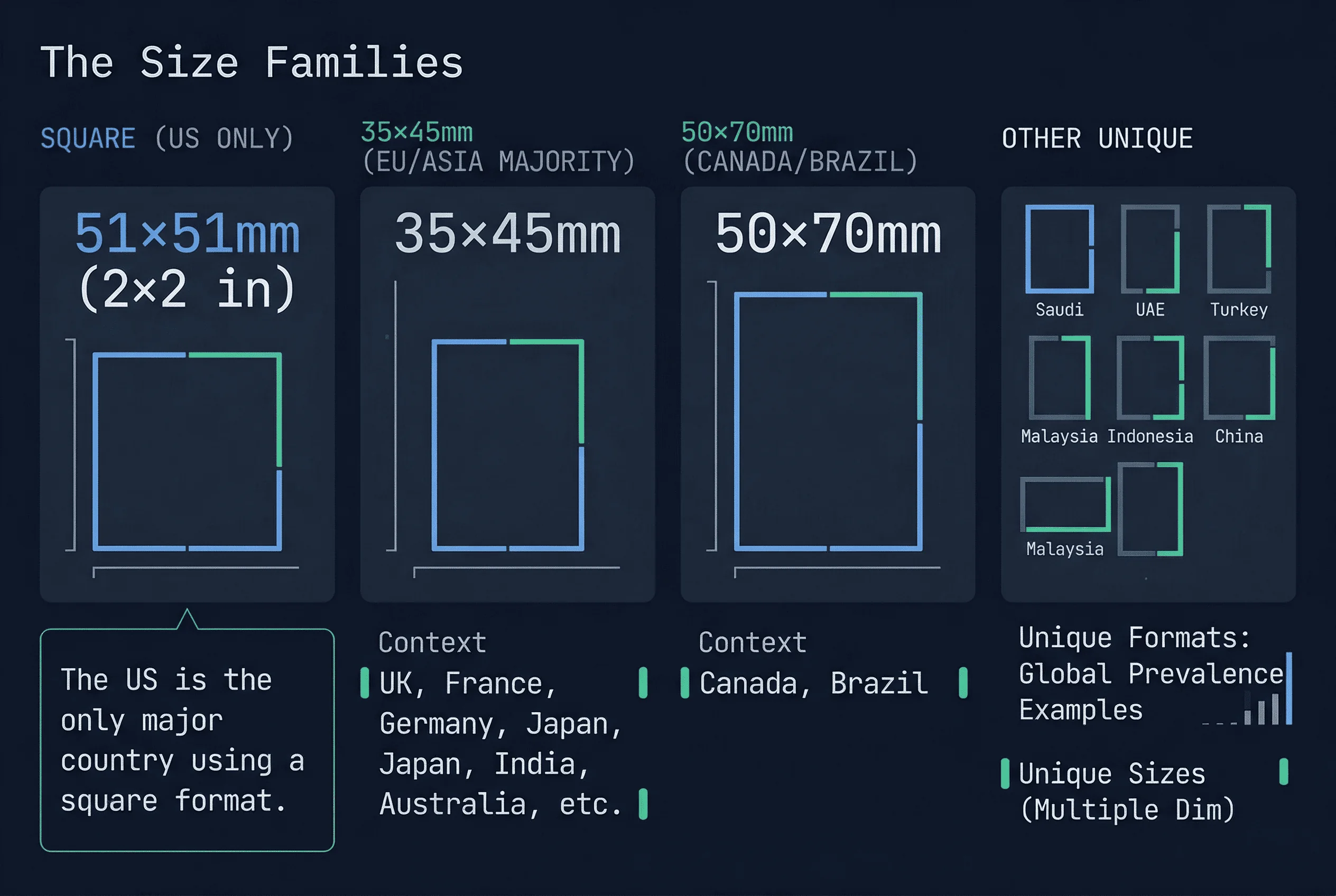
A US 2×2 inch photo at 300 DPI equals 600×600 pixels. A 35×45mm photo at 300 DPI equals approximately 413×531 pixels. If you're taking a photo yourself and plan to print it, these pixel dimensions matter. Most passport photo services handle this automatically, but DIY photographers need to ensure their file meets both the physical size and pixel requirements.
For digital-only submissions (common for many countries now), the exact pixel dimensions matter more than physical size. Many countries now accept online applications with digital photo uploads, which means you need to know your pixel dimensions, DPI, and file format. Common requirements include JPEG format, 200-300 DPI, and file sizes under a certain limit (often 240KB).
Color space matters for digital submissions too. Most countries require RGB color space. CMYK files can cause color shifts that make your photo look different when printed or viewed by officials.
Face Measurement Rules for Passport Photos
Beyond the overall photo size, countries specify how much of the photo your face should occupy. The US requires your head to measure 1–1.38 inches from chin to the top of your head — that's 50–69% of the 2-inch frame.
The UK has similar requirements: your face should be around 70% of the vertical space. Australia's requirements specify a minimum face height of 32mm and maximum of 36mm.
Many countries require both eyes to be at the same level, with specific distances from the bottom of the photo. These technical requirements are why using a professional service is often worthwhile — they understand all these specifications without you needing to memorize them.
What Happens If You Use the Wrong Passport Photo Size?
Using the wrong size photo will result in rejection. The application processing time stops while you obtain a new photo. For renewals, this can delay your passport by weeks. For first-time applicants, it extends what is already a multi-week process.
Rejection isn't just an inconvenience — it can derail travel plans, especially if you have upcoming trips. A rejected passport application means starting over with a new photo, which costs more money and time. Some countries also have limits on how many times you can submit revised photos.
The safest approach is to always specify your destination country when getting photos taken. Don't assume one size fits all. If you're applying for multiple passports or travel documents, get separate photos for each or use a service that can produce multiple sizes.
Before getting your photo taken, confirm the exact requirements for your destination country. The US requirements differ from most others, so don't assume what works for a US passport will work abroad. Use a passport photo size checker to verify your dimensions are correct before submitting.
Understanding which countries have the strictest rules can help you prepare if you're applying for multiple passports or travel documents. Some countries accept standard photos with no issues; others reject photos that would be perfect for other countries.