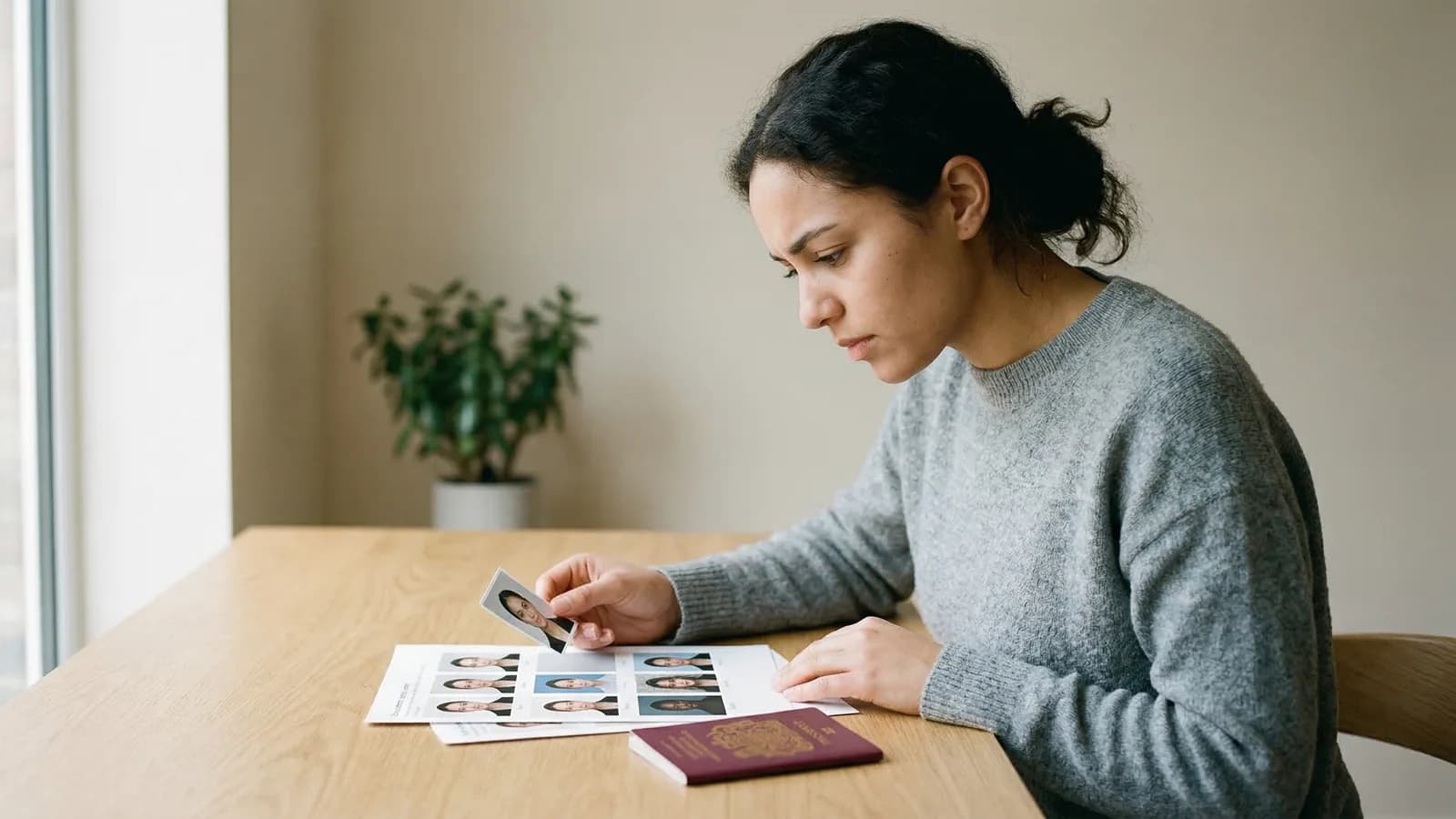
Most countries require a plain white background — specifically #FFFFFF or very close to it. A few countries accept light gray, and some allow light blue. Using the wrong background color will get your photo rejected. This is one of the most common reasons for passport photo rejection worldwide.
The purpose is contrast. Immigration officials need to see your face clearly against the background. White provides maximum contrast with all skin tones and hair colors. It also works best with the automated systems that many countries now use to process passport applications.
When you get your photo taken, the background is the first thing inspectors check. A background that's even slightly off-white creates problems that are easy to avoid with the right preparation.
Passport Photo Background Colors by Country
| Country | Accepted Background | Hex Code |
|---|---|---|
| United States | White | #FFFFFF |
| United Kingdom | Light grey | #E6E6E6 |
| Canada | White | #FFFFFF |
| Australia | White | #FFFFFF |
| Germany | Light grey | #E6E6E6 |
| India | White | #FFFFFF |
| France | White | #FFFFFF |
| China | White | #FFFFFF |
| Japan | White | #FFFFFF |
| Schengen (EU) | White or light gray | #FFFFFF or #E8E8E8 |
United States requires pure white (#FFFFFF). There's very little tolerance for variation. Off-white, cream, light gray, or any other color gets rejected. The US has some of the strictest background requirements.
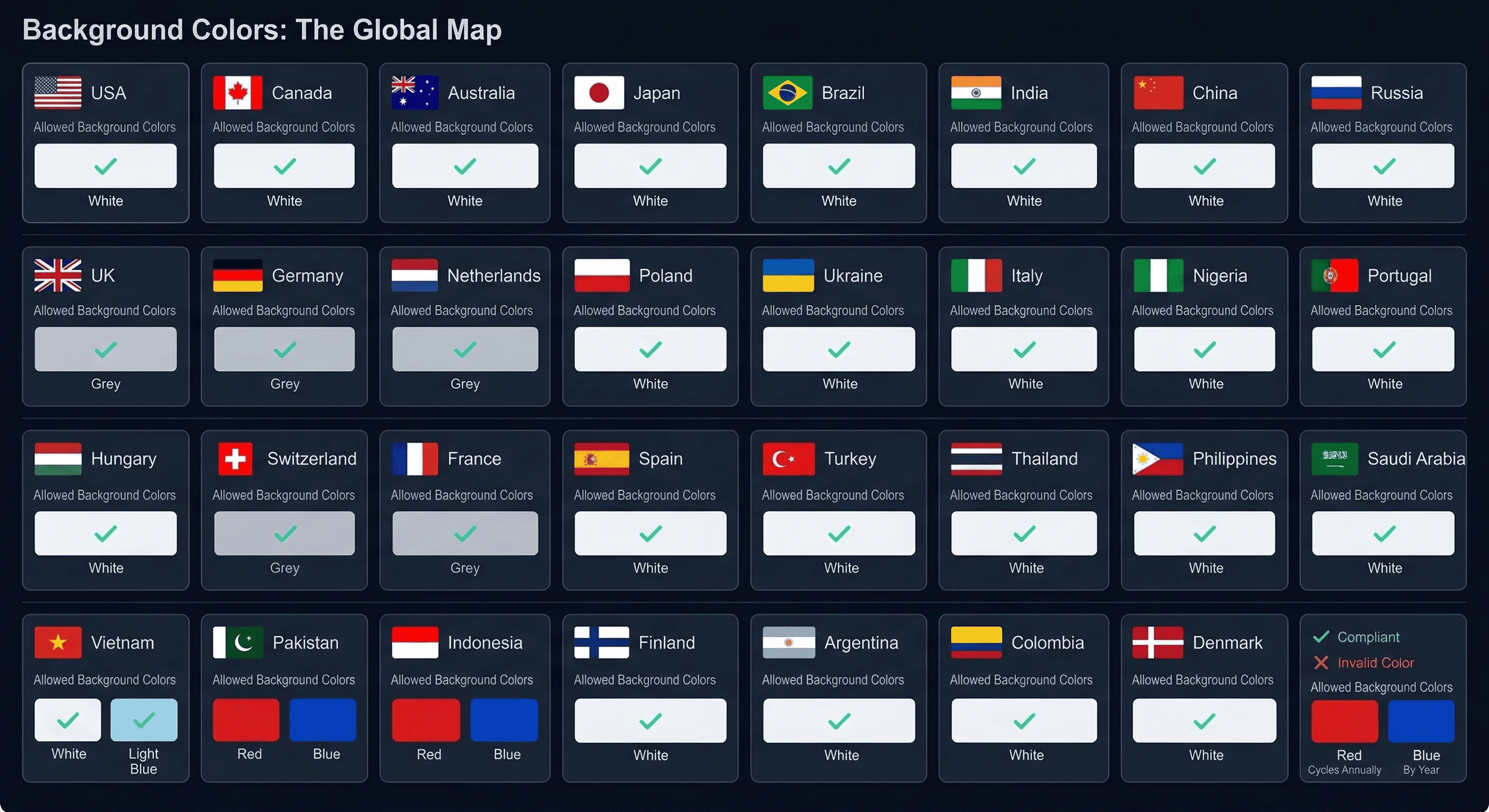
United Kingdom accepts light grey (#E6E6E6, RGB 230,230,230). This is a noticeably lighter grey, not quite off-white. The UK changed to this standard because pure white sometimes appears too harsh when digitally processed or printed. The UK is more flexible than the US on background shade.
Canada follows the US requirement of pure white. The Canadian passport system is closely aligned with the US, and the background requirements are essentially identical.
Australia requires white but is somewhat flexible about exact shade. Most white backgrounds will pass, but it's best to aim for pure white.
Germany specifically requires light grey (#E6E6E6, RGB 230,230,230) — the same shade as the UK. This is one of the unique aspects of German passport photos. Using pure white will get your German passport photo rejected. Germany is an exception to the general white-background rule.
India requires white but can be strict about quality. The background must be uniform with no shadows or texture. Some Indian consulates overseas are more strict than others.
China requires white with specific brightness requirements. Photos that are too dark or have any color tint get rejected.
Japan accepts white and is generally straightforward about the requirement. The Japanese passport system is known for technical precision.
The UK accepts light grey (#E6E6E6) because pure white can sometimes appear too harsh in digital processing. Germany uses the same shade of light grey (#E6E6E6) to distinguish the background from the subject's clothing if they wear white.
Some countries accept very pale blue (#E6F2FF), though this is less common and usually only for specific document types. When in doubt, stick with white.
Get a compliant passport photo online
Why Passport Photo Background Color Matters for Compliance
The background color is about more than aesthetics. Immigration authorities need consistent, high-contrast images that work across different processing systems, printing methods, and display technologies.
White backgrounds have been standardized internationally because they work reliably across all these systems. Light gray works in specific contexts (particularly for countries that print on certain paper types), but white is the safer choice when allowed.
The color also affects how your face appears in the photo. A background that's too dark makes your face look washed out. A background that's too light can make you look like a ghost. The perfect background creates natural contrast.
Automated systems scan passport photos and measure facial proportions. These systems are calibrated for white backgrounds. When the background is any other color, the measurements can be off, leading to rejection.
How to Create a White Passport Photo Background at Home
You need a surface that's truly white and evenly lit. Here are your options:
A white bedsheet or large white poster board works well. Hang it on a wall or have someone hold it behind you. The key is eliminating shadows — if the sheet has folds or creases, the shadows will show up in the photo.
A white wall in your home can work, but only if the paint is truly white, not cream or eggshell. Test it by holding a white piece of paper next to the wall — if they look different, the wall is too off-white.
Professional backdrops are available for under $20 if you take passport photos regularly. These are designed specifically for consistent, shadow-free lighting.
For the best DIY results, use a large piece of white foam core or a white wall. Position your camera or phone to avoid including any wall seams, outlets, or other features that might show up in the photo.
What Counts as "White Enough" for a Passport Photo?
The automated systems used by passport agencies are unforgiving. They measure exact color values and reject anything outside the acceptable range.
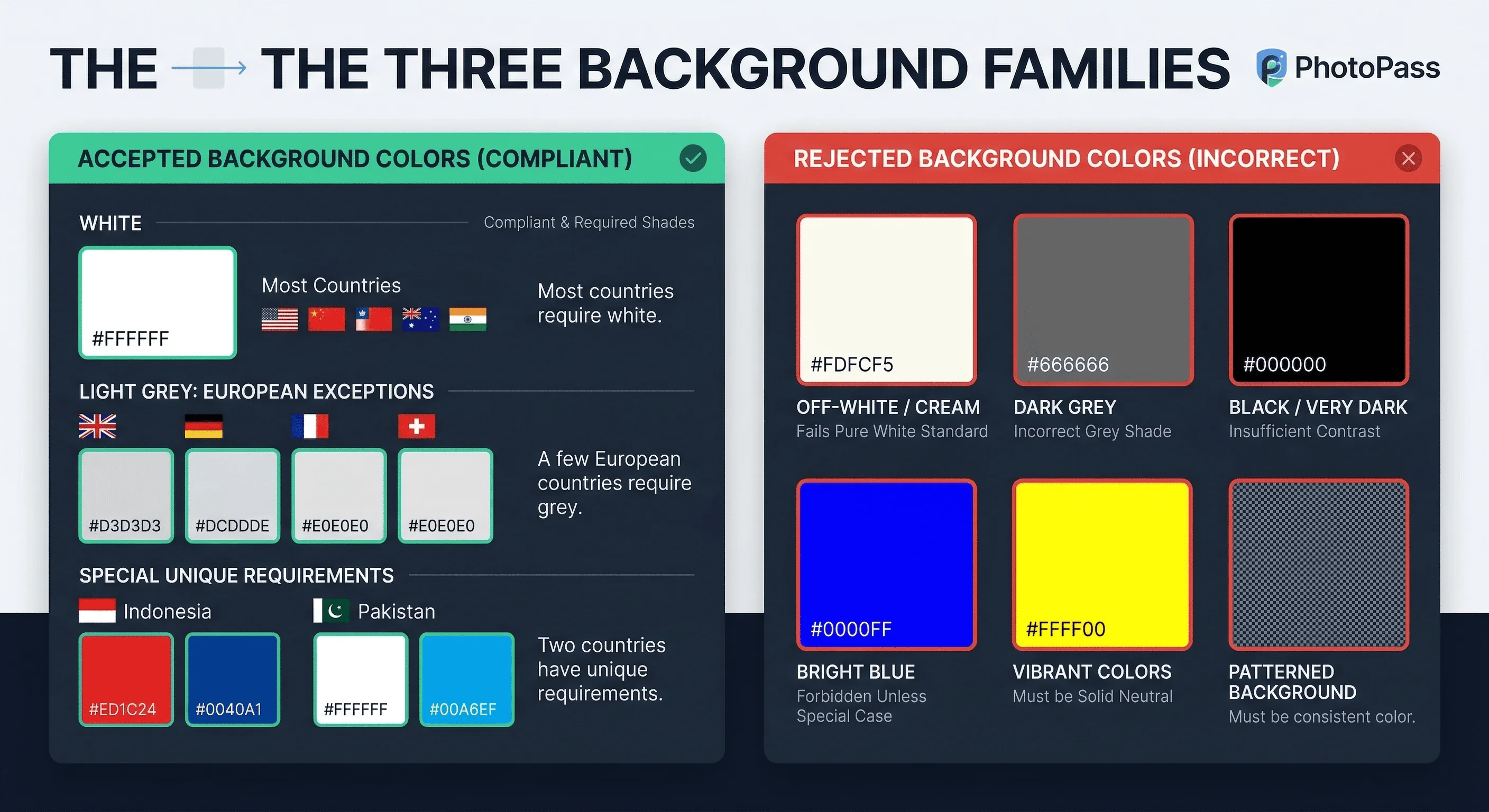
Pure white (#FFFFFF) always passes. Off-white (#FFFFED) sometimes passes but is risky. Cream, ivory, light beige, or anything with a warm tint gets rejected.
The safest approach is to use a known-white surface and ensure even lighting. If you're using a passport photo checker tool, it will tell you whether your background passes before you submit.
When in doubt, hold a piece of printer paper next to your background. If they look the same color, your background is white enough. If the paper looks whiter, adjust your background.
Common Passport Photo Background Mistakes to Avoid
Shadows are the enemy. Even with a white background, if light hits your face at an angle, you'll cast shadows that blend into the background. The software sees this as an uneven background and rejects it.
Patterned wallpaper, textured walls, and curtains all fail. Anything other than a solid, flat color will cause problems. Even subtle textures can be detected by automated systems.
Wearing white clothing against a white background creates what photographers call "blending" — the software can't tell where your face ends and your clothes begin. Wear a dark shirt to ensure clear separation.
Using a colored wall (even pale blue or gray) when the rules require white is an automatic rejection. Always verify the exact color requirement for your destination country.
Uneven lighting that creates a gradient across the background is also problematic. The background must be uniformly lit with no bright spots or dark corners.
Country-Specific Passport Photo Background Rules
Check Germany-specific requirements if you're applying for a German passport or visa, since their light gray background is an exception to the white standard.
For UK applications, the light grey (#E6E6E6) background is the standard. White is generally not the target for UK photos — aim for the specified light grey.
For US applications, pure white is mandatory. Even close shades will be rejected by the automated system.
For visa applications (as opposed to passport applications), requirements sometimes differ. A country might accept photos with white backgrounds for their visa even if they use light gray for their own passports.
Understanding the requirements for your specific situation is crucial. Don't assume that what's accepted for one type of application works for another. Our guide to passport photo costs by country can help you find the best option for your needs.