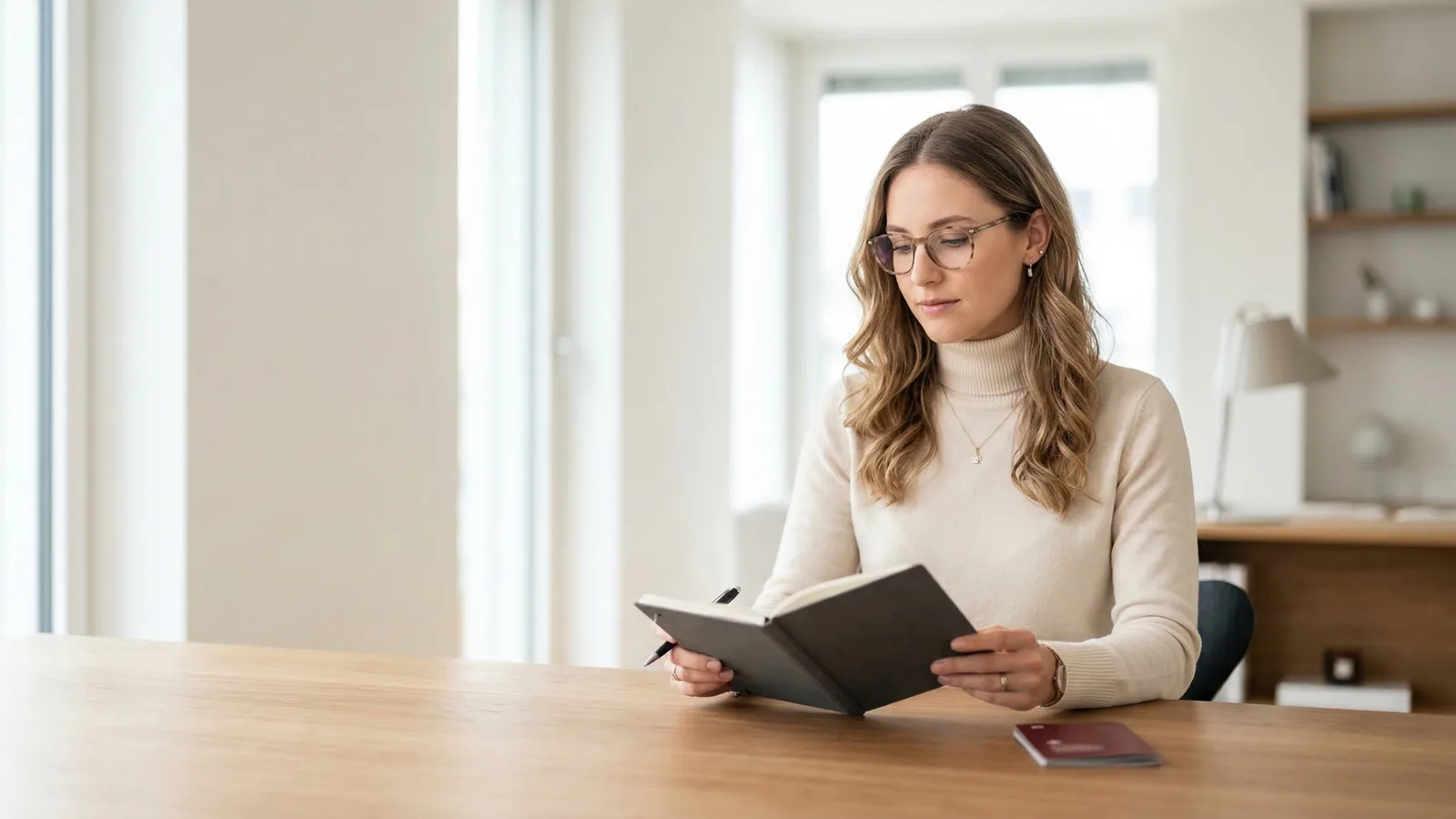
Yes, you can wear glasses in your Switzerland passport photo — but only prescription glasses, and only if they meet specific technical requirements. The State Secretariat for Migration (SEM) allows prescription eyewear, but strict conditions apply.
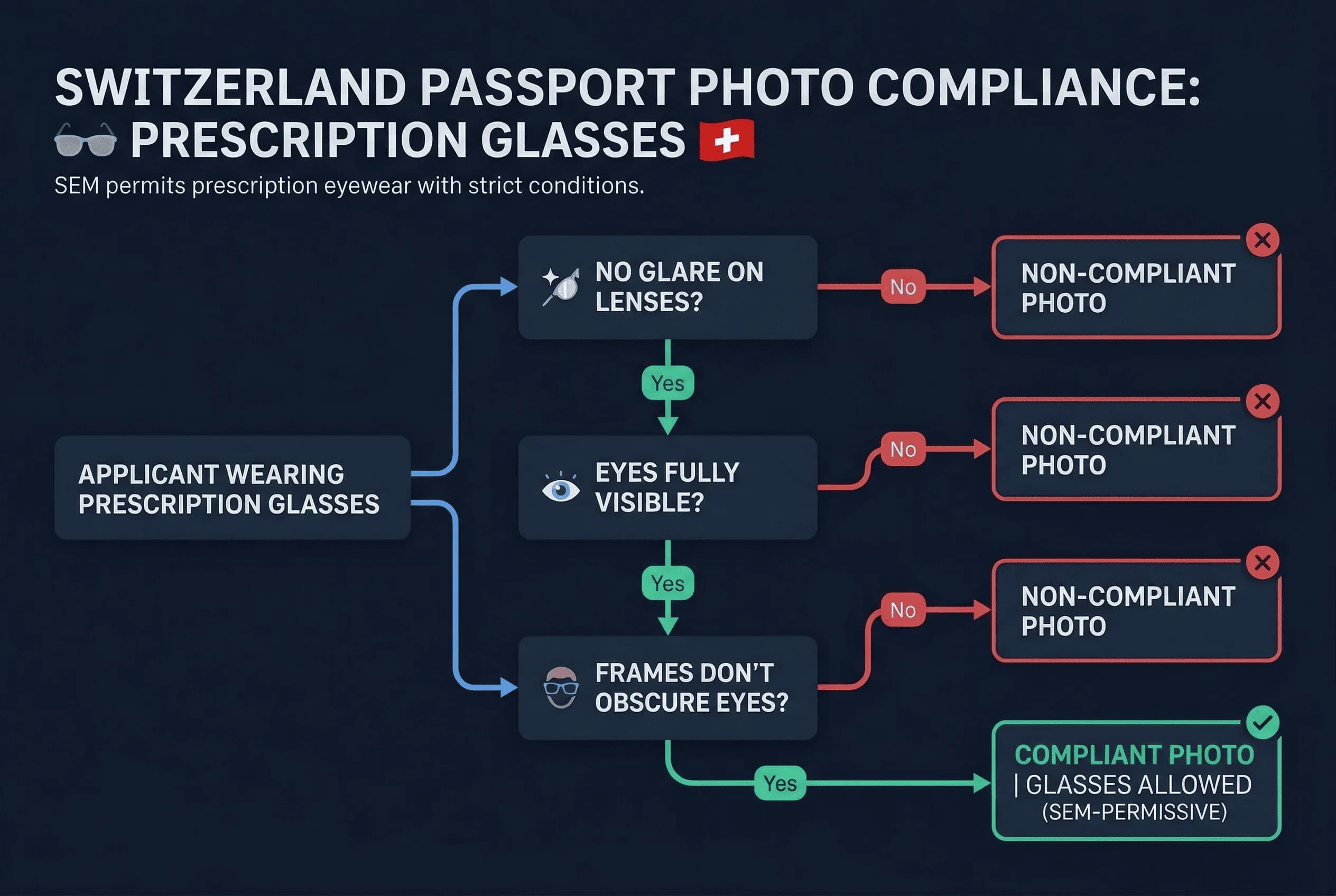
Switzerland follows ICAO biometric passport standards, which permit prescription glasses provided they don't create glare or obscure the eyes. Like the United Kingdom, Germany, and Canada, Switzerland doesn't require you to remove your glasses if you wear them daily. However, getting the approval isn't automatic. Many applicants submit photos that get rejected because of reflection, shadow, or frame coverage.
Exact SEM Glasses Rules for Swiss Passport Photos
Swiss passport photo requirements for glasses are straightforward but demanding:
- Prescription glasses only. Sunglasses, tinted lenses, and fashion glasses without a prescription are not permitted.
- No glare or reflection. This is the most common rejection reason. Light reflecting off the lenses must be completely eliminated.
- Eyes must be fully visible. The frames cannot cover any part of the eyes, including the iris and pupils.
- No darkening effect. Tinted prescription glasses are not allowed, even with a valid prescription.
- Wire-rim frames are problematic. Thin metal frames often create shadows or reflections that trigger automatic rejection.
The SEM uses automated facial recognition software to process passport applications. Glasses that create any form of lens opacity, reflection, or shadow will cause the system to flag your photo for manual review — and manual reviewers follow the same strict rules.
Get a compliant passport photo online
How to Get Your Swiss Glasses Passport Photo Approved
The solution isn't to skip the glasses. It's to photograph them correctly.
Use anti-reflective coating. If you have a choice when ordering new prescription glasses, request anti-reflective (AR) coating. This reduces lens reflectivity from roughly 8-12% to under 2%, making a significant difference in passport photo acceptance.
Control lighting precisely. Professional passport photo studios understand how to position lighting to eliminate lens reflection. They place the light source at a 45-degree angle to the subject, directing reflections away from the camera lens. At-home attempts with overhead lighting or flash almost always create visible lens flare.
Tilt the glasses slightly. A slight downward tilt of the glasses can move reflections out of the eye area. This technique works best with a professional photographer who understands passport specifications.
Consider removing the lenses. Some applicants have had success using their regular frames with the actual lenses removed. This eliminates reflection entirely while maintaining the same facial appearance. However, this only works if you can see clearly without the prescription — which most people cannot.
What Happens If Your Swiss Glasses Photo Is Rejected?
The Swiss passport application system typically provides feedback within 5-7 working days. If your photo is rejected due to glasses-related issues, you'll receive notification through your application portal. Common rejection codes include:
- "Lens reflection detected"
- "Eyes partially obscured"
- "Facial features insufficiently visible"
When this happens, you must resubmit a new photo. The good news is that Switzerland allows you to upload a new photo directly through the online portal without restarting the entire application process. You'll typically have 30 days to submit an acceptable photo before the application is automatically withdrawn.
Regional Differences in Swiss Passport Photo Processing
Different cantons may have slightly different processing times, but the SEM centrally manages passport photo standards. Whether you're applying in Zurich, Geneva, or Bern, the same glasses rules apply. However, acceptance rates vary slightly by submission method:
- Online applications: Highest acceptance rate because the system provides real-time feedback on photo quality before submission.
- In-person at cantonal offices: Slightly lower acceptance rate, as staff may flag borderline cases more conservatively.
- Via Swiss embassies abroad: Most strict, as foreign processing partners may apply additional interpretation of the rules.
Swiss Baby Passport Photos and Glasses Rules
Infants and young children in Switzerland follow the same glasses rules as adults. If your baby wears prescription glasses for vision correction, they can be photographed wearing them — provided the eyes are clearly visible and there's no reflection. However, getting a compliant photo of a baby in glasses is significantly harder because they move constantly and lighting becomes unpredictable.
Most parents find that removing the glasses for the photo and relying on the natural appearance works better, even for children who wear glasses regularly. The Swiss authorities accept photos without glasses for children under 12 in most cases.
Quick Checklist for Swiss Passport Photos with Glasses
- Prescription glasses only — no sunglasses or tinted lenses
- No visible reflection or glare on either lens
- Both eyes fully visible and unobstructed
- Frames don't cover any part of the eyes
- Lighting eliminates shadows on the face from the frames
- Photo meets the 35×45mm size requirement
- Background is white
- Face shows neutral expression with eyes open
If you've checked all these boxes, your Swiss passport photo with glasses should be approved.
Where to Get Swiss Passport Photos with Glasses
Gemeinde / commune offices. Many local offices have nearby photo studios. Staff can advise on photo requirements.
Professional studios. Studios in major cities including Zürich, Genève, Bern, Basel, and Lausanne. Cost: CHF 15–30. Ask for "Passfoto mit Brille, kein Blitz, weisser Hintergrund" (passport photo with glasses, no flash, white background).
Photo booths (Fotoautomat / Photomaton). Automated booths at SBB/CFF train stations and shopping centres. Cost: CHF 8–12. These work for glasses if you control the angle carefully.
Migros Photo Service / Interdiscount. Available at some locations. Cost: CHF 10–15.
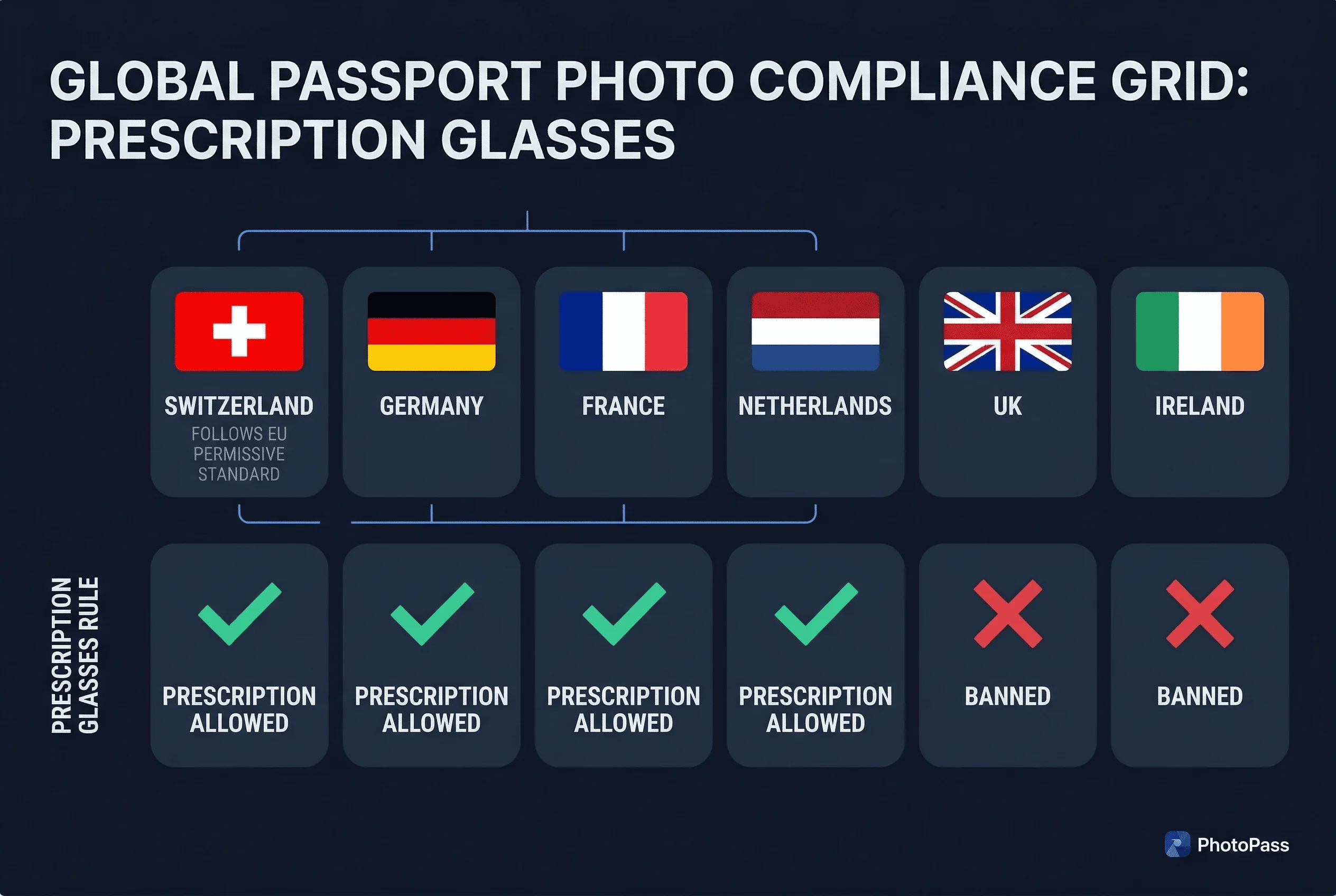
Glasses Rules: Switzerland vs Other Countries
| Country | Glasses | Notes |
|---|---|---|
| Switzerland | ✅ Conditional | Prescription only, no glare |
| United Kingdom | ✅ Conditional | Prescription only, no glare |
| Germany | ✅ Conditional | Prescription only, no glare |
| Canada | ✅ Conditional | Prescription only, no glare |
| South Korea | ✅ Conditional | Prescription only, no glare |
| United States | ❌ Banned | Since 2016 |
| France | ❌ Banned | |
| Netherlands | ❌ Banned | |
| Australia | ❌ Banned | Since 2018 |
| Japan | ❌ Banned | |
| India | ❌ Banned | Since 2020 |
Switzerland is in the minority. Most countries now ban all glasses.
Glasses Rules for Swiss Citizens Renewing Passports Abroad
If you're renewing your Swiss passport from abroad, the same glasses rules apply. Swiss embassies and consulates worldwide accept glasses photos if SEM conditions are met. Studios abroad may not be familiar with Swiss requirements — specify clearly.
Swiss ID Card and Passport Photo Glasses Rules
Switzerland's national ID card follows the same photo rules as the passport. Prescription glasses are allowed under the same conditions. A single photo session can serve for both documents.
How to Request Swiss Passport Photos in Four Languages
Switzerland has four national languages. When requesting photos:
- German: "Passfoto mit Brille, kein Blitz, kein Glanz auf den Gläsern"
- French: "Photo de passeport avec lunettes, pas de flash, pas de reflet"
- Italian: "Foto passaporto con occhiali, senza flash, senza riflesso"
Do Not Digitally Edit Glasses in Swiss Passport Photos
Do not digitally add or remove glasses from a photo. Do not digitally remove glare. Always take the photo correctly from the start.
Verify your photo meets all Swiss passport requirements with the passportsize-photo.online checker. For size requirements, see Swiss passport photo size guide. View all Swiss passport photo rules on the Switzerland hub.